Get Full Government Meeting Transcripts, Videos, & Alerts Forever!
Get email alerts on the Attendance topic
No spam. Unsubscribe anytime.
Board hears attendance‑plan update; staff proposes policy changes on tardies, excused notes and graduation eligibility
Summary
Staff described a district attendance task force, reported a decline in chronic absenteeism and proposed specific policy clarifications — including how many tardies equal an absence, limits on parent excuse notes and whether excessive absences affect graduation participation.
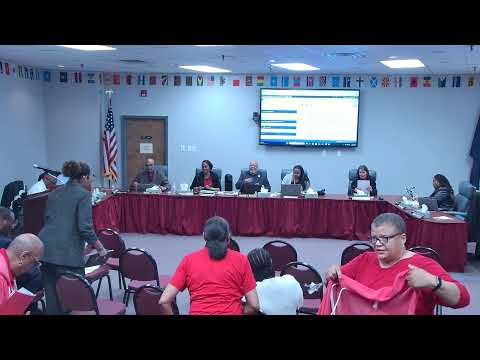
School staff told the board March 19 that district chronic absenteeism has moved in the right direction and outlined proposed policy clarifications and a stronger division monitoring plan.
Dr. Yasmin Gay, chief of staff, and Chief Academic Officer Paul Brown presented data showing an overall decrease in chronic absenteeism when comparing the 2023–24 school year to the 2024–25 school year to date. The presenters said the division’s attendance task force — which includes school leaders, truancy and discipline coordinators, the director of family engagement and community partners — recommends clarifying the attendance policy to strengthen accountability.
The superintendent said the task force’s recommendations include defining how many accumulated tardies equate to an absence, setting a limit on the number of parent‑excused notes the division will accept, clarifying what constitutes excused versus unexcused absences, and specifying whether excessive absences should affect seniors’ ability to participate in graduation ceremonies. Staff also asked the board to consider clearer treatment of sanctioned non‑school events (for example, VHSL tournaments or other pre‑approved activities) and the division’s approach to virtual learning seat‑time and make‑up opportunities.
“Attendance is the work of everybody,” Dr. Gay said, describing a three‑bucket implementation plan that assigns responsibility at the division, school and family/community levels. Brown and other staff emphasized the expansion of school‑level attendance teams, daily monitoring tools and an attendance dashboard in PowerSchool so principals will have timely, actionable data by class period and by day.
Board members asked for school‑by‑school attendance profiles and encouraged outreach to AAU coaches, employers and other community partners to limit non‑school scheduling conflicts during school hours. Several board members volunteered to serve on an advisory subcommittee to review revised policy language before it comes back to the full board.
Next steps: staff said they will revise the attendance policy language for board review, produce school‑level attendance profiles and publicly post the division attendance dashboard and implementation timeline. The board asked staff to include parents, students and community partners in further task‑force meetings.