Get Full Government Meeting Transcripts, Videos, & Alerts Forever!
Get email alerts on the Libraries topic
No spam. Unsubscribe anytime.
JFAC approves $2.58 million for library digital access but adds limits on diversity, equity and inclusion spending
Summary
After debate and a failed substitute motion, JFAC approved general‑fund and federal funding for the Idaho Commission for Libraries’ broadband reimbursements and digital access grants and adopted language restricting state funds from supporting diversity, equity and inclusion activities in library‑sponsored programs.
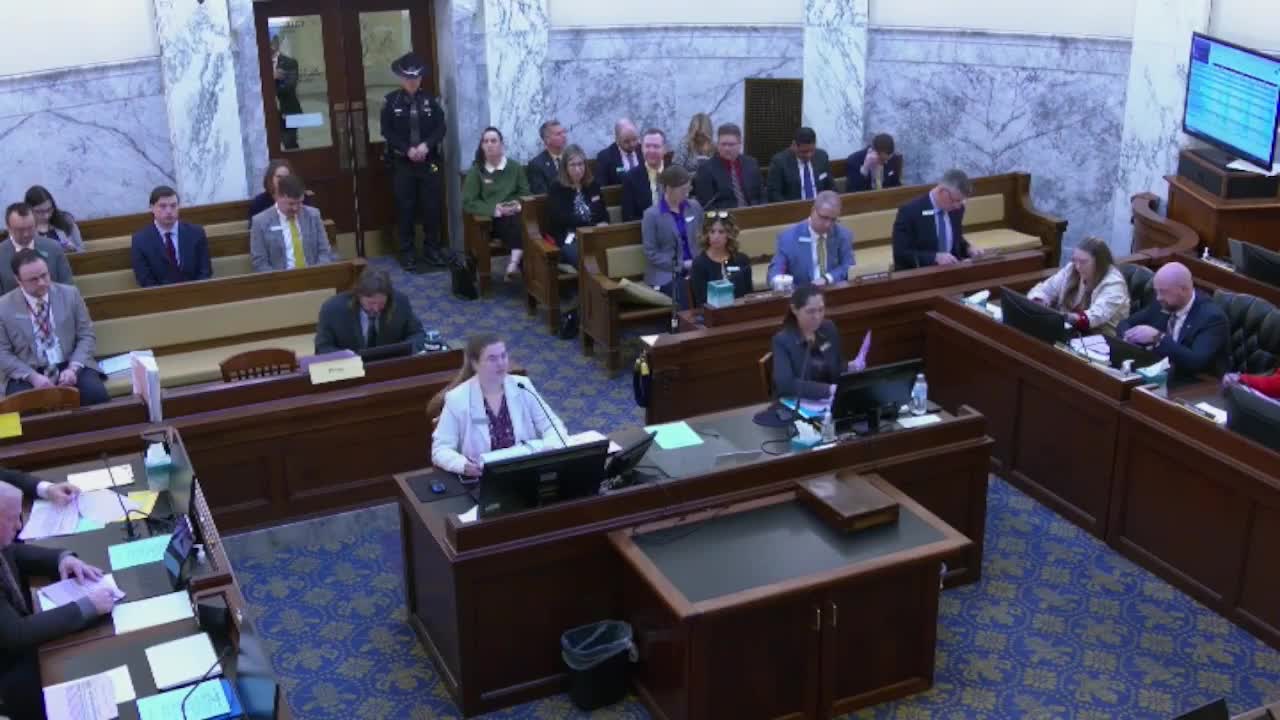
The Joint Finance-Appropriations Committee approved funding for the Idaho Commission for Libraries’ broadband and digital access programs but adopted multiple pieces of accompanying language that generated debate, including a clause directing that state‑appropriated funds not be used to support diversity, equity and inclusion (DEI) or “social justice ideology” in library‑sponsored activities.
Analyst Brooke Dupree summarized the commission’s FY2026 requests: $42,400 for broadband reimbursements to eligible libraries, $30,000 for federal subgrants (the commission had $40,000 available through a federal grant), and $2.5 million in federal funds for the “Digital Access for All Idahoans” grant. The committee considered a motion from Senator Carlson to fund $42,300 from the general fund for broadband reimbursement and $1,231,000 in one‑time federal operating expenditures for the digital access grant. Representative Price seconded that motion. Senator Gallavese offered a substitute motion that would have funded $42,300 general fund, $40,000 federal subgrants, and $2.5 million in federal funds for the digital access grant; the substitute failed on a combined total of 9 ayes and 11 nays.
Several committee members spoke in support of the larger federal grant amount after hearing from local libraries. Representative Gallavese, who moved the substitute, said libraries across the state — including small and rural libraries — had asked members to reconsider and described programs aimed at seniors, telehealth access, veterans’ access to VA services, and basic digital literacy.
After the substitute failed, the original motion carried with a committee total of 17 ayes, 3 nays and will carry a due‑pass recommendation.
Separately, members considered and approved several pieces of appropriations language and reporting requirements tied to library funding. The committee adopted language re‑appropriating ARPA Capital Projects Fund monies to support telehealth facilities in libraries and approved language directing the Idaho Commission for Libraries to designate an employee to confirm compliance with Idaho Code section references on library activities and to coordinate with the Department of Education; the language requires a report to JFAC by Dec. 1. The committee also approved language specifying that state‑appropriated funds may not be used to support diversity, equity, inclusion or social justice ideology in any library‑sponsored activities and directed a report to the committee by Dec. 1. That language prompted questions about definitions and whether populations identified in the digital access grant (households below 150% of poverty, aging individuals, incarcerated individuals, veterans, persons with disabilities, language minorities, racial or ethnic minorities, rural residents) would be excluded; committee members and the motion maker said those populations have been and would continue to be served in prior instances where similar language was adopted.
Roll calls on the various language items and motions produced mixed results depending on the motion; the re‑appropriation and selected funding motions ultimately passed and the committee adopted the DEI restrictions language by a total committee vote of 15 ayes, 4 nays, 1 absent/excused. The committee’s record shows the panel forwarded due‑pass recommendations for the funded items and the adopted language.
Ending: The commission will receive the approved funding allocations and must submit the reports required by the adopted language; the DEI‑related language will constrain use of state‑appropriated funds for library‑sponsored activities pending the commission’s compliance reporting.