Get Full Government Meeting Transcripts, Videos, & Alerts Forever!
Get email alerts on the School Facilities topic
No spam. Unsubscribe anytime.
Committee OKs introduction of RS 32040 to create public education facilities grant fund for rural schools
Summary
On Jan. 28, 2025, the Idaho House Committee on Education voted to introduce RS 32040, a bill to create a needs-based Public Education Facilities Fund to help school districts—prioritizing rural districts—pay for construction, remodeling and safety-related repairs.
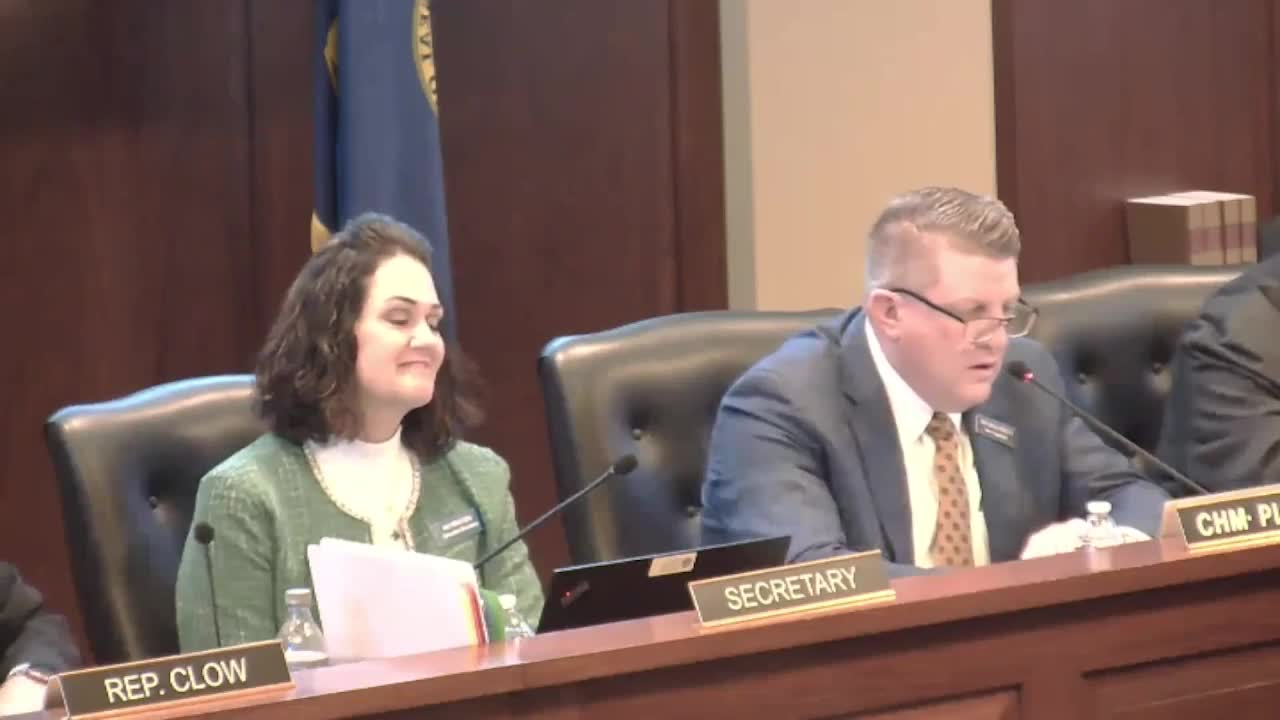
The House Committee on Education on Jan. 28 voted to introduce RS 32040 for a public hearing, a bill sponsors said would create a Public Education Facilities Fund to help school districts pay for construction, remodeling, deferred maintenance and safety repairs.
The bill was presented to the committee by Representative Rod Furnace of District 31 and Representative Sony Galaviz of District 16. Representative Sauter moved to introduce RS 32040 for a hearing; the motion was put to a voice vote and the chair stated the motion carried.
Sponsors said RS 32040 would convert an older, underused program into a straightforward grant program administered by the State Board of Education. The proposal would transfer an existing approximately $25 million balance from an older Title 33 fund into the new Public Education Facilities Fund, and sponsors also proposed transferring roughly half of the balance (about $57 million total currently in the public school health insurance participation fund, per the bill text) to seed the new fund. Sponsors emphasized the program is intended to be need-based and to prioritize smaller, rural districts.
Under the draft language described to the committee, grants would pay for construction, remodeling and maintenance that are “directly related to a school district’s core educational mission.” The bill would expressly prohibit using fund money for athletic facilities. School districts applying for assistance would need to submit a project plan, proposed design or scope, copies of bids, three years of budget documents and evidence of attempts to raise local funds, including prior bond attempts. The State Board’s office would review applications, assign priority based on demonstrated need and monitor awarded projects.
During committee discussion, sponsors and committee members raised examples and questions about scale and eligibility. Representative Furnace described Salmon, Idaho, where an elementary building reportedly has failing structure and the community passed a $20 million bond but remains about $3 million short. Representative Galaviz and others cited North Gem as an example of a district whose bonding capacity is far below the cost of a new school (a $30 million new elementary vs. a $10 million bonding capacity, as described in committee remarks).
Members asked for details that would be expected in the public hearing: whether there will be per‑project caps or a mechanism to prevent the fund from being exhausted in a single year; whether applicants should be required to maintain a local maintenance levy before qualifying; how priority for districts with existing bonds would be handled; and how the bill defines “rural” for priority purposes. Sponsors said they would bring detailed worksheets and district‑level needs data to the hearing, including facility assessments submitted under the prior distribution (described in the fiscal note).
The bill text described a mechanism for recovery if a district receives excess funds: money could be repaid to the fund. Sponsors also told the committee the proposal replaces an older 2006 cooperative fund created after an Idaho Supreme Court mandate and that only one district (Plummer‑Worley) had previously used that older program.
Representative Clow, Representative Nelson and others asked staff to provide a district‑by‑district breakdown of property‑value differences and bonding capacity ahead of the hearing so members could better assess need and equity. Committee members also requested that sponsors review the statutory definition of “rural” used in the draft so consolidated districts are not unintentionally excluded.
The committee voted to introduce RS 32040 for a public hearing. The motion to introduce was moved by Representative Sauter and carried by voice vote; the chair recorded his aye. The measure will return to committee for a public hearing and more detailed review of fiscal impacts, eligibility criteria and program administration.
Votes at a glance: Motion to introduce RS 32040 — Moved by Representative Sauter; outcome: motion carried (voice vote). The chair stated the motion carried following a voice vote.