Get Full Government Meeting Transcripts, Videos, & Alerts Forever!
Get email alerts on the Natural Resources Fire Suppression topic
No spam. Unsubscribe anytime.
Department of Lands asks for staffing, equipment and one‑time funds as governor backs large transfers to fire‑suppression account
Summary
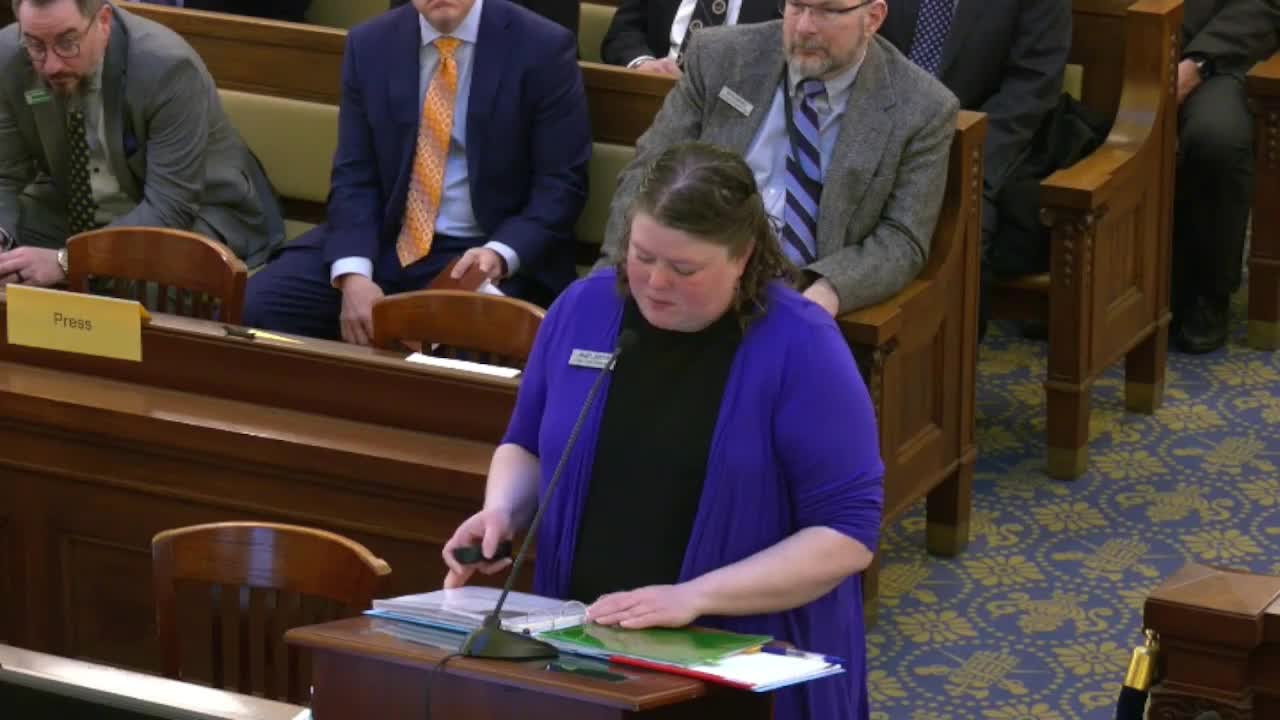
Janet Jessup, budget and policy analyst for the Legislative Services Office, told the Joint Finance Committee the Department of Lands’ FY2026 request focuses on firefighting capacity, timber protective association funding and forest‑restoration work; the governor recommended major transfers to the fire suppression deficiency fund and $1,000,000 in firefighter bonuses for Department of Lands employees.
Janet Jessup, budget and policy analyst with the Legislative Services Office, presented the Idaho Department of Lands’ FY2026 budget to the Joint Finance Committee and described multiple requests tied to wildfire suppression, staffing and federal partnership programs.
The governor’s budget recommendation included large transfers to the state’s fire suppression deficiency fund and a $1,000,000 firefighter bonus for Department of Lands employees. The governor recommended a one‑time transfer of $60,000,000 (supplemental for the current year) and also recommended a $40,000,000 transfer into the suppression account; the department and committee discussed how those amounts would affect the fund balance. The Timber Protective Associations (TPAs) are not state employees; the governor recommended a compensation‑equivalency CEC for TPAs but did not include TPA employees in the initial $1,000,000 firefighter bonus, and the TPAs have requested an additional $250,000 so their firefighters can receive bonuses as well.
Why it matters: the Department of Lands administers timber, trust lands and the state’s fire response program. The fire suppression deficiency fund allows the state to pay suppression costs and is continuously appropriated; testimony showed the legislature has shifted to pre‑funding that account in recent years because of recurring high suppression costs.
Key points from the presentation and director’s testimony
• Department role and funding: Jessup noted the Department of Lands is one of Idaho’s executive departments established in section 58 1 0 1 of Idaho code and serves as the administrative arm of the Board of Land Commissioners, established in section 7, article 9 of the state constitution. The Department has roughly 355 allocated FTP and multiple dedicated funds, including a Department of Lands Fund composed of many statutorily directed revenue streams.
• Fire suppression deficiency fund: the fund is continuously appropriated for declared suppression spending. The Legislature began prefunding the account around 2015 rather than waiting for agencies to come forward with deficiency warrants. Director Dustin Miller told the committee that, without the governor’s requested additions, the suppression account could drop to about $13,000,000 in FY2026 as the department continues to reconcile invoices and cost shares with federal partners.
• Good Neighbor Authority (GNA): Director Miller described GNA as a federal‑state partnership authorized in the 2015 farm bill that allows state and federal agencies to collaborate on active management of National Forest System lands. Miller said the GNA program has become largely self‑funding through timber receipts generated from federal lands; he described roughly $40,000,000 generated to date under the program and explained how receipts are used for personnel, operating costs, payments to the Forest Service and restoration contracts.
• Timber Protective Associations and compensation (TPAs): Jessup explained that TPAs are quasi‑state organizations with a long history (Southern Idaho TPA established 1904; Clearwater Potlatch TPA established 1905). TPAs are funded by assessments on private timberland owners; they are not state employees and their payroll and hiring are governed separately. The governor’s recommendation included a CEC equivalent for the TPAs to maintain parity with state employees, but the TPAs asked for an additional $250,000 to provide bonuses to their firefighters comparable to the $1,000,000 bonus recommended for Department of Lands employees.
• Enhancements and positions: the department requested several new positions tied to fire program modernization, including a fire emergency support program manager, a fire aviation section manager and a statewide forest assessment program manager, among other roles. Several enhancements were one‑time in nature; roughly 79% of the department’s requested enhancements were listed as one‑time expenditures.
• Federal funds and appropriations: Jessup and Miller described a recent increase in reversion rates tied to federal funds the department had not yet spent because matching federal monies (for example IIJA/Infrastructure Investment and Jobs Act funds) or federal reimbursements had not materialized at the time of reporting.
• Abandoned mine lands (AML): Director Miller said the state faces a significant workload to close and secure nearly 9,000 abandoned mine sites and that funding has not kept pace with the need. The department receives a portion of a mine license tax for the abandoned mine fund but said the revenues are insufficient to address the backlog.
Director Dustin Miller answered committee questions about timing of partner reimbursements, the role of GNA in generating timber sale receipts used for on‑the‑ground restoration and mitigation, and the department’s ongoing efforts to modernize fire response and mapping for assessments. Miller emphasized that the department and its partners prioritize life and property in suppression decisions and that longer, more severe fire seasons increase costs and complexity.
Committee members asked for historical suppression expenditures and additional detail on revenues and fund balances prior to making final budget decisions; no final appropriation was recorded at the hearing.