Get Full Government Meeting Transcripts, Videos, & Alerts Forever!
Get email alerts on the Research Ethics topic
No spam. Unsubscribe anytime.
Senate committee rejects resolution reaffirming Nuremberg Code as Idaho research standard
Summary
A Senate committee heard hours of debate and voted down Senate Concurrent Resolution 104, a nonbinding measure from Sen. Tammy Nichols that would have reaffirmed the Nuremberg Code as a foundational ethical standard for medical and scientific research in Idaho.
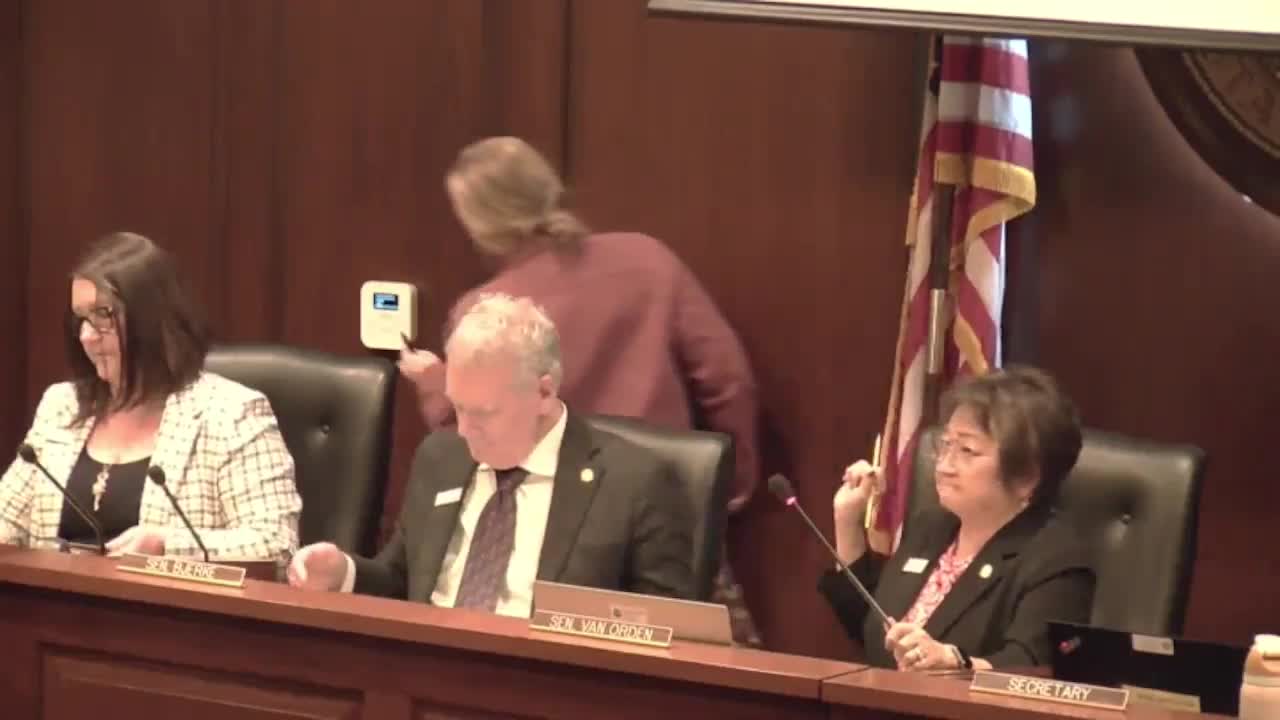
Senate Concurrent Resolution 104, introduced by Sen. Tammy Nichols, failed on a 3-6 roll call in the Idaho Senate Health and Welfare Committee after extended debate about the resolution's scope and foreign references.
The resolution would have “reaffirm[ed] the Nuremberg Code as the foundation of ethical research,” encouraged Idaho medical, academic and research institutions to follow recognized guidelines and promoted “transparency, informed consent, and independent oversight,” Nichols said during the committee hearing. Nichols said the resolution is advisory only and carries no fiscal impact.
Nichols, Tammy Nichols, Senator, District 10, described the Nuremberg Code’s origin in 1947 as a response to Nazi-era human experiments and listed historical abuses she said underline the need for strong ethical standards. "This resolution upholds that in Idaho, we adhere to ethical principles with voluntary consent, transparency, and safeguards against harm," Nichols said (00:00:37.865).
Committee members asked how the advisory resolution would change Idaho law. Senator Blaylock asked for examples of laws or policies that the resolution would prompt the Legislature to change; Nichols said she had none specific and described the language as “preventative.” Several members expressed concern about referencing international declarations. Senator Wintrow and others questioned why the committee would recognize documents from international organizations rather than rely solely on U.S. or Idaho standards. Nichols replied the resolution merely recognizes “complementary contributions” from documents such as the Belmont Report and UNESCO declarations and would not itself create binding law.
Debate also included references to public distrust following the COVID-19 pandemic. Senators who supported the resolution said reaffirming long‑standing ethical principles could help restore public trust; opponents said Idaho already has medical and research ethics enforced through state and federal law and objected to singling out foreign organizations. Senator Shippey specifically objected to citing UNESCO because of that organization's policy positions on subjects such as abortion; Nichols said the resolution references only those parts of outside declarations that reinforce human dignity and fundamental freedoms.
A motion to send SCR 104 to the Senate floor with a "do pass" recommendation was made by Senator Keiser and seconded by Senator Bridal Felder. The committee then took a roll call vote. Recorded votes available in the hearing transcript include: Senator Harris — no; Senator Shippy — no; Senator Blaylock — no; Senator Wintrow — nay; Vice Chair Pierke — aye; Chair Van Orden — no. The clerk announced the result as "3 ayes and 6 nays," and the motion failed.
The resolution is advisory and contains no implementing provisions; Nichols and supporters framed it as a statement of principle and a reminder to adhere to informed consent and independent oversight as science and technology evolve.
Votes at a glance: SCR 104 — motion to send to the floor with due pass; outcome: failed on roll call (3 ayes, 6 nays).