Get Full Government Meeting Transcripts, Videos, & Alerts Forever!
Get email alerts on the Behavioral Health topic
No spam. Unsubscribe anytime.
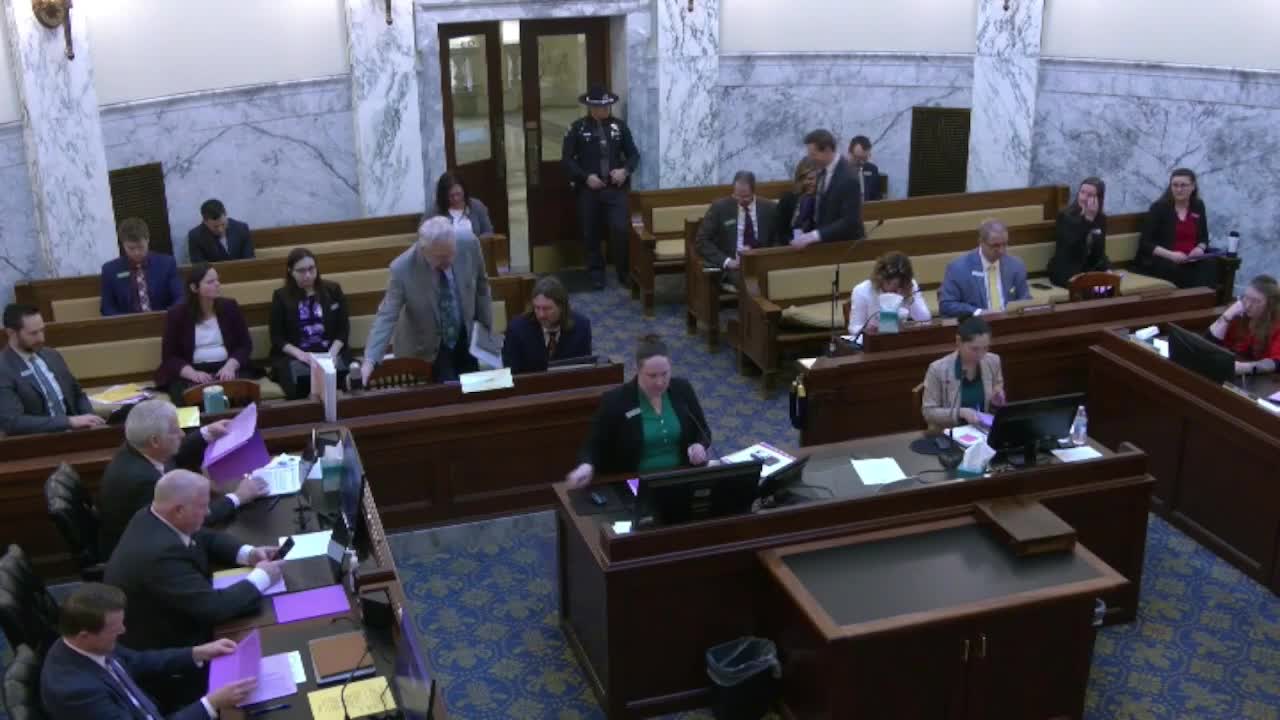
JFAC approves behavioral‑health supplementals, State Hospital adjustments and directs review of CANS assessment
Summary
The Joint Finance‑Appropriations Committee approved multiple Health & Welfare supplementals and FY2026 adjustments tied to the Idaho Behavioral Health Plan, psychiatric hospitalization and State Hospital accounting changes, and directed the department to study alternatives to the CANS child assessment tool.
The Joint Finance‑Appropriations Committee approved multiple supplemental and fiscal‑year‑2026 enhancement requests for the Department of Health and Welfare’s behavioral‑health programs and directed staff to examine alternatives to the child and adolescent needs and strengths (CANS) assessment.
Alex Williamson, budget and policy analyst with Legislative Services, presented a suite of items that required reconsideration after earlier House action. The committee voted on fiscal‑year‑2025 supplementals and FY2026 enhancements across mental‑health services, psychiatric hospitalization and substance‑use treatment and prevention.
Key budget approvals included:
- Mental health services: a FY2025 supplemental appropriation of $6,743,800 in federal cooperative welfare funds to cover grants and the delayed implementation of the Idaho Behavioral Health Plan. The committee approved the appropriation on a roll call that produced a favorable recommendation to move forward.
- Psychiatric hospitalization: a $2,663,500 one‑time general‑fund appropriation for civil‑commitment expenditures and community hospitalization was approved. The committee also approved a net‑zero accounting adjustment for State Hospital West (moving roughly $2.2 million from federal to dedicated funds) and a State Hospital South adjustment that reallocated federal, dedicated and general funds (net zero overall) to align with managed‑care accounting changes.
- Program adjustments: The committee moved a Center of Excellence program from ongoing to one‑time funding and removed nine FTP positions associated with that ongoing authorization to allow for further review.
Committee members pressed for clarity on program administration, vehicle fleets and federal‑grant administrative burden. Representative Mitchell sought to remove vehicle replacement spending from the current request while retaining a requirement for the department to review fleet needs. The committee added language directing a departmental report on administrative burden for federal grants.
On program evaluation, the committee adopted new language that asks the Department of Health and Welfare to explore alternatives to the CANS assessment used to determine services for children and adolescents. Representative Tanner described the request as "to explore some alternatives to the CANS assessment," noting the motion does not mandate replacement but directs the department to report back. Senator Wintrow, who said she had reviewed the assessment process and stakeholders’ input, urged caution about altering the instrument without broader consultation: "If you just start opting out of questions, you affect the algorithm of the tool itself and you knock everything out of whack," she said, adding that parents and families should be included in any evaluation.
The committee also approved other behavioral‑health related language that includes transfer‑limitation exemptions, federal funding restriction provisions and standard conditions and limitations that will roll into the behavioral‑health appropriations package.
Votes on the various behavioral‑health supplemental and enhancement items were recorded on the roll; most measures passed with substantial majorities in the joint committee. Committee members said the approvals aim to ensure continuity of care and adapt accounting to the operational realities of managed care and the Idaho Behavioral Health Plan.
What happens next: The committee’s package for behavioral health, including the CANS review language and hospital funding adjustments, will proceed with JFAC’s due‑pass recommendations for consideration on the chambers’ floors.