Get Full Government Meeting Transcripts, Videos, & Alerts Forever!
Get email alerts on the Millennium Fund topic
No spam. Unsubscribe anytime.
JFAC approves Idaho Millennium Fund allocations for after‑school programs, fentanyl campaign and youth assessment centers
Summary
The Joint Finance‑Appropriations Committee approved recommendations from the Millennium Fund committee to spend dedicated settlement dollars on prevention and youth services, including after‑school programs, an Idaho State Police fentanyl awareness campaign and youth assessment centers at the Department of Juvenile Corrections.
The Joint Finance‑Appropriations Committee voted to adopt the Idaho Millennium Fund committee’s recommendations for dedicated settlement dollars, directing funding to after‑school programming, a fentanyl awareness campaign and youth assessment centers.
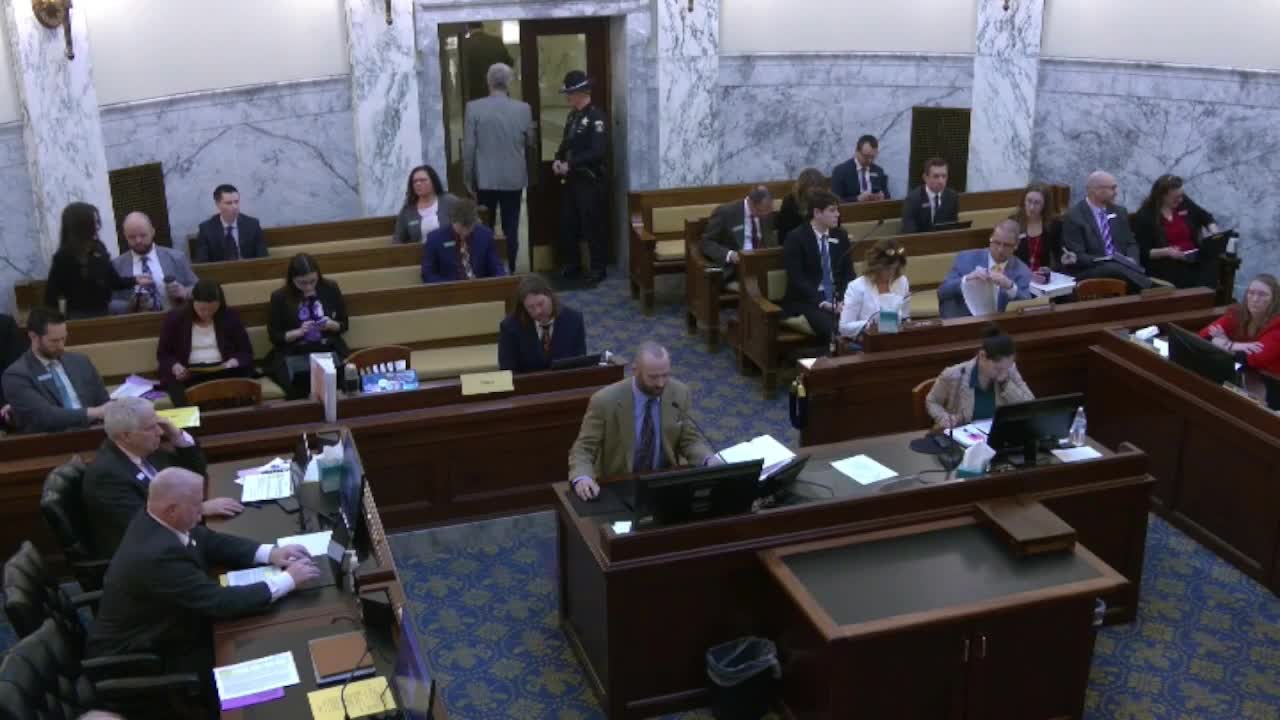
Jared Tetrault, deputy division manager of Budget and Policy Analysis with Legislative Services, told the committee the Idaho Millennium Fund was ratified in the state constitution (2006) to account for tobacco‑settlement dollars. He said Idaho receives roughly $25 million annually from the national settlement and that a portion is used each year through the Millennium Fund income fund.
Representative Gallavey moved the committee’s recommendation to allocate dedicated funds: $500,000 to the Idaho State Police for a fentanyl awareness campaign (from the opioid settlement fund), $1.5 million to the State Department of Education for after‑school programs, $210,000 to Idaho State Police from miscellaneous revenue for programs, and $2.5 million one‑time to the Department of Juvenile Corrections for youth assessment centers. The motion requested a total of $6,710,000 from dedicated funds to support specified programs and to reappropriate funds tied to a fiscal‑year 2025 supplemental.
The committee also accepted language requiring after‑school program dollars to be used by school districts and public charter schools specifically for prevention and cessation education for tobacco, alcohol and other substances and to comply with applicable age requirements identified in Idaho code (citation shown in committee materials). The package includes language to ensure recovery‑center funds go to nonprofit entities, quarterly distributions with department oversight, and a process for new centers to request funding through standard budget requests.
Committee members noted the recommendation reduced or removed some previously proposed items from earlier drafts—Idaho Public Television operation costs were reduced, the youth assessment survey removed, and vape detector funding cut. Jared Tetrault said the committee sought to ensure funds reach their intended youth‑focused purposes.
The Millennium Fund motion passed during committee roll call. The clerk recorded the combined committee vote as 19 ayes, 1 nay (Senate 9‑1, House 10‑0). With the committee’s approval, the recommendations will proceed as JFAC’s official recommendation for inclusion in the appropriations package.
Language adopted by unanimous consent also requires the Department of Education to follow open competitive acquisition processes for certain purchases and to report performance status for capacity‑building schools to Legislative Services.