Get Full Government Meeting Transcripts, Videos, & Alerts Forever!
Get email alerts on the Aging Needs Assessment State Plan topic
No spam. Unsubscribe anytime.
Idaho Commission on Aging presents needs assessment; highlights caregivers, rural quality-of-life findings and state plan goals
Summary
The Idaho Commission on Aging presented a statewide needs assessment and the agency’s 2024–2028 state plan, emphasizing caregiver strain, rural–urban differences in self-reported quality of life and planned statewide objectives.
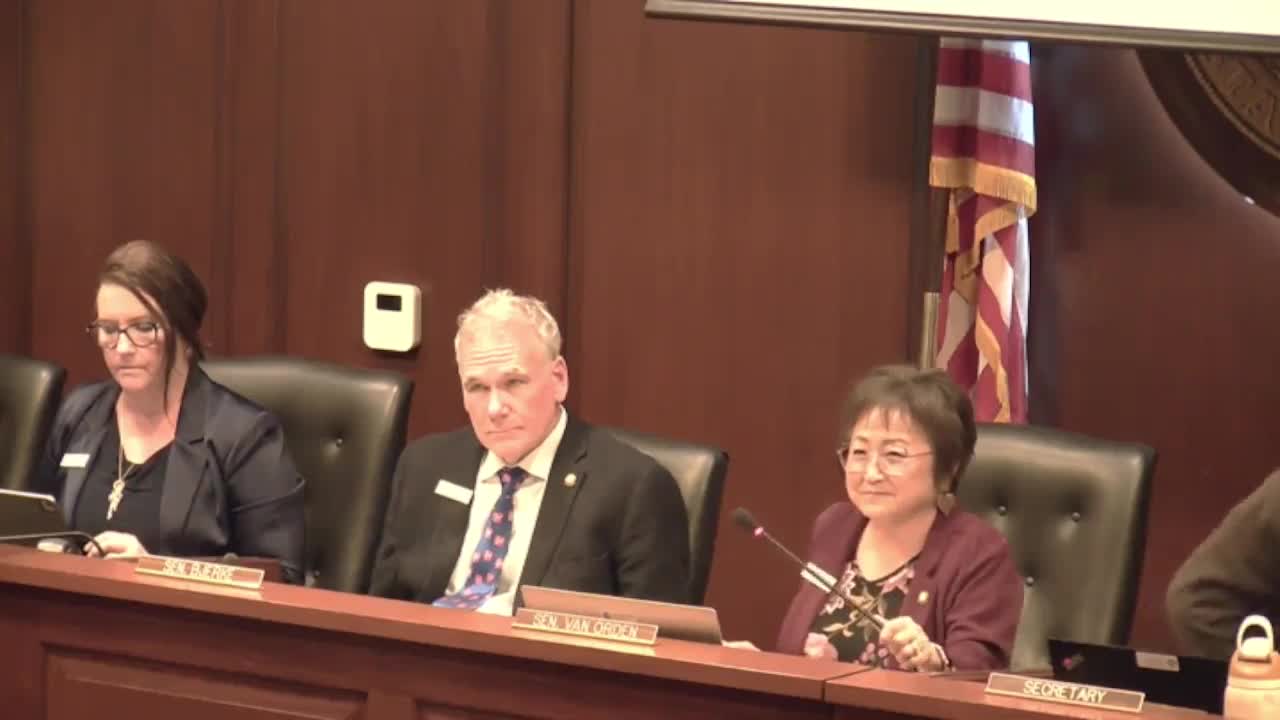
The Idaho Commission on Aging presented a statewide needs assessment and outlined objectives in its 2024–2028 state plan during a Senate committee meeting.
Judy Taylor, director of the Idaho Commission on Aging, said the commission collected 1,109 unique survey responses and reached residents in 37 of Idaho’s 44 counties. Taylor told the committee the assessment targeted older Idahoans at high risk of institutionalization and that responses were analyzed across four buckets: all respondents, high-risk respondents (those rating their quality of life fair, poor or very poor), urban respondents and rural respondents.
Key findings Taylor highlighted included: - Caregiver strain: In the high-risk cohort, 33% indicated they “cannot care for another individual without hurting their health” and lack the help they need. - Geography and quality of life: The commission’s data showed 66% of the high-risk respondents were urban and 34% were rural; Taylor said rural respondents reported higher self-rated quality of life in several measures. - Participation and isolation: High-risk respondents reported lower participation in community activities and less ability to use technology for support and socialization.
Taylor summarized how ICOA will use the findings in its 2024–2028 state plan, which she said was accepted by federal funders in October with no edits requested. Objectives she cited include implementing case management and benefits counseling as an information-and-assistance function at the local level, prioritizing nutrition and increasing the share of high-risk clients served, requiring each area agency on aging to implement assisted-technology projects (two meaningful projects each) to promote health and socialization, and having senior centers run at least one annual loneliness-reduction activity.
Financial and administrative questions: Vicki Anzick, project manager at the Commission on Aging, acknowledged earlier delays in payments tied to one local area agency on aging and to the rollout of the state payment system LUMA, and said those delays “to my knowledge, those have all been resolved as of today.” Another ICOA staff member (recorded in the transcript as Ms. Schneck) described federal and state rules that shape program funding: she said the federal Older Americans Act caps administrative costs at 10% and ICOA requires that 50% of funding go directly to contracted client services, limiting the share area agencies can retain for administration.
Committee members asked about Alzheimer’s disease and related dementias. Taylor said caregivers for people with dementia are a major high-risk group and described ICOA’s ADRD high-risk caregiver support program. She said prevention and caregiver support are both priorities and noted ICOA’s work with the state ADRD effort, including participation on the executive steering committee and involvement writing the state plan.
Why it matters: The needs assessment identifies caregivers and socially isolated older adults as priority groups and directs state-level goals—case management, benefits counseling, nutrition, assisted-technology projects and loneliness-reduction activities—intended to reach high-risk elders across the state.
Discussion vs. decision: The presentation was an agency update and did not create new statutory duties in the committee; ICOA said its state plan will be implemented locally by six area agencies on aging, which must report quarterly to ICOA commissioners on progress.