Get Full Government Meeting Transcripts, Videos, & Alerts Forever!
Get email alerts on the Charter School Facility Financing topic
No spam. Unsubscribe anytime.
Study: Idaho financing programs cut charter facility costs, save roughly $113 million over 15 years
Summary
A presentation to the Idaho Senate Education Committee said a bundle of state financing tools — a revolving loan fund plus a credit-enhancement "moral obligation" program — has reduced charter school facility costs, saving an estimated $113 million over 15 years and freeing funds for instruction.
A national education-policy group told the Idaho Senate Education Committee that a set of state financing policies has substantially reduced charter school facility costs and freed money for instruction.
Matthew Joseph, senior policy advisor at the nonprofit AccelinEd, told the committee Idaho’s combination of a short-term revolving loan fund and a long-term credit-enhancement program — described in the presentation as a “moral obligation” credit enhancement — has saved charter schools an estimated $113,000,000 over roughly 15 years. “The state so far has spent $0 to do this,” Joseph said, adding that the savings translate, on average, to the equivalent of about 10 teachers per charter school per year.
Joseph said the typical charter school in Idaho spends about $1,857 per student on facilities and, even with existing supports, was left needing roughly $1,294 per student from operating funds. The state programs he described reduce interest costs so schools can keep more operating dollars for instruction.
Why it matters: Joseph told senators that charter schools lack access to the same local levy and bond advantages as traditional districts, so they ordinarily face higher financing costs or must take facility expenses from classroom budgets. He said Idaho’s two-part approach addresses that market gap by (1) providing short-term, low- or no-interest loans during a school’s early years and (2) enabling lower-cost long-term financing once a school establishes a track record.
How it works: Joseph said the revolving loan fund supplies initial financing that is repaid and recycled to other schools. For long-term borrowing, the state’s moral-obligation credit enhancement lowers the interest rate charter schools face in the private bond market, though the state is not automatically liable for defaults; the governor would request legislative action if a default occurred. Joseph said no defaults have occurred to date.
Joseph described a multiplier effect from private partners: philanthropic matches and private-sector arrangements reduced required borrowing further. He cited the Albertson Foundation and the nonprofit Building Hope as examples of partners that have multiplied the state programs’ effect and smoothed transitions from short- to long-term financing. “There’s been this huge increase,” Joseph said, describing how private matches and favorable buyout terms for developers multiply savings.
He provided examples of Idaho schools the policy has affected. Joseph said Idaho Novus Classical Academy used the revolving loan fund and philanthropic matches to reduce its upfront financing burden; Sage International School of Middleton benefited from the state’s credit enhancement and saved an estimated $700,000 a year; and Elevate Academy in Caldwell used savings to support career-technical programs that require specialized equipment and smaller classes. Joseph said one charter operator told him the school likely would not have opened without the state supports.
Limits and next steps: Joseph warned that the moral-obligation program has reached its cap because demand has exceeded the program’s available capacity. He recommended keeping eligibility criteria strict while expanding capacity to meet demand so savings continue. Joseph also invited committee members to follow up with AccelinEd staff or to attend the organization’s annual summit.
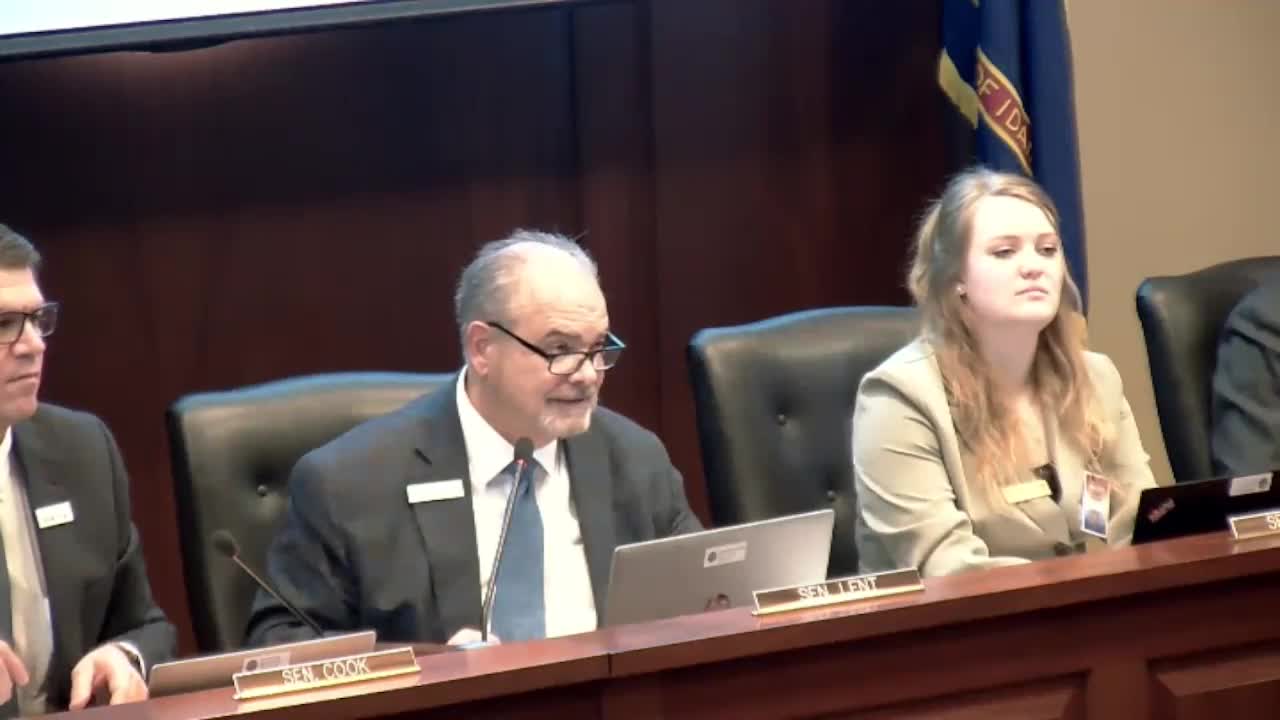
Committee reaction: Chairman Dave Lent invited questions; none were asked during the meeting. Joseph provided contact information and offered additional materials to committee members.
Ending: The presentation concluded without committee action; Joseph said AccelinEd would make the study available and staff present at the hearing offered to assist with follow-up questions.