Get Full Government Meeting Transcripts, Videos, & Alerts Forever!
Get email alerts on the Adoption Federal Funds Rs32271 topic
No spam. Unsubscribe anytime.
Senate committee backs resolution signaling Idaho would accept federal adoption-education funds, amid questions about strings
Summary
The committee voted to send a concurrent resolution to print that expresses support for receiving federal funds for adoption education and expanded birth-mother support; members pressed the sponsor and a witness on whether federal grant conditions might carry unwanted policy strings related to reproductive health.
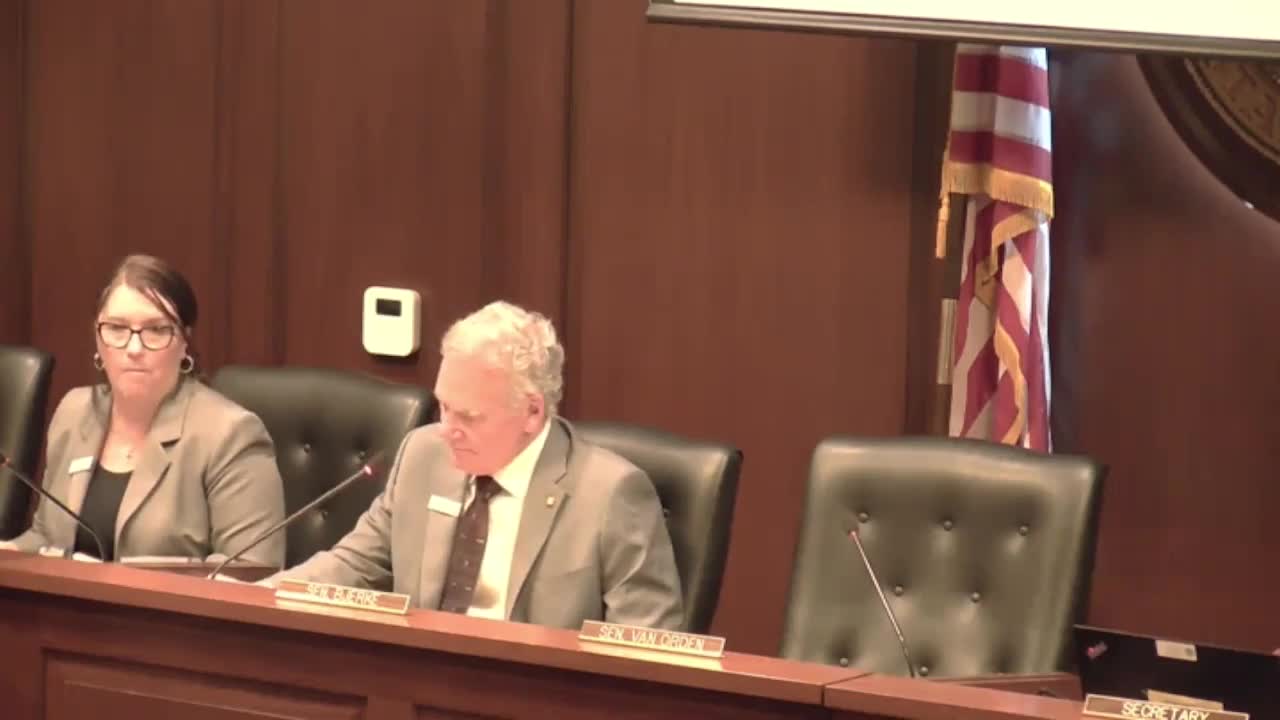
The Senate Health and Welfare Committee voted to send RS 32271, a concurrent resolution declaring legislative support for receiving federal funds for adoption education and expanded birth-mother support and care, to print after a sponsor presentation and witness testimony.
Senator Julie Van Orden (R., District 30), sponsor of the resolution, said the measure is intended to put the state on record so Idaho can be ready to accept federal grants if Congress or the Department of Health and Human Services changes grant language to make funds available for adoption outreach and birth-mother services. "We thought if there's a way to change the requirements for some of these grants at a federal level, we would like to see those monies come in to Idaho if they're gonna come in to be used for grants for us to give these young moms support," Van Orden said during her presentation.
Terry Markcroft, founder and executive director of the nonprofit Unplanned Good, told the committee the funding would be used for four broad categories: adoption education, birth-mother care and support, material and physical support such as baby boxes at safe-haven sites, and legal support for birth mothers. Markcroft said her coalition includes national groups working to expand adoption education and support services.
Committee members asked whether taking federal funds would create conditions or "strings attached." Senator Zanderfeld asked whether proponents had assessed potential federal requirements that might accompany grants. Markcroft replied the advocacy effort aims to align federal grant language with the sponsors' objectives so the funds would support adoption education and birth-mother services rather than require unwanted conditions.
Several senators framed the history behind the resolution: Van Orden and others said previous federal grants had become unusable when state law changed because grant terms restricted use for certain activities related to reproductive-health education; as a result, some grants were not accepted by the Department of Health and Welfare. Committee members said the resolution is intended as a preparatory step to allow state agencies to apply for grants should federal language become compatible with state law.
Senator Harris moved to introduce and send RS 32271 to print; the motion was seconded. Senator Wintrow said she supported birth-mother medical, counseling and legal services but said she had unresolved questions about grant language and whether the proposal balanced prevention of unintended pregnancies and family-planning services; she stated she would vote no on the motion and later was recorded as opposed. The committee carried the motion by voice vote; the chair said the resolution passed.
The resolution itself is non-binding: it expresses legislative support for receiving federal funds for adoption education, adoption awareness and the improvement and expansion of birth-mother support and care, but does not obligate state spending or change state law. Van Orden and witnesses characterized the resolution as a step to facilitate future grant applications if federal programs are modified to permit the uses the sponsors seek.