Get Full Government Meeting Transcripts, Videos, & Alerts Forever!
Get email alerts on the Mental Health Crisis Hold topic
No spam. Unsubscribe anytime.
Senate committee advances bill letting officers use "imminent danger" standard for crisis holds for neurocognitive disorders
Summary
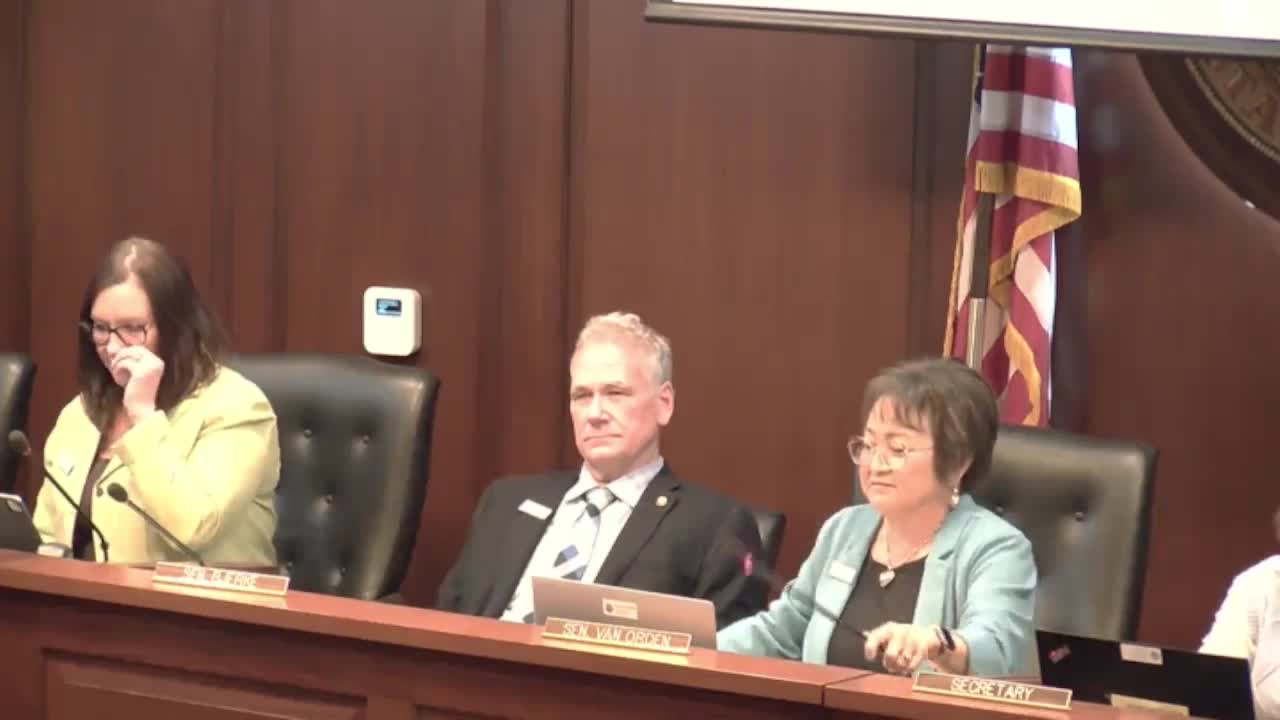
The Idaho Senate Health and Welfare Committee voted to give Senate Bill 1120 a do-pass recommendation after the bill’s sponsor proposed changing the legal standard police use to place a limited crisis hold for people with neurocognitive disorders.
The Senate Health and Welfare Committee on Thursday gave Senate Bill 1120 a do-pass recommendation to the full Senate after a brief discussion about the legal standard police would use to place a limited crisis hold for people with neurocognitive disorders.
Senator Melissa Wintrow, the bill’s sponsor, told the committee the measure is a small modification to a law the Legislature passed last year that created a crisis hold as a last resort for police when a person with a neurocognitive disorder poses a danger to themselves or others. "A homeless director called me and said … we have somebody with Huntington's, and they are a danger to self and others," Wintrow said, describing an incident in which staff reported the person was throwing hot coffee pots and police said they had no crisis-hold authority for that population.
Wintrow said the bill replaces the phrase "person is likely to injure"—a standard some policing agencies flagged as unfamiliar—with language that a person's "continued liberty poses an imminent danger," a legal standard those agencies said they recognize. She also said the bill retains the "likely to injure themselves or others" standard in section 5 for physicians in hospital settings, because that language is more familiar to medical professionals.
Senator Ziderfeld asked for an example to clarify "person's continued liberty poses an imminent danger." Wintrow reiterated the shelter example, saying an officer confronted with a person throwing scalding liquid who cannot be persuaded to accept transport or care could determine that allowing the person to remain at liberty would continue to pose a threat and therefore could place a crisis hold.
Senator Bierke moved to send the bill forward with a do-pass recommendation; Senator Keiser seconded. The committee approved the motion by voice vote. The transcript records ayes and no recorded opposition, but it does not provide a roll-call tally.
If the full Senate concurs, the bill would modify the narrow circumstances under which police may detain a person with a suspected neurocognitive disorder for evaluation and possible medical assessment. The committee record does not specify additional implementation steps or a timetable for final action.