Get Full Government Meeting Transcripts, Videos, & Alerts Forever!
Get email alerts on the Capital Projects topic
No spam. Unsubscribe anytime.
Permanent Building Fund: committee reviews capital slate, deferred maintenance and Chinden Campus costs
Summary
Legislative analysts and the Division of Public Works briefed Joint Finance on the permanent building fund's structure, multi-year project accounting, a $1.9 billion active project portfolio, and the fiscal 2026 project recommendation including higher-education and military facility requests.
The Joint Finance Appropriations Committee received a multi-year briefing on the permanent building fund, its revenue sources, and the division of public works' active capital and maintenance projects.
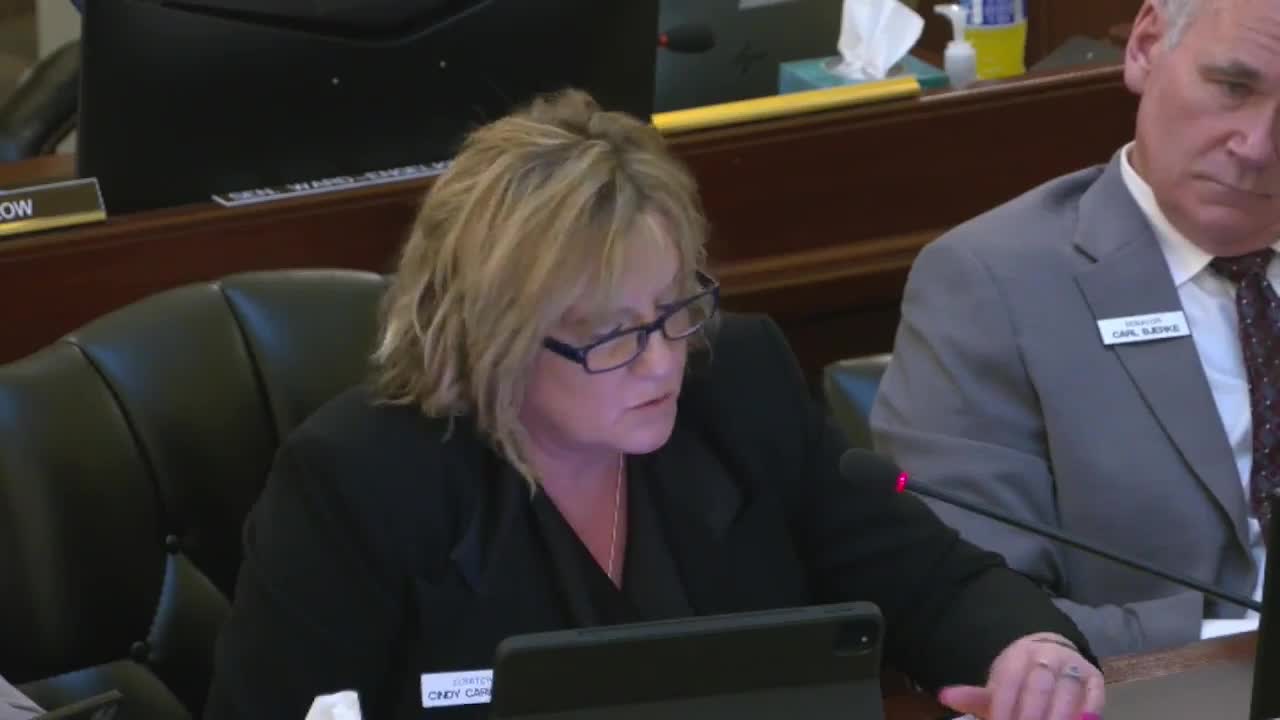
Analyst Frances Lippett explained the permanent building fund is structured to support multi-year capital projects and that unexpended balances at the end of a fiscal year are continuously appropriated pursuant to section 57-1105 of Idaho Code. She summarized statutory revenue sources for the permanent building fund, including a $10 fee on income-tax filings, portions of sales, cigarette and beer taxes, a share of lottery proceeds, and interest earnings.
Lippett told the committee the total value of active public works projects is about $1.9 billion, with roughly $1.4 billion in capital projects; about 42% of capital funding has been committed. She recapped the division's November capital budget report, and listed fiscal 2026 requests the permanent building fund advisory council recommended for consideration.
Dale Reynolds, division of public works administrator, walked members through selected FY2026 capital requests. Highlights included:
- A request to expand the Department of Lands Ponderosa office to add restroom/shower facilities, improve reception-area security and provide workspace for a 20-person hand crew.
- $5.56 million for utilities connections to a future Idaho National Guard readiness center in Bonneville County, supporting an eventual peak occupancy of about 350 military personnel.
- A revised request for the Idaho State Police Lewiston District 2 facility: the division initially sought to purchase and retrofit an existing building but could not reach terms with an owner, so the updated request supports land purchase and new construction.
- $2.5 million to expand lab space at Boise State's Micron Center for Materials Research to build out shelled space on the third floor.
- A $14 million request toward a life science complex at Idaho State University; Reynolds said the full project budget is estimated at about $127.77 million and would be funded by a combination of permanent building fund money, $35.77 million in agency funds and roughly $78 million in bonding.
Lippett also described the permanent building fund's role financing statewide deferred maintenance and noted the legislature previously provided $544 million for a statewide deferred-maintenance program managed by an external contractor. Committee members asked about project timelines and execution: Reynolds said projects vary by delivery method and scope but provided the women's prison project as an example of a roughly 2.5-year construction timeline once a project reaches the construction phase.
Reynolds and committee members also discussed the Chinden Campus, where the department reported about $70 million completed projects, $30 million in progress and an estimated $145–160 million in additional work for deferred maintenance and upgrades depending on remaining buildings to be developed. He said the campus is largely occupied and that HP (a private tenant) occupies three of the eight buildings under a lease extension through 2029 with an option for another five years.
Why it matters: The permanent building fund finances large, multi-year capital projects and deferred maintenance that affect public safety, higher education research capacity and state facility operations. Large requests such as university life-science complexes and prison facilities have multiyear budget and construction implications.
Next steps: Committee members requested the division provide the project-status report and a list of projects that have not started or advanced within the four-year reporting windows the legislature included in last year's budget language so the committee can consider repurposing funds where appropriate.