Get Full Government Meeting Transcripts, Videos, & Alerts Forever!
Get email alerts on the Child Welfare topic
No spam. Unsubscribe anytime.
Committee advances bill to speed placement of surrendered newborns, adds tribal‑notification steps
Summary
The Senate Health and Welfare Committee advanced Senate Bill 10‑58 to the floor with a due‑pass recommendation. The bill would speed placement of newborns surrendered under Idaho's Safe Haven law by directing the Department of Health and Welfare to work with licensed adoption agencies and to notify tribes as required by the Indian Child Welfare Act.
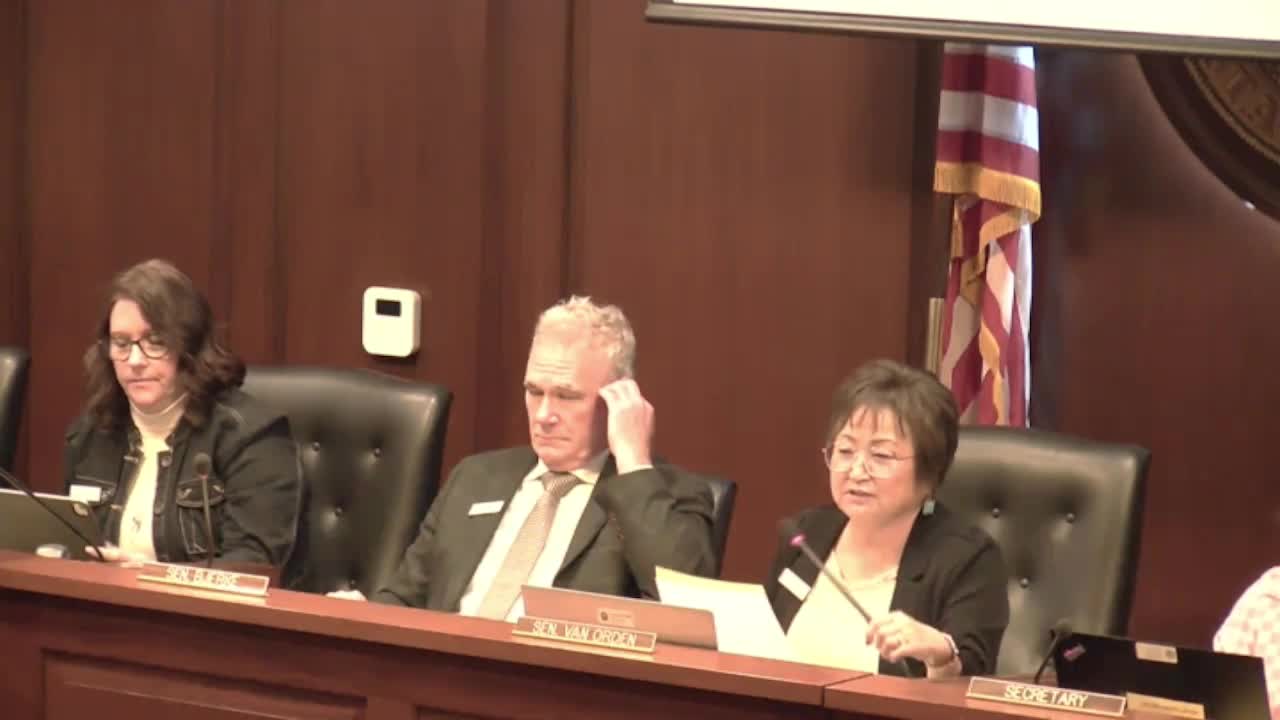
The Senate Health and Welfare Committee voted to send Senate Bill 10‑58 to the Senate floor with a due‑pass recommendation after testimony from the bill sponsor, adoption agencies, tribal representatives and an adoptive parent.
Senator Tammy Nichols, sponsor of SB 10‑58, told the committee the bill updates Idaho’s Safe Haven laws to improve the process for placing newborns who are anonymously surrendered. Under current law a parent may surrender a newborn up to 30 days old at specified locations. Nichols said the bill directs the Department of Health and Welfare (DHW) to maintain a list of licensed adoption agencies and generally requires that custody be transferred to a selective adoption agency within 24 hours of a surrender unless the child requires medical care.
"This bill does not increase any cost in the state's general fund or impose additional financial burden on state or local governments," Nichols said, adding the measure requires ICWA (Indian Child Welfare Act) notifications when a child may be an Indian child and sets timing expectations for those notices.
Adoption agency witnesses urged passage. Kara Walsh, a licensed social worker with New Beginning Adoption Agency, told the committee, "The earliest days of a baby's life are vital for healthy attachment and development," and said licensed agencies can respond quickly to placement needs. Terry Marcroft of Unplanned Good and multiple tribal representatives — including Tyrell Stevenson (legislative director for the Coeur d'Alene Tribe) and Blake Hude (Shoshone‑Bannock Tribes) — also supported the bill and said they worked with DHW to align the language with ICWA requirements.
Not all testimony was supportive. Whitney Wunderlich, an adoptive parent whose child entered her care after being surrendered under the Safe Haven Act, said her family's experience with the foster‑care adoption path included training specific to infants with unknown medical histories and argued that placing surrendered newborns directly with private adoptive parents could result in adoptive families being "blindsided" by medical or behavioral needs. She suggested a narrower fix: expedite adoption processing for surrendered infants who already are in foster care.
Senator Wintrow expressed broader concerns about the Safe Haven concept and the potential for coercion, saying she struggled with making Safe Haven boxes a normal option and that she preferred strengthening social services for parents in crisis instead of expanding Safe Haven placement pathways.
Key procedural points in the bill as described in testimony: DHW would keep a roster of licensed adoption agencies to facilitate rapid placement; custody should generally shift to a selective adoption agency within 24 hours unless medical care is needed, in which case agencies would have up to 48 hours to place the child or the child would remain in hospital while the court and prosecutor are notified for a shelter‑care hearing; ICWA notices must be issued within 10 days if the child may be an Indian child. Witnesses cited expanding use of safe‑surrender boxes nationwide and said Idaho opened its first such box in Blackfoot last year.
Senator Keiser moved and Senator Beierke seconded sending SB 10‑58 to the floor with a due‑pass recommendation. The motion carried on a voice vote; Senator Wintrow stated she planned to vote no. The committee did not conduct a roll‑call recorded in the hearing transcript.
The bill now goes to the Senate floor for additional consideration; sponsors and tribal representatives said they expect to refine implementation details and communications among hospitals, law enforcement, DHW and tribes as the program is used.