Get Full Government Meeting Transcripts, Videos, & Alerts Forever!
Get email alerts on the Public Health Governance topic
No spam. Unsubscribe anytime.
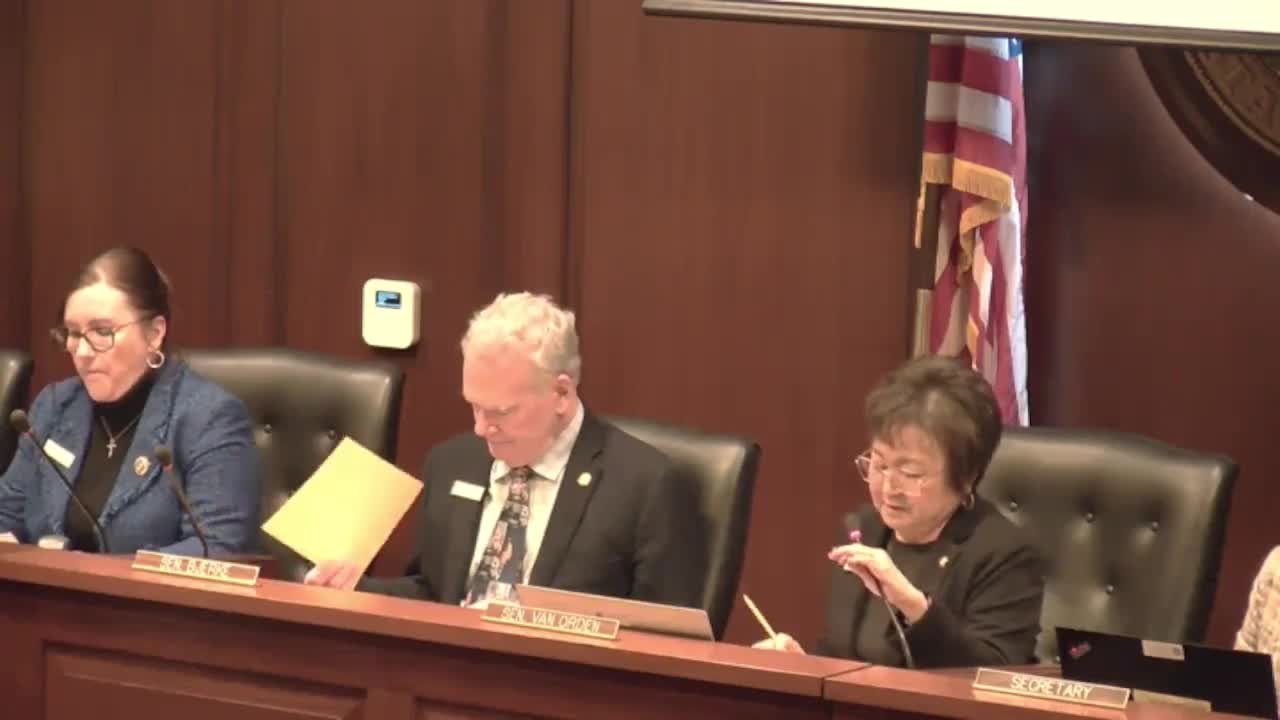
Senate committee punts bill limiting public-health district powers to 14th order for amendment
Summary
Senate Bill 1031, which would narrow the authority of local public-health districts, was sent to the 14th order for possible amendment by the Idaho Senate Health and Welfare Committee after an extended debate on the bill’s definitions and scope.
Senate Bill 1031, which would narrow the authority of local public-health districts, was sent to the 14th order for possible amendment by the Idaho Senate Health and Welfare Committee after an extended debate on the bill’s definitions and scope.
The bill sponsor, Senator Brian Lenny, R‑Nampa (District 13), told the committee the measure would replace broad, open‑ended authority currently in Idaho law with a requirement that public‑health districts act only in ways that are "specifically authorized by state law" and that are "necessary and reasonable" and supported by science. "This bill aims to solidify that trust by ensuring that any actions our public‑health districts take are rooted in statute, in science, and in necessity," Lenny said.
Supporters said the change would create accountability and give residents recourse when health districts act beyond their statutory powers. Misty Karlfeld, who identified herself as leader of Health Freedom Idaho and said she represents "thousands of health freedom lovers," told the committee that Idaho Code 39‑414 currently grants health districts too much discretion and that SB 1031 would restrict districts from taking "all things" actions without statutory authority. "Please restrict their power and duties from all things to necessary, reasonable things required for the preservation and protection of public health," Karlfeld said.
Several senators questioned specific language in the bill. Senator Tana Wintrow raised concerns about the phrase "specifically authorized by state law," asking which statutes the bill would rely on and whether the wording could unintentionally bar routine preventive measures. "Preventive health measures may be taken only in cases of a demonstrated immediate public‑health risk supported by scientific evidence," Wintrow said she was worried the clause could limit ordinary preventative work, such as vaccinations and public‑education programs that are not tied to an "immediate" risk.
Other committee members urged clearer drafting. Senator Mary Blaylock and Senator X (comments in transcript identifying as Senator Bierke) recommended consideration of alternative words (for example, "imminent" rather than "immediate") and clearer definitions of "scientific evidence" so that normal public‑health functions would not be unintentionally restricted. Several senators noted that a 2023 change requires public‑health orders to have county commissioner approval, which offers one layer of local oversight.
After discussion, Senator Seiderfeld moved to send SB 1031 to the Senate floor with a due‑pass recommendation. Senator Harris offered a substitute motion to send the bill to the 14th order for possible amendment; Senator Bierke seconded the substitute motion. The substitute motion was adopted on a voice vote. A committee member asked to be recorded as opposing the substitute; the committee chair did not read a roll call tally in the transcript.
The committee hearing included multiple senators who both supported rein‑scripting public‑health authority after the COVID‑19 pandemic and others who warned that the bill’s current phrasing could impede routine preventive work. Senator Lenny said he was willing to accept amendments and to send the bill to the 14th order for additional language work.
The committee adjourned after scheduling a follow‑up meeting the next day.