Get Full Government Meeting Transcripts, Videos, & Alerts Forever!
Get email alerts on the Foster Care Extension topic
No spam. Unsubscribe anytime.
Senate panel advances bill to extend foster‑care supports from 21 to 23 and ease relative licensing
Summary
The Senate Health and Welfare Committee voted to send House Bill 245 to the Senate floor with a due‑pass recommendation. The bill would extend voluntary foster‑care supports from 21 to 23 and permit expedited placement and limited licensing waivers for relatives.
The Senate Health and Welfare Committee voted to send House Bill 245 to the Senate floor with a due‑pass recommendation after hearing department staff, foster‑care alumni and advocacy groups describe the proposal as a low‑cost intervention that lengthens the transition period available to young people leaving foster care.
Senator Carl Bjerke (R‑District 5) introduced the measure, which would extend eligibility for voluntary foster‑care supports from age 21 to 23 and streamline the department's ability to place a youth with relatives by expediting licensing or granting limited waivers of certain licensing standards. "Notwithstanding the provisions of subsections 1 of this section, the department may expedite placement with a relative, issue a foster care license, and grant a limited variance or waiver of a licensing standard requirement," the bill text read in committee remarks.
Monty Prow, deputy director for support and child welfare at the Department of Health and Welfare, told the committee the change gives emerging adults "a little bit of a longer runway" to learn life skills such as budgeting, job seeking and keeping medical appointments. Prow said participation is voluntary and that each young person who opts in must be part of an independent living or transition plan with a case manager who checks on progress.
Department and public testimony supplied several program details: about half of youth in extended‑care arrangements live with foster families while the other half choose independent living; independent living payments were described in testimony as approximately $876 per month for youth living on their own, while foster payments remain payable to the foster parent when the youth lives with a family; and the committee heard an estimate from a sponsor that about 88 youth in the system are currently up to age 21 and that participation at age 23 might be smaller (the sponsor said "I think this would lower it to 40 or so"). The department also listed other states that allow foster‑care supports up to age 23, including Alabama, Alaska, Arizona, Arkansas, West Virginia, California, Connecticut and New Hampshire.
Foster‑care alumni and advocates gave personal testimony. Ivy Smith, who identified herself as a former foster youth and a member of Idaho Voices for Children, described being prevented from living in a college dorm at 17 until a court allowed an exception and urged lawmakers: "Please help Idaho's foster youth have a fighting chance. House Bill 2 45 gives Idaho's most vulnerable youth the tools and resources that they need to thrive during their transition." Marissa Franklin said, "Foster care saved my life," and urged the committee to extend supports so more youth can finish school and stabilize medically and financially.
Senators discussed the balance between encouraging independence and providing supports. Some members said they were initially skeptical but supported the bill after hearing testimony and department assurances; one senator said he wanted the Legislature to review outcomes after the change, if enacted.
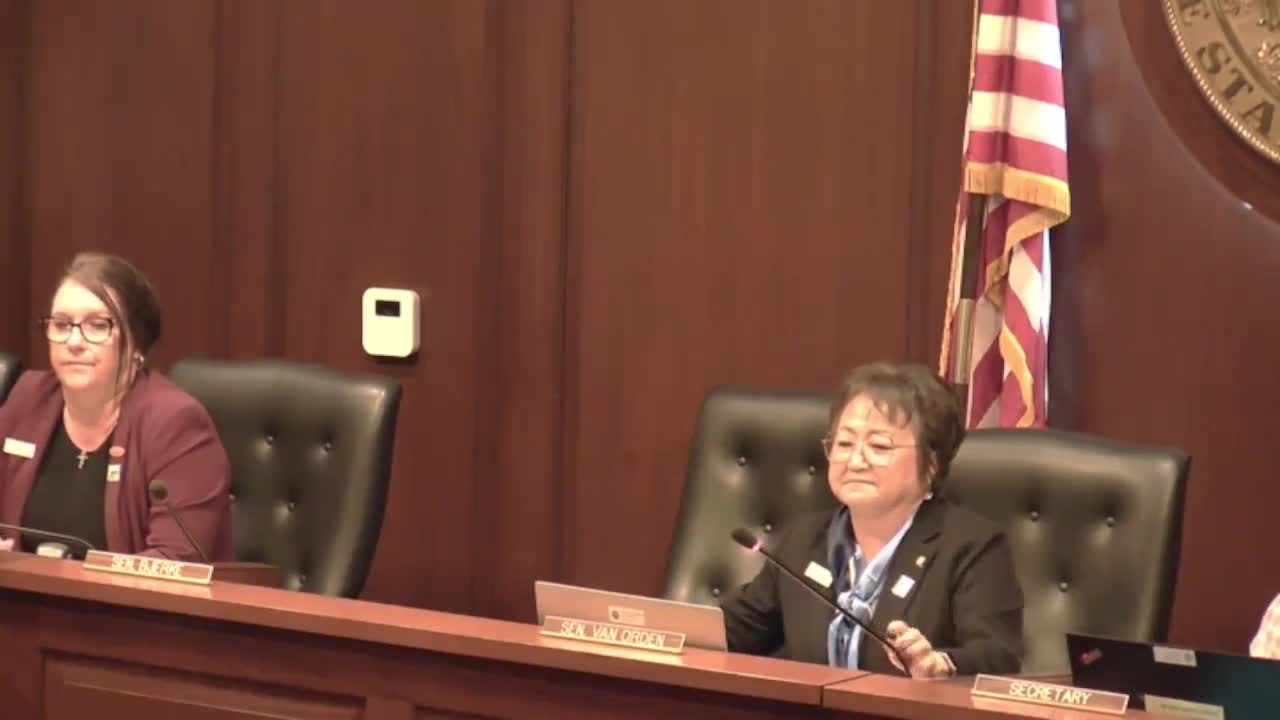
Procedural: Senator Harris moved to send House Bill 245 to the floor with a due‑pass recommendation; Senator Wintrow seconded. The committee approved the motion by voice vote; the transcript does not include a roll‑call tally.
Next steps: With the committee's recommendation, House Bill 245 will advance to the full Senate for floor consideration.