Get Full Government Meeting Transcripts, Videos, & Alerts Forever!
Get email alerts on the Teacher Workforce topic
No spam. Unsubscribe anytime.
Former Idaho teacher tells Senate committee classroom conditions are driving colleagues out of the profession
Summary
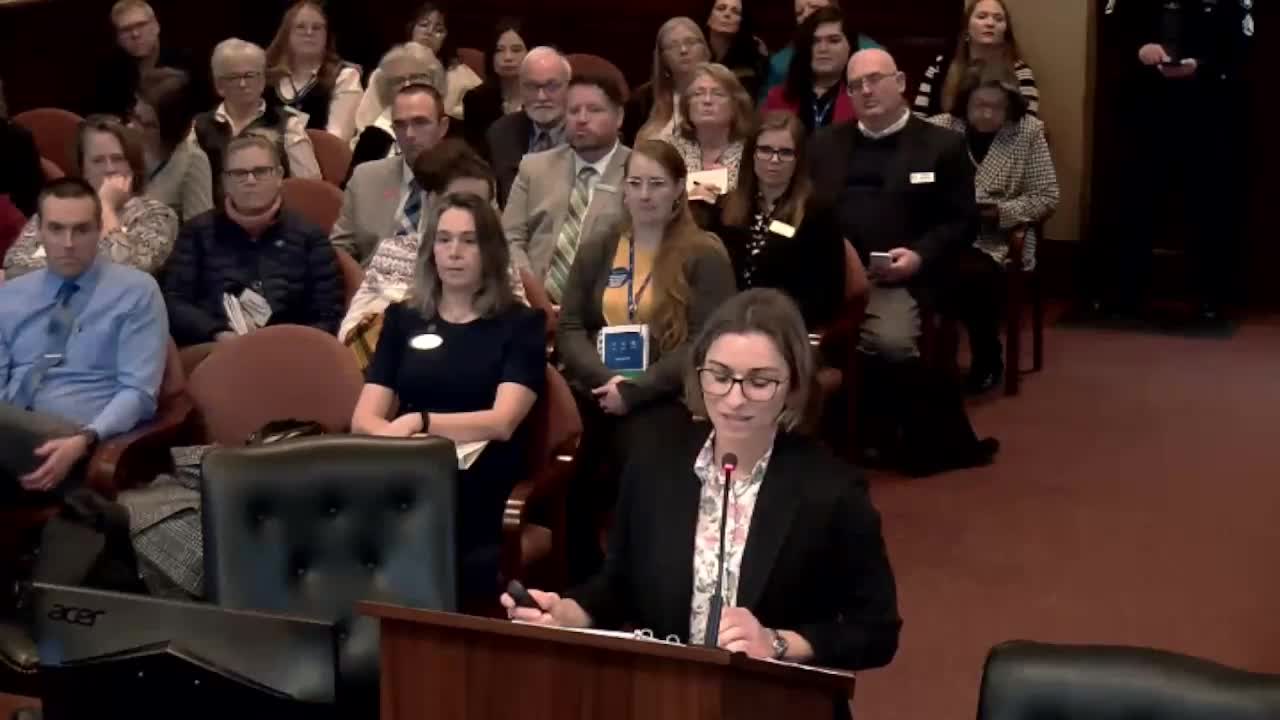
Courtney Linker, a former Idaho classroom teacher, told the Idaho Senate Education Committee in Boise that widespread stress, student behavioral problems and rising nonteaching duties are driving teachers from the profession.
Courtney Linker, a former Idaho classroom teacher, told the Idaho Senate Education Committee in Boise that widespread stress, student behavioral problems and rising nonteaching duties are driving teachers out of classrooms.
Linker told the committee she interviewed 73 teachers in 16 districts and 35 schools to test whether her experience was widespread. "Last year's experience as a classroom teacher broke me," she said, describing a combination of physical and mental strain that led her to take an extended leave.
Linker said her interviews found high levels of anxiety and workload among teachers: 60 percent of those she interviewed said they feel stressed or anxious at work, 55 percent said they feel overwhelmed, and 47 percent said their work has a negative impact on their personal lives. She told senators that only 27 percent of respondents said they believe they will make it to retirement as teachers without changing conditions.
The research behind Linker's presentation focused on the daily responsibilities teachers now carry. She said teachers on average checked 56 of 66 listed responsibilities, and that many tasks on that list have become unusually frequent. Linker said these added duties — from extra meetings and progress monitoring to intensive parental communication and increased monitoring of student wellness and safety — leave little time for classroom instruction and planning.
Linker urged several specific changes she argued would reduce burnout and improve classroom conditions. "No secondary teacher should be responsible for more than 200 kids, and no elementary teacher should be responsible for more than 30 kids," she said. She also asked the Legislature to rework the funding system to provide more counselors, psychologists and behavior-intervention staff, raise pay for paraprofessionals and reduce unnecessary testing and administrative tasks.
Linker criticized Individual Professional Learning Plans (IPLPs) as inconsistently applied and time-consuming. When questioned by Senator Semleroth, she said the IPLP is often tied to the Danielson framework but handled differently across districts, and that many teachers already set professional goals without the added digital paperwork.
Several senators asked about Linker's methods and recommendations. In response to Senator Nichols, Linker said she recruited participants from her professional network but intentionally sought teachers in many different districts to capture a broader sample. Senator Ward Engelking asked whether her experience had caused post-traumatic stress–type symptoms; Linker said the time away was intended to determine whether she wanted to return and that the stress she experienced has been severe.
Public commenter Lori Belaud, introduced earlier, also told the committee that student discipline, parental accountability and teacher support are central to stemming teacher turnover. Belaud recommended stricter behavioral expectations, more consistent phonics and classroom management practices, and stronger administrator supports for teachers.
Linker suggested limiting classroom technology use and cited local examples: she said some districts have seen academic and behavioral improvements after removing student cellphones during the school day. She also proposed legislative consideration of a retirement "rule of 80" to encourage experienced teachers to remain in the classroom.
Chairman Senator Dave Lent thanked Linker for a "frank, straight" report and reminded committee members of the Legislature's constitutional duty to provide a "general, uniform and thorough system of public free common schools" (Article IX, Section 1, Idaho Constitution).
No committee action or vote followed the testimony; senators indicated the information will inform upcoming education legislation and budget discussions.