Get Full Government Meeting Transcripts, Videos, & Alerts Forever!
Get email alerts on the Public Health Masks topic
No spam. Unsubscribe anytime.
Committee advances bill to bar government mask mandates after hours of testimony
Summary
House Bill 32, a measure that would prohibit government officials from requiring masks for disease control in most circumstances, received extensive public testimony for and against it and was sent to the House floor by a 13–2 committee vote.
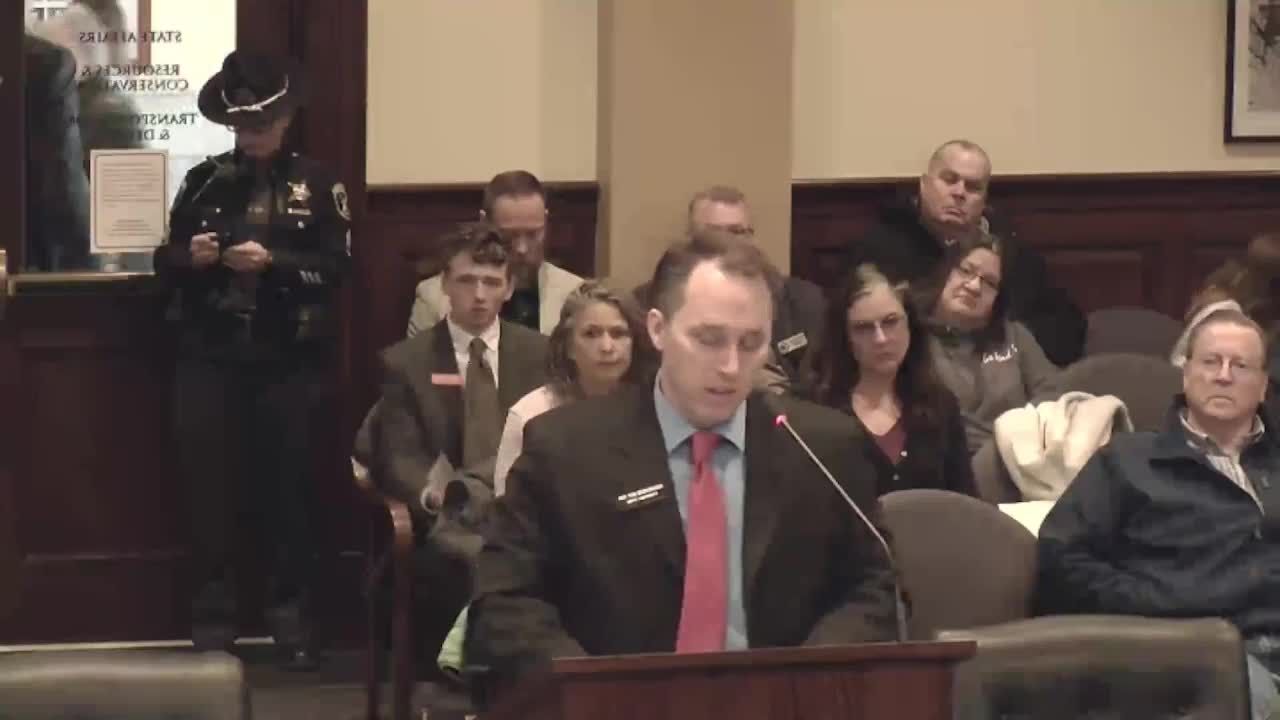
Representative Rob Bieswanger (District 8) introduced House Bill 32 to the House State Affairs Committee as a statutory prohibition on government-imposed mask mandates for preventing disease transmission. “House bill 32 is probably the best bill you're gonna hear all year,” Bieswanger said in opening remarks. He described the bill as protecting individual choice while preserving exemptions for workers who require masks as part of job-related safety measures.
Bieswanger told the committee the bill would bar government officials from imposing jail time or fines for failure to wear a mask; he said officials may still advise or recommend mask use but not impose punitive measures. “This bill simply says, we're not gonna throw them in jail, we're not gonna give them prohibitive fines for it, it just takes it the rights back to the citizens,” Bieswanger said.
Committee members probed the bill’s scope. Questions addressed whether the statute would permit employers or state inspectors to require masks in food-processing or public-health settings, and whether leases and occupational requirements would be affected. Bieswanger and witnesses said the draft contains language exempting vocationally required masks and food-safety measures; several speakers urged clearer language and clause-by-clause review at a hearing.
Public testimony was sharply divided. Supporters included Fred Birnbaum of the Idaho Freedom Foundation, who said the issue remains politicized and argued for statutory protection against future mandates. Small-business owners and several medical practitioners and technicians — including a former chemical-weapons response paramedic who described specialized training in mask fitment — urged passage, citing concerns about economic and operational burdens when mandates were imposed.
Opponents included Kelly Packer, executive director of the Association of Idaho Cities, who said the bill would remove local elected officials’ ability to respond to future, uncertain public-health emergencies. “We stand here in opposition of House Bill 32,” Packer told the committee, asking lawmakers to preserve local authority to act when public-health conditions require it. Several other opponents described experiences of family members with autoimmune disease or long COVID and asked lawmakers to leave public-health authority available to protect vulnerable residents.
After more than an hour of testimony and questions, Representative Scott moved that the committee forward House Bill 32 to the House floor with a due-pass recommendation. The roll call produced 13 affirmative votes and 2 negative votes; the motion passed 13–2.
Ending: The committee’s due-pass recommendation sends House Bill 32 to the full House for further consideration. Committee debate focused on the bill’s exemptions for work-related safety and the balance between individual choice and local public-health authority; the measure now proceeds to the House floor where additional debate and amendment are possible.