Get Full Government Meeting Transcripts, Videos, & Alerts Forever!
Get email alerts on the Psychology Practice Prescribing topic
No spam. Unsubscribe anytime.
Senate committee OKs changes to psychologist licensing to expand prescribing and supervision options
Summary
The Senate Health and Welfare Committee voted to send Senate Bill 1088 to the floor after testimony that the bill would reduce supervisory barriers for prescribing psychologists, add eligible collaborators, expand the definition of service extenders and require background checks for new licenses to comply with the interstate compact (PSYPACT).
Senator Mark Harris, Idaho State Senate, presented Senate Bill 1088 to the Health and Welfare Committee, saying the measure "improves and streamlines the practice of psychology in the state of Idaho by removing unnecessary barriers and deleting obsolete redundant language and making some other changes." The bill was sent to the Senate floor with a due-pass recommendation.
The bill addresses four primary areas, sponsors told the committee: changing supervision requirements for provisional prescribing psychologists to a collaborative agreement model; broadening who may serve as a collaborating prescriber; clarifying that doctoral students whose programs do not award a separate master's may serve as "service extenders" under supervision; and adding a background-check requirement for new licenses (the change would not be retroactive for existing licenses), a step supporters said is necessary for Idaho’s participation in PSYPACT, the psychologists' interstate compact.
Supporters — including contract lobbyist Lance Shiles, who said he represented the Idaho Psychological Association — told the committee the supervision requirement under current law has been a barrier. "The current process of having a supervision agreement with only an Idaho or adjoining state physician has become cumbersome and a barrier to becoming a prescribing psychologist," Senator Harris said, noting that Idaho has had "8 prescribing psychologists since the bill to allow prescribing psychologists went into effect 8 years ago." Senator Harris argued the collaborative agreement model would allow provisional prescribing psychologists to work with "additional experienced prescribers like practice nurses, pharmacists, prescribing psychologists, as well as physicians." Lance Shiles urged the committee to "send Senate Bill 1088 to the floor with a due pass recommendation."
Licensed practitioners who testified in favor described access problems under current requirements. "Service extenders provide a vital service in our state, particularly in our underserved areas," said Dr. Kendra Westerhouse, a licensed psychologist who testified for the Idaho Psychological Association. Dr. Patrick Bartos, a prescribing-psychology program graduate who said he recently moved to Idaho, described securing supervising physicians as a practical barrier: some physicians told him their malpractice insurance would not cover supervision or that administrative burdens made supervision infeasible.
The bill would also remove a permanent advisory panel for prescribing psychologists; sponsors said the panel has "served its initial purpose" and met infrequently. The draft also removes obsolete statutory language and makes other cleanups.
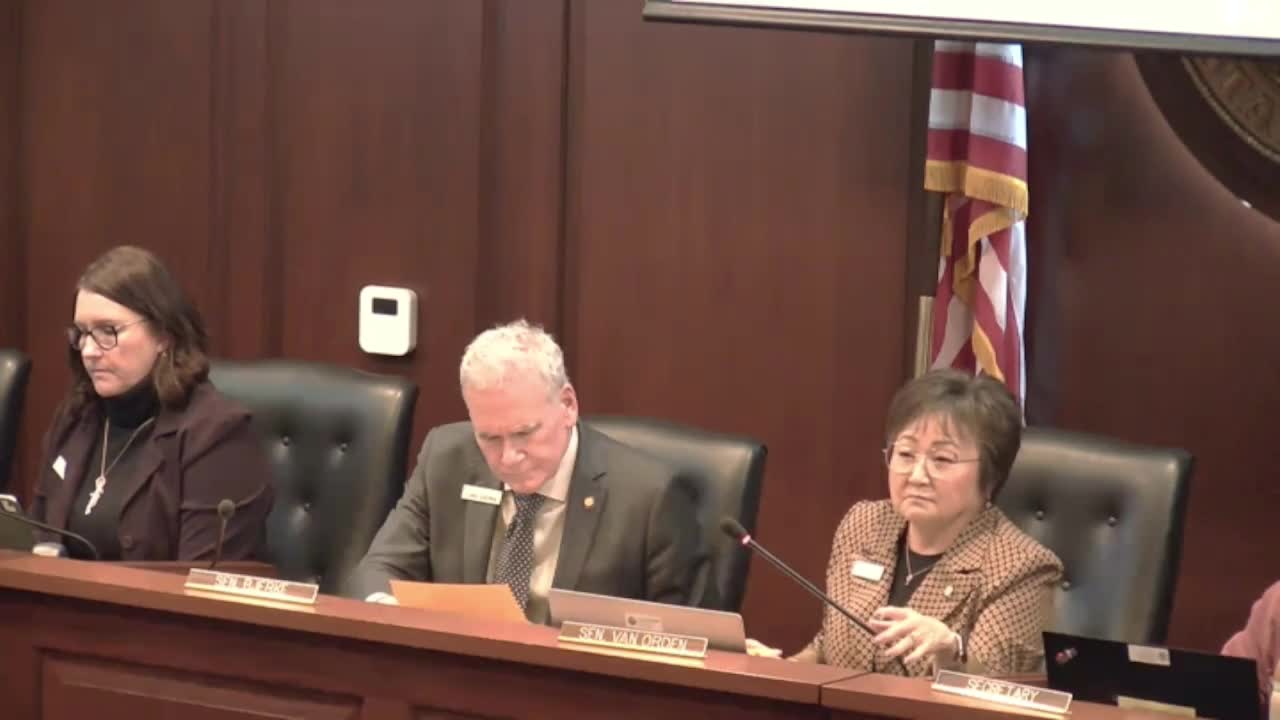
Committee members asked for clarity about the collaborative model and the proposed background-check requirement. Senator Wintrow said she appreciated the sponsor’s briefing packet and that the packet's presentation of the repealed text made it easier to review the changes. After discussion, Senator Keiser moved and the committee seconded a motion to send Senate Bill 1088 to the floor with a due-pass recommendation. The committee approved the motion by voice vote.
The bill’s sponsors and supporters emphasized the measure is designed to expand access to psychopharmacologic care by addressing supervision and credentialing barriers while keeping patient-safety checks such as background checks and collaborative practice in place.