Get Full Government Meeting Transcripts, Videos, & Alerts Forever!
Get email alerts on the Transportation topic
No spam. Unsubscribe anytime.
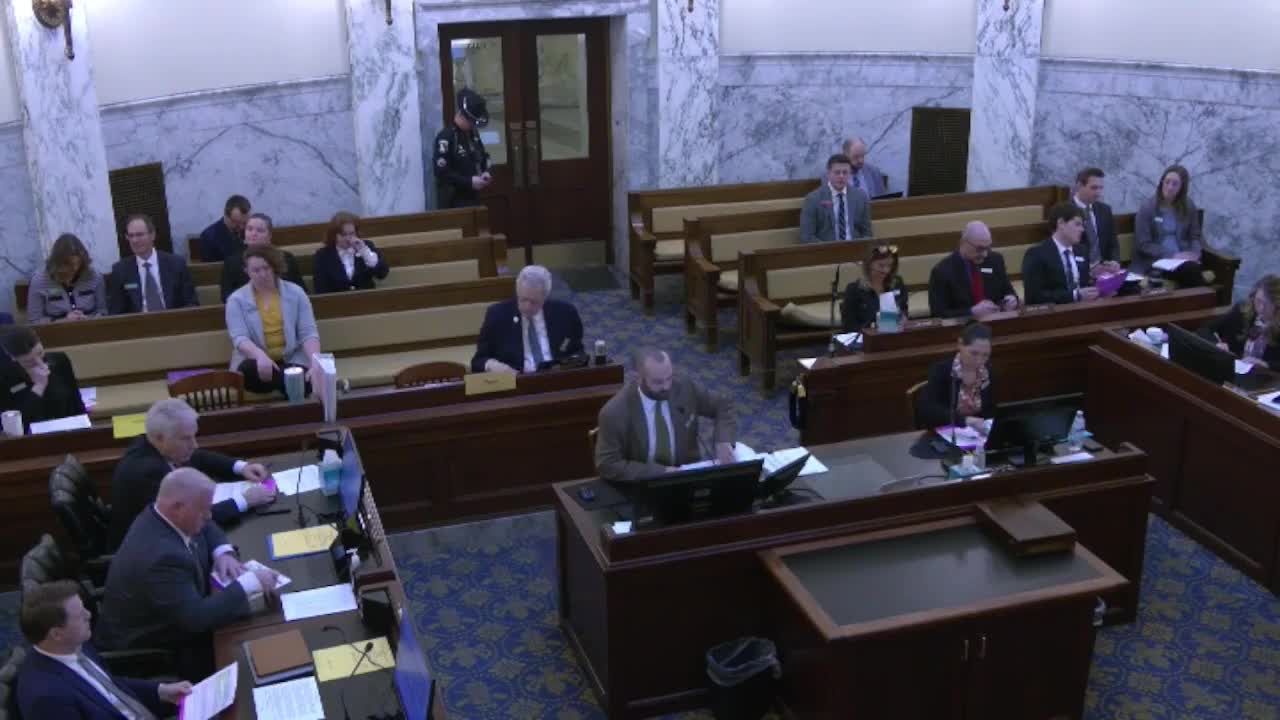
Committee approves $600,000 pilot for student bus-routing software, requires district reporting
Summary
The committee approved a one-time $600,000 general-fund pilot for student transportation routing software, directed participating districts to report savings and outcomes, and asked the Department of Education to return data to the committee.
The Joint Finance-Appropriations Committee approved a one-time $600,000 general-fund appropriation for a student-transportation routing-software pilot and adopted language requiring participating districts to report cost and savings data. Jared Tetro, budget and policy analyst with the Legislative Services Office, told the committee the division’s original request was for $5 million and that committee reductions had reduced the request to the current pilot amount.
Senator Woodward moved the $600,000 pilot allocation for fiscal year 2026. Representative Petzke, who seconded the motion and spoke to the package, said the pilot will start smaller than the agency requested but will allow data collection that can support a larger program later. Petzke said the committee added language requesting that “any districts or charters that use this software report to us the savings that they generate so that we can hopefully fund this at a higher level in the future.”
Committee members asked how many districts had expressed interest and how many buses the pilot would cover. Tetro said a department survey received responses from about 70 districts and charters and that most indicated interest; the co-chair later said 43 districts had expressly indicated interest. The motion’s financial assumptions used $1,500 per bus, which committee members calculated would cover approximately 400 buses at the $600,000 level.
Members also discussed the pilot’s evaluation timeline. If contracts and implementation begin by August, staff said districts would have roughly four months of data by the time the next legislative session starts and about a full year of data for the committee’s review if the contract runs the full year. The committee adopted screen language requiring participating districts or charters to track necessary data — including costs and savings — and to report back to the legislature after one full year of data. The motion and language passed and will be reported with a due-pass recommendation.
The appropriation is one-time funding; committee members said the pilot is intended to provide evidence for whether the program should be expanded in future budgets.