Get Full Government Meeting Transcripts, Videos, & Alerts Forever!
Get email alerts on the Conflict Of Interest Dual Service topic
No spam. Unsubscribe anytime.
Rep. Ehart introduces measure to bar dual service in certain state-funded local offices
Summary
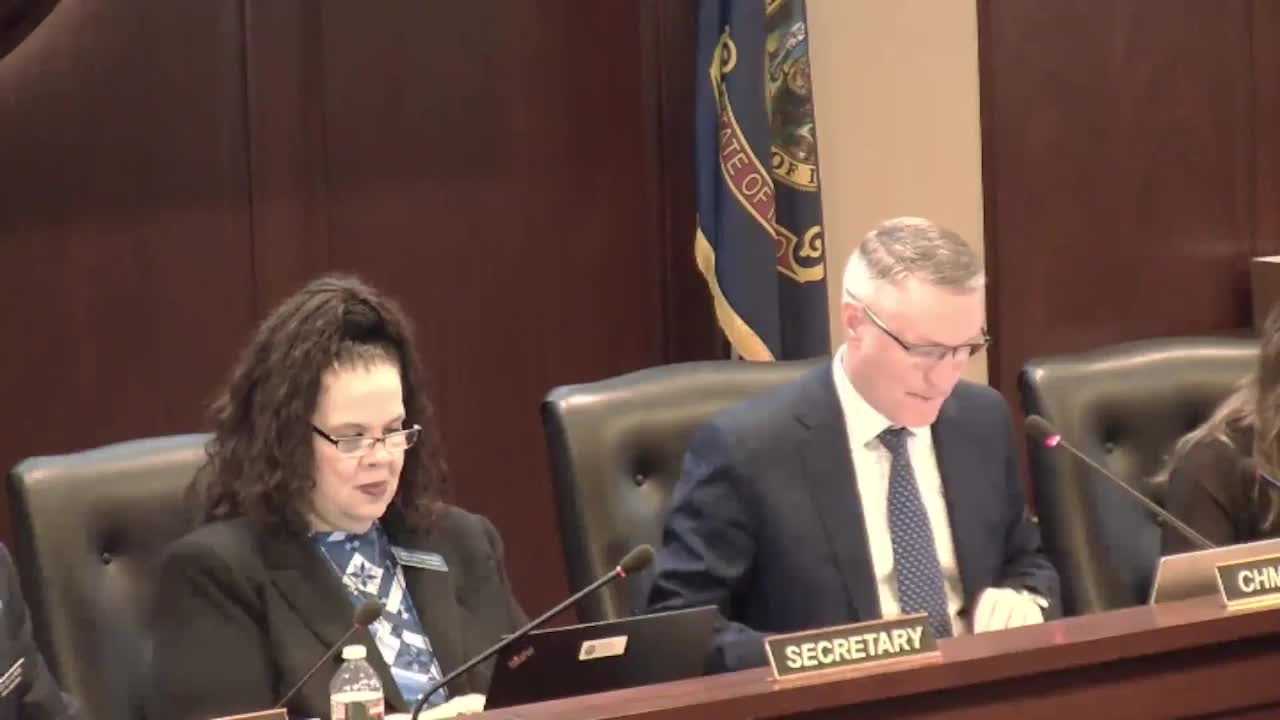
Representative Barbara Ehart introduced RS32539, a proposal to clarify that state legislators may not simultaneously serve in certain local, nonpartisan offices that directly receive state funds; the proposal includes exemptions for very small jurisdictions.
Representative Barbara Ehart introduced RS32539, a proposal intended to clarify conflict-of-interest rules by barring legislators from simultaneously serving in certain local, nonpartisan offices that directly receive state funds.
Ehart said the measure targets situations where a person is an elected official at the state level while also serving “in a nonpartisan such as a mayor, city council or highway taxing district where you're directly receiving those monies and funds from the State,” a circumstance she described as a “conflict of interest and concentration of power.” She told the committee the measure seeks to reduce that conflict by clarifying existing rules.
Committee members asked a series of clarifying questions about which local entities would be covered. Representative Mickelson asked whether irrigation, ground water, cemetery or fire districts would be included. Ehart replied the bill would apply to “city councils, mayors, and highway districts, those main entities that receive major state funds.” She also said the bill includes exemptions for small jurisdictions: cities under 1,000 population and school districts under 500 students would be exempt from the prohibition.
Representative Scott moved to introduce RS32539 and the committee approved the motion by voice vote.
Ehart said the change responds to “many complaints” about current practice; committee members requested additional details such as the share of school districts below the 500-student threshold, which Ehart said she could provide at a later time.