Get Full Government Meeting Transcripts, Videos, & Alerts Forever!
Get email alerts on the Aging Services topic
No spam. Unsubscribe anytime.
Commission on Aging asks to use remaining ARPA funds, requests small ongoing increases for FY2026
Summary
Agency officials told the Joint Finance-Appropriations Committee the Idaho Commission on Aging used federal ARPA awards for one-time modernization and caregiver supports, and is requesting modest ongoing general-fund increases and a final one-time federal draw before ARPA expires on Sept. 30, 2025.
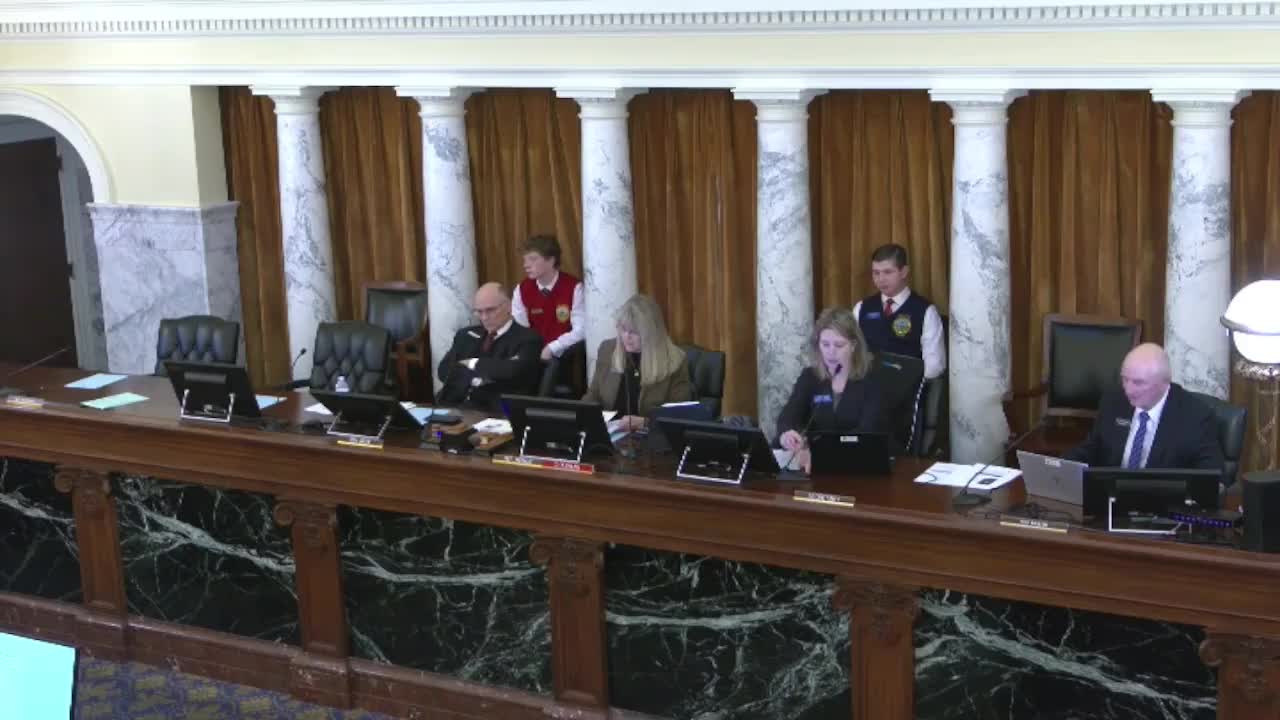
The Idaho Commission on Aging asked the Joint Finance-Appropriations Committee on Feb. 24 to allow it to use remaining federal American Rescue Plan Act (ARPA) funds for one-time projects and to approve modest ongoing general-fund increases for FY2026.
Budget and policy analyst Colin McGurkin of the Legislative Services Office told the committee the commission implements the federal Older Americans Act and the Idaho Senior Services Act and “keeps aging Idahoans safe and healthy in the communities of their choice” through local Area Agencies on Aging (AAAs). He said the commission expended $16.7 million in fiscal 2024, with about 88% of that in trustee and benefit payments that support local AAAs: roughly $10.4 million in federal funds and $4.2 million from the general fund.
McGurkin said the commission has used recurring one-time federal ARPA awards since FY2022 for meal services, caregiver supports and facility modernizations, including about $5.2 million in one-time ARPA appropriations in FY2024 and roughly $7.4 million in ARPA-related expenditures the analyst cited overall. He told the committee the commission requested a one-time federal appropriation of $500,000 to pay final invoices and draw down remaining ARPA funds before the federal access deadline of Sept. 30, 2025.
Why it matters: The commission’s work supports meals, transportation, caregiver assistance and adult protective services for older Idahoans; the agency said ARPA funds were used for modernization and temporary service enhancements and therefore will not create ongoing obligations.
Director Judy Taylor, who introduced herself as director of the Idaho Commission on Aging, told the committee the agency followed guidance to use one-time ARPA money for one-time needs. She said some ARPA-funded items — for example, membership fees for Adult Protective Services staff that provided access to training — will end when the funds expire. Taylor said community health workers supported a high-risk caregiver pilot; those positions will continue through remaining funds and by reprioritizing respite hours and other services if needed.
The commission’s FY2026 request aligns with the governor’s recommendation and asks for $162,600 ongoing from the general fund to cover inflationary increases; McGurkin said $155,000 would fund a 3% increase in trustee and benefit payments distributed to AAAs, and $7,600 would cover a 2% increase in operating expenses for the commission itself. FY2025 enhancements highlighted in the presentation include 1.0 FTP and $76,700 ongoing for a financial specialist and $805,000 ongoing from the general fund to AAAs for nutrition-program funding intended to reduce wait lists and increase meals served.
Taylor said nutrition is a top priority and that, with money appropriated last session, the commission increased meal rates 25 cents per meal for congregate and home-delivered meals and eliminated the previous home-delivery wait list. “As of today we have no waiting lists in Idaho,” she told the committee.
Committee members asked for more detail about Alzheimer’s/dementia spending, staff portions charged to ARPA, how community health workers were funded and the $25,000 item for personnel costs to bill staff time to federal awards. Project manager Vicki Janzick explained that staff administrative time is direct-billed to the appropriate federal grant rather than other federal funding sources; the $25,000 covers staff time for processing invoices and monitoring subrecipients that can be charged to those federal grants.
Taylor closed by reiterating the commission’s mission to prevent institutionalization and to invest appropriated funds toward monitored outcomes.
Ending: Committee members did not take a formal vote on the commission’s request during the hearing; staff said follow-up information (detailed Alzheimer’s/dementia spending, exact ARPA staff-charge percentages and the composition of the nutrition base) would be provided to the committee by email.