Get Full Government Meeting Transcripts, Videos, & Alerts Forever!
Get email alerts on the School Security topic
No spam. Unsubscribe anytime.
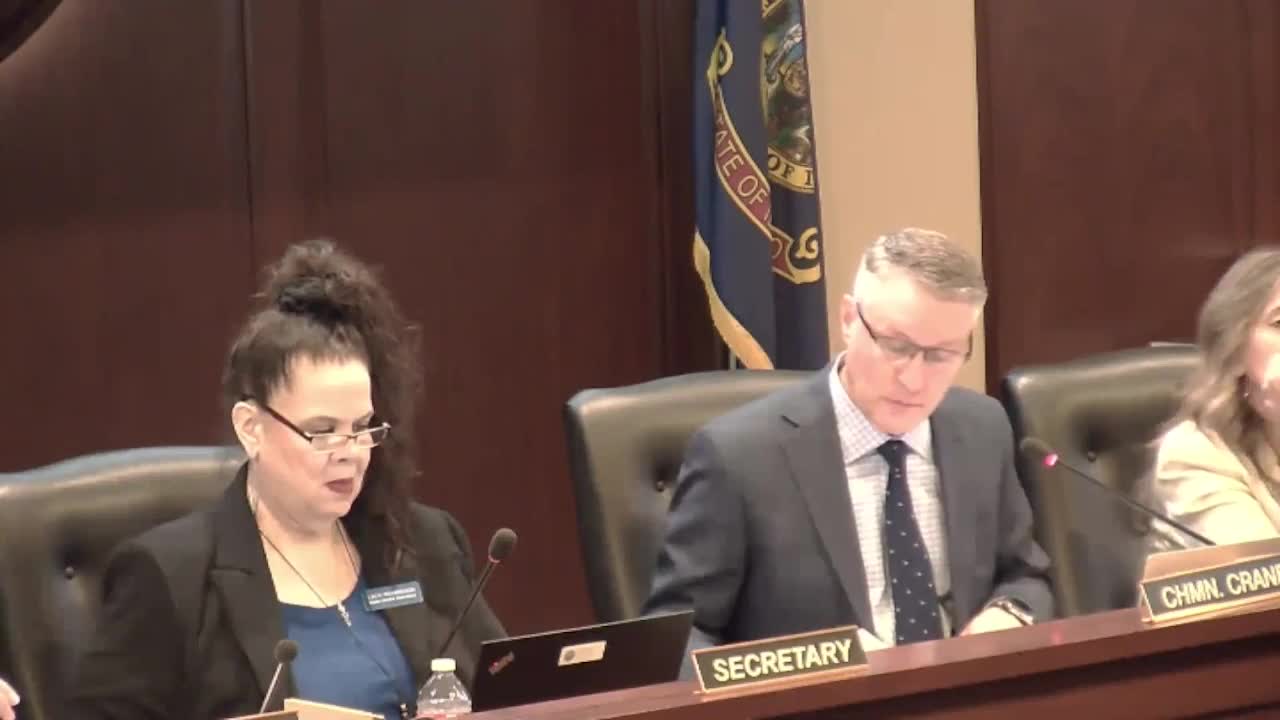
Idaho bill would let school employees carry concealed firearms after POST training; lawmakers debate costs, liability and school board authority
Summary
Representative Ted Hill introduced RS 32342 to allow school employees to carry concealed handguns on campus after state-certified POST training; committee members asked about training costs, ammunition limits, confidentiality and whether school boards could prohibit carriers. The committee voted to introduce the draft for a future hearing.
Representative Ted Hill, R-District 14 (Eagle and Emmett), told the House State Affairs Committee that RS 32342 would permit school employees who complete specified POST-certified training to carry concealed handguns on school property.
The bill, Hill said, pairs statutory authorization with standards he described as “scenario-based” and comparable to law enforcement training. “The best way to solve this problem is to have armed guards,” Hill said, adding that the draft allows schools or school boards to set the level of training up to six days of POST training and requires recurrent qualifications.
The measure is aimed at preventing mass shootings at schools, Hill said, noting concerns about police response times. “Police average response is between 6 and 12 minutes,” he said, calling on a deterrence effect where potential attackers would be less likely to target campuses if some employees might be armed.
Why it matters: The proposal would change longstanding policy that makes most school grounds gun-free zones. It seeks to create a state-level framework for training, ammunition and recurring qualifications while limiting the discretion of local school boards in deciding whether employees may carry under the statute.
Key provisions and details mentioned in committee - POST training: Hill said the bill relies on POST-certified instruction; the draft contemplates up to six days of scenario-based training and an annual or semiannual range qualification. “You shoot like 1,500 rounds, 6 days scenario-based training,” Hill said. - Cost and payment: Hill told the committee the POST course would likely cost “$500–$600” per participant and that attendance would generally fall to highly motivated individuals; he said the individual would likely bear the cost unless a local district chose otherwise. - Ammunition and weapons: The draft limits authorized firearms to handguns and specifies hollow-point ammunition for loaded concealed handguns on campus, a change Hill said came from police recommendations because hollow points “are very specific to the target” and “ball goes through walls and hollow point is not.” - Recurring training/qualification: Hill said the draft requires range qualifications twice per year. - Confidentiality: The bill text states school boards “shall maintain confidentiality” of names of employees authorized to carry; Rep. Kiehlis and others questioned whether confidentiality undermines any deterrent effect. - Liability: Hill said employees would be personally responsible for any use of their firearms, saying “every bullet has a lawyer hooked to it.”
Committee questions and concerns Committee members pressed Hill on fiscal and implementation details. Rep. Green asked who pays for POST training; Hill said it would likely be the individual and recommended clarifying that in the fiscal note. Rep. Kiehlis asked how confidentiality of authorized carriers aligns with the bill’s claimed deterrent effect; Hill replied that local knowledge and informal dissemination would produce deterrence even if formal lists remain confidential. Rep. Achilles asked whether a school board could still bar an employee; Hill said the draft was designed to limit that option and provide a statewide standard rather than leave the decision solely to local boards.
What the committee did Representative Alfieri moved to introduce RS 32342 for further consideration. The committee voted in favor; the motion carried and the bill will be scheduled for a future hearing.
Next steps Hill said he expects a fuller hearing with more details and supporting material on POST training and operational implementation. Committee members asked for clearer fiscal-note language and other clarifications ahead of that hearing.