Get Full Government Meeting Transcripts, Videos, & Alerts Forever!
Get email alerts on the Workforce Training topic
No spam. Unsubscribe anytime.
College of Eastern Idaho tells JFAC growth strains capacity; seeks portion of statewide CTE funding
Summary
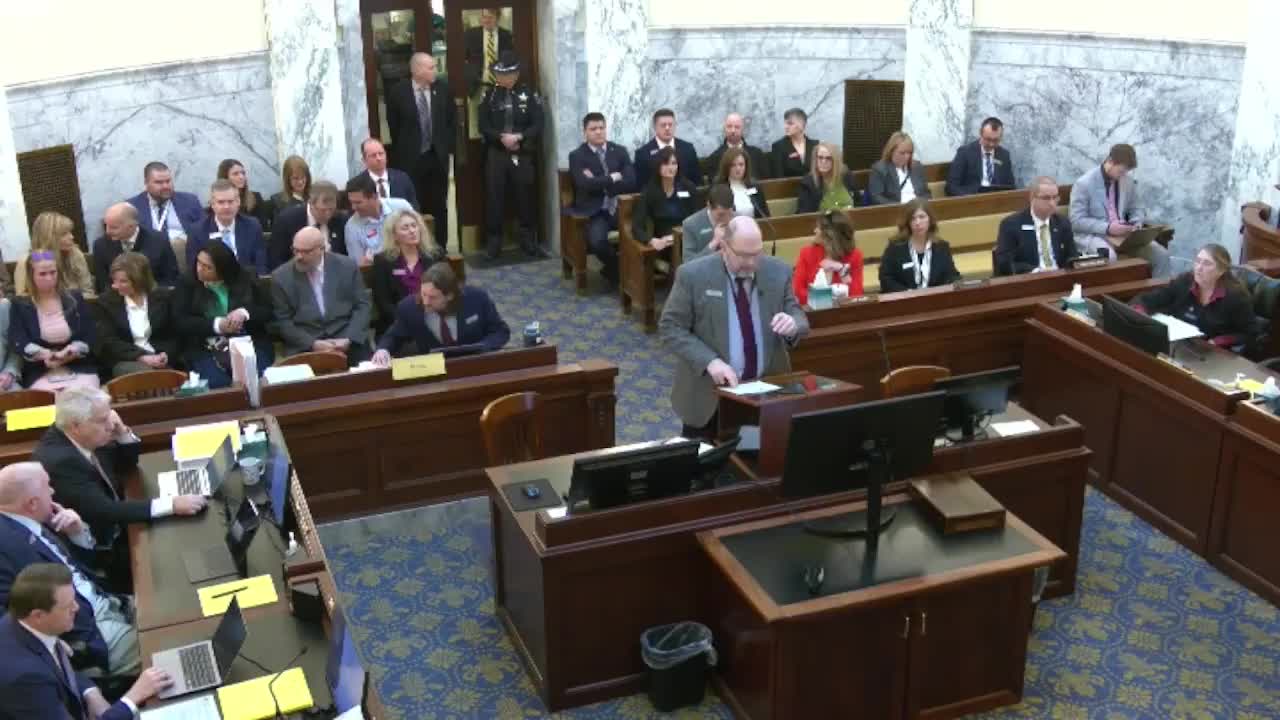
College of Eastern Idaho President Laurie Barber told the Joint Finance-Appropriations Committee that CEI’s rapid growth has outpaced facility, faculty and student-support capacity and that the college would use state CTE funds to expand program seats and update equipment.
College of Eastern Idaho President Laurie Barber told the Joint Finance-Appropriations Committee that CEI’s rapid growth has outpaced facility, faculty and student-support capacity and that the college would use state CTE funds to expand program seats and update equipment.
Barber, who introduced herself as president during the hearing, said CEI has expanded from about 700 students at the time it was Eastern Idaho Technical College to roughly 3,600 degree-seeking students and more than 14,000 workforce-training participants. She told the committee CEI’s FY 2024 appropriation was $7,003,700 and FY 2025 was $7,700,000.
Why it matters: Barber asked JFAC to support a statewide package the committee is considering that includes $25 million for postsecondary institutions and a $10 million ongoing bucket for community and technical college CTE expansion. She said an ongoing increase of $2 million to CEI’s general fund allocation from that $10 million would be “transformational” for the college’s ability to expand CTE capacity.
Capacity and wait lists: Barber told the committee CEI is capacity constrained across facilities, faculty and equipment. She said that in fall 2024 CEI had about 465 CTE students who were not able to get a seat in their chosen program and that the college has expanded nursing enrollment from 35 students in 2017 to capacity for 220 students. Barber said employer partnerships have helped CEI expand training — she cited Idaho National Laboratory (INL) providing instructors that nearly doubled CEI’s cybersecurity enrollment and an example with Teton Toyota that combines on-the-job training with classroom instruction — but said employer support cannot fully substitute for institutional capacity, equipment and academic staff.
Budget history and EWA: Kevin Campbell, the Legislative Services Office analyst, summarized CEI’s budget history for the committee. He said CEI typically spends all of its state appropriation and that CEI’s five-year average base-budget growth is about 7%, with FY 2023 an outlier year that included CEC and enhancements. Campbell said CEI received several EWA additions in recent years and listed ongoing enhancements included in FY 2024 and FY 2025.
Compensation and staffing: Barber told the committee CEI has difficulty retaining staff and faculty because local industries sometimes offer substantially higher pay. She said an analysis showed 20 full-time faculty below the local K–12 salary average (around $62,000) and that bringing adjuncts and full-time faculty to competitive levels would require approximately $2.26 million.
Planned use of CTE funds: Barber said CEI would spend CTE funding on updated equipment (for welding, fabrication, mechatronics, nursing and other in-demand fields), additional faculty in prerequisite science and math courses needed to expand CTE throughput, and expanded student supports. She emphasized the college’s desire to serve more local students and to supply regional employers with trained workers.
No formal votes took place. Committee members asked CEI to provide further program- and capacity-level detail to inform budget decisions and indicated staff would model EWA calculations across institutions for comparison.