Get Full Government Meeting Transcripts, Videos, & Alerts Forever!
Get email alerts on the Public Health Budget topic
No spam. Unsubscribe anytime.
Department seeks to restore public health programs, requests data and workforce funding
Summary
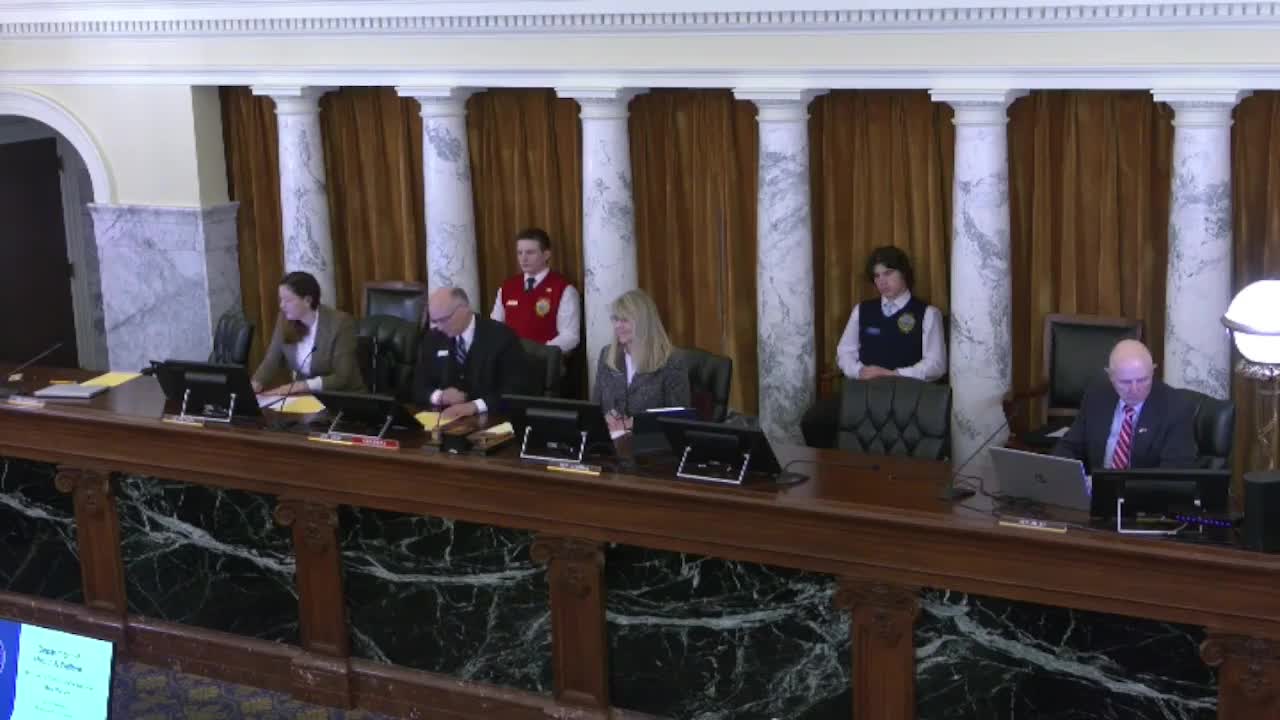
At a Joint Finance-Appropriations Committee hearing, Idaho Department of Health and Welfare leaders described a budget request to restore multiple ongoing public health programs, finish ARPA-funded data projects and fund workforce incentives including a rural physician loan-repayment program.
The Joint Finance‑Appropriations Committee heard that the Idaho Department of Health and Welfare is asking the legislature to restore ongoing funding for multiple programs in the Division of Public Health Services and to approve one‑time and ongoing enhancements for data modernizations and workforce retention.
Division budget manager Keith Bybee told committee members the division's fiscal picture reflects the downstream effects of federal COVID relief funding, and that the department is asking to restore programs that were moved from ongoing to one‑time appropriations. "This year they had 1 supplemental request, for a cancer data registry. This was a technical correction that was passed by JFAC on 01/17," Bybee said, pointing committee members to the budget book sections that list one‑time and ongoing requests.
Why it matters: The Division of Public Health Services administers programs ranging from immunizations, maternal and child health and vital records to emergency medical services, laboratory services, suicide prevention and public‑health preparedness. Changes to the division's baseline and to one‑time project funding would affect service delivery, data reporting and contracts with local public health districts and community providers.
Most important details
- Size and structure: The division's fiscal 2025 appropriation was shown as about $164.0 million; the department described a correction in spending patterns that followed large CARES Act and ARPA grants earlier in the decade. Beebe said many programs were converted from ongoing to one‑time funding, creating a structural issue the department is asking the legislature to address.
- One‑time/ARPA items: The department listed a set of one‑time enhancements (agency request column totals shown as $8,752,500) that the governor recommended in whole. These include Vital Statistics data modernization, WIC system modernization, data modernization grants and a continuing communicable disease prevention grant that would support 4.4 limited‑service positions.
- Ongoing restorations requested: The department requested roughly $20.8 million in ongoing restorations and the governor recommended about $21.5 million. Notable items described in detail by staff included: - Suicide prevention: request of $1,807,700 general fund and $195,000 federal funds to support activities of the legislative suicide prevention program established in 2016. - Drug overdose prevention: request to restore 4 full‑time equivalent positions and $2,820,200 ongoing for the Drug Overdose Prevention Program (in place since 2017). - Refugee health screening: request to restore 1.5 FTE and $991,000 ongoing for the Idaho Refugee Health Screening Program (in operation since 2010). - Women, Infants and Children (WIC) supplemental nutrition: restoration of $6,944,600 ongoing to support the supplemental nutrition grant that works with WIC services. - Programs to support diabetes, HIV prevention, oral‑health workforce, hepatitis surveillance and other block‑grant programs were also listed for restoration at amounts described in the department presentation.
- Immunization and vital records: The division requested $2,500,000 ongoing from dedicated funds for the Idaho immunization program and $150,000 ongoing from dedicated funds for the Bureau of Vital Records and Health Statistics to help automate and speed processing of birth, death and other vital records.
- Home visiting and rural physician incentives: The department requested $725,900 ongoing in federal funds for home visiting services targeted by needs assessments and a governor's initiative of $500,000 general fund to expand medical education loan repayment under the rural physician incentive program for providers in federally designated shortage areas.
Questions and context from committee members
Committee members pressed the department on the rationale for keeping programs within Public Health Services rather than moving them to other agencies. Representative Price asked whether programs such as Alzheimer's/dementia services and the Fit and Fall Proof program should be moved to the Commission on Aging; Director Alex Adams said the department's focus is prevention and that program placement should reflect where the prevention work is done, but the department remains open to transfers if another agency can perform the work better. "We're certainly open to discussions on where each of these programs fits best and if other agencies can do them better than we are, we're more than happy to transfer," Adams said.
Senators and representatives also asked for more detail on the ARPA and data modernization work before additional funding is approved; Adams said the department will supply committee members a summary of what has been completed and what remains to be done. Senator Cook asked the department to provide a written update on system upgrades and the status of prior ARPA projects.
What the department said about workforce and measurement
Adams and division administrators described a related push to improve performance measurement across programs. Bybee and Adams emphasized the budget exercise was intended as a "healthy exercise" in reviewing ongoing needs and removing or timing funding where appropriate. Elke Shaw (division administrator for public health services) and Chief Financial Officer Misty Lawrence joined Adams in answering questions about program outcomes and capacity.
What did not happen
There were no committee votes or formal motions recorded in the hearing transcript. Staff and members asked for follow‑up materials and for technical corrections to some supplemental requests (for example, the cancer registry supplemental that JFAC passed on Jan. 17). No legislation was adopted during the session transcripted.
Looking ahead
Committee members signaled they will review the materials, follow up with analysts and staff, and consider the balance between restoring baseline funding and allowing programmatic reorganization. Adams said the one‑time/maintenance timing helped the department and the committee review major programs and recommended members contact analysts for detailed follow‑up on individual items.
Ending
The hearing moved on after roughly an hour of questions about Public Health Services, with committee leaders asking members to submit follow‑ups and staff promising a summary of system modernization work.