Get Full Government Meeting Transcripts, Videos, & Alerts Forever!
Get email alerts on the Water Resources Budget topic
No spam. Unsubscribe anytime.
Department of Water Resources requests 5 new staff, $30 million ongoing and outlines $293 million in committed projects
Summary
At a legislative budget hearing, the Idaho Department of Water Resources told legislators it needs five new water‑administration positions, a public information officer and $30 million in ongoing general‑fund support to manage a surge of projects and new administrative duties.
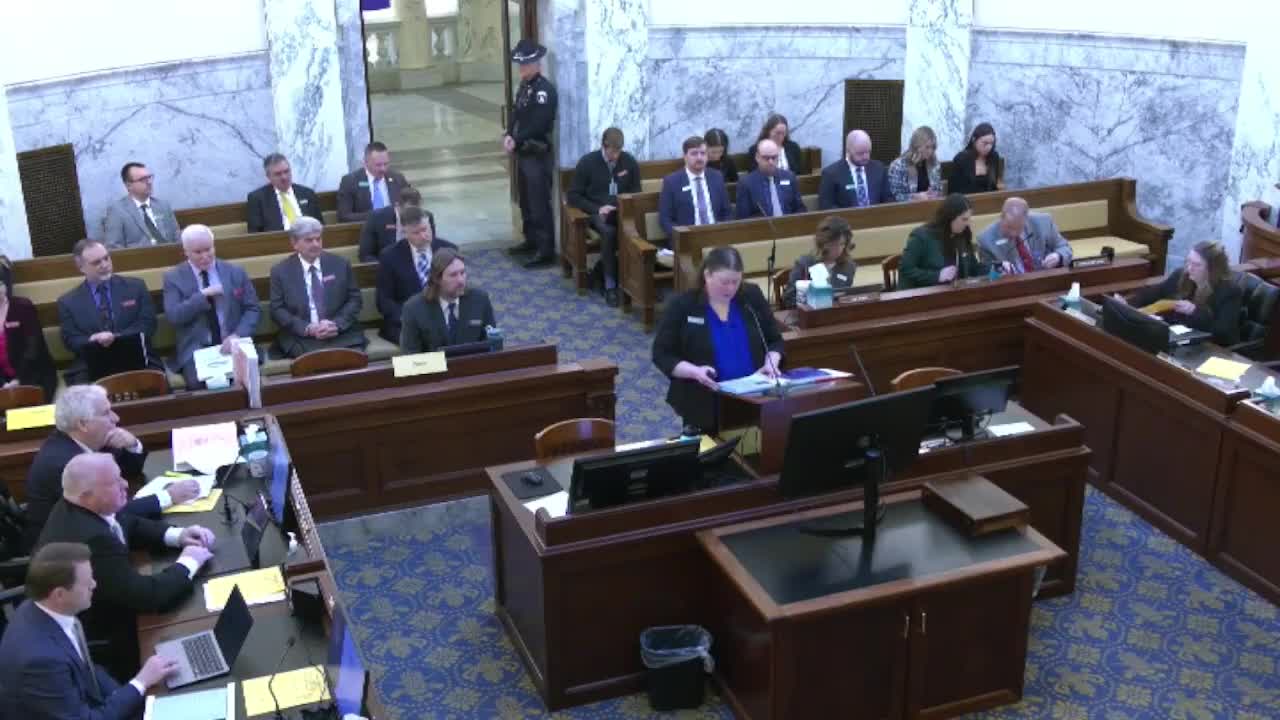
At a legislative budget hearing, the Idaho Department of Water Resources told members of the Joint Appropriations Committee that it needs five new positions to form a Water Administration Bureau, a public information officer and $30 million in ongoing general-fund support to advance statewide projects and meet new administration duties.
The department, represented by Director Matthew Weaver and Water Resource Board Chairman Jeff Raybould and introduced by Janet Jessup, a legislative budget analyst, told legislators the agency is carrying large appropriations from recent infusions of federal and state funds — including American Rescue Plan Act (ARPA) state fiscal recovery monies — and that most of those funds are already committed to named projects.
The additional staff would be grouped with existing personnel in a new Water Administration Bureau that the department says is needed to support creation and ongoing operations of water districts, perform real-time measurement and administration demanded by a recent settlement on the Eastern Snake Plain Aquifer (ESPA), and handle growing workloads tied to transfers, adjudication and water-right changes. Weaver told the committee the five requested positions include a bureau chief and technical records support, while the public information position would be repurposed from an existing vacancy.
Jessup, the legislative analyst, said the department’s fiscal materials and interactive GIS project map are on the committee SharePoint. She said the department’s base staffing was about 170 full-time positions and that in 2024 the agency expended roughly 87–90% of its personnel appropriation and operated near a typical vacancy rate. She also flagged that the agency’s recent increase in expenditures is tied to ARPA funds: roughly $50 million of ARPA funding was one-time and another $50 million was treated as ongoing when added to the base in fiscal 2023.
Why it matters: committee members pressed agency leaders on whether the department can administer a rising slate of water projects while meeting obligations in the ESPA settlement and scaling up monitoring and recharge work. If the department lacks staff and dedicated ongoing funding, projects and compliance tasks may be delayed.
Key fiscal and program details
- Water management account balance and commitments: Director Weaver and Chairman Raybould summarized the water management account cash flows through Dec. 31 of the prior year. They reported an ending fiscal 2024 cash balance of roughly $293 million, about $38 million in revenues through Dec. 31, and roughly $11.2 million in expenditures, yielding a cash position around $320 million. Of that, the board has adopted commitments of about $290 million, leaving roughly $29 million in uncommitted cash for new awards.
- Loans outstanding: Raybould estimated roughly $23 million in outstanding loans in the revolving development account and about $20 million in loans out of the water management account.
- ARPA and other federal inputs: The agency said ARPA state fiscal recovery funds account for a large share of the recent growth in operating and trustee/benefit payments; one prior appropriation included $50 million one-time and $50 million ongoing. The department also cited additional federal funding from the Bipartisan Infrastructure Law for some remediation and wastewater activities (amounts noted in committee materials).
Selected projects funded or supported from water-management and related accounts
- Mountain Home Air Force Base water-supply pipeline and pumping station completion. - Anderson Ranch Dam raise planning and related work (state share under the WIN Act was discussed). - Pipeline to a fish hatchery fed from Dworsha Dam and related fisheries projects. - Work to secure additional usable storage or carryover in Bear Lake. - Priest Lake water-management project adjustments and added funding. - Lewiston Orchards irrigation district conversion/reuse project, with partial funding and Bureau of Reclamation involvement to protect instream flows and fish habitat. - Raft River pipeline and regional sustainability grants and loans for irrigation-district organization and engineering. - Treasure Valley water supply assessment and planned recharge work to address rapid development. - Programs to convert groundwater irrigators to available surface water where feasible (groundwater-to-surface conversions).
Recharge and administration needs
Agency leaders emphasized two linked priorities: adding managed recharge capacity and expanding water administration. The department said it and private actors together have averaged about 600,000 acre-feet per year of aquifer-management activity (state-sponsored recharge averaged about 268,000 acre-feet annually; private recharge averaged about 116,000 acre-feet and private pumping reductions about 212,000 acre-feet over a recent multi‑year period). The water board supported raising the ESPA recharge target from an average annual goal of about 250,000 acre-feet to 350,000 acre-feet, and Raybould said the Upper Valley likely needs roughly an additional 1,000 cubic feet per second of instantaneous recharge capacity to reach that target.
Director Weaver described the administrative burden tied to the ESPA settlement: approximately 5,000–6,000 wells on the ESPA will be expected to report head measurements in real time under the settlement schedule, and Weaver said full implementation of real-time measurement could require 12–15 full‑time staff if the department carried the entire load — though the department proposed a leaner five‑position enhancement combined with increased contributions by groundwater districts and water districts.
Other budget items discussed
- Laserfiche conversion: the department is converting roughly 75 forms to electronic submission using Laserfiche; the agency characterized the remaining phase as a one‑time request (Jessup noted a placement error in the materials and that it should be in one‑time rather than ongoing).
- ArcGIS licensing: the department requested $58,500 ongoing for additional ArcGIS license costs tied to moving to a different licensing model; staff said the change reflects a new license type rather than simple contract inflation.
- Personnel: the department reported near‑historic staffing concentrated in water management, planning and technical services. The five requested FTEs would be paired with about 11 existing water‑administration staff to form the proposed bureau.
Committee reaction and next steps
Lawmakers pressed the department on the size and timing of projects and whether the agency could move money into active project spending faster. Chairman Raybould and Director Weaver described typical project timelines: engineering and planning can take years, and the board usually advances funding in stages as work progresses and invoices are submitted. Weaver and Jessup told the committee they will follow up with the committee on the statewide project list and the detailed SharePoint PDFs that break out committed versus unspent balances.
Provenance: committee materials and on‑record presentation and Q&A by Janet Jessup, Director Matthew Weaver and Chairman Jeff Raybould at the legislative budget hearing. The presentation and detailed fund sheets are available on the committee SharePoint and were cited repeatedly by the analyst during questioning.
Ending
Committee members said they will review the project lists and budget materials Jessup referenced and may press for more detail on project timing, loan balances and how an ongoing $30 million transfer would be prioritized. The department emphasized it seeks a mix of staffing enhancements and ongoing funding to meet both immediate administration needs and multi‑year capital and recharge work.