Get Full Government Meeting Transcripts, Videos, & Alerts Forever!
Get email alerts on the Cei Cte Capacity topic
No spam. Unsubscribe anytime.
College of Eastern Idaho urges $2 million ongoing from community‑college CTE bucket to address wait lists and staffing
Summary
New CEI President Lori Barber told JFAC CEI has outgrown its original campus, is capacity constrained for CTE and workforce programs, and would use a share of a proposed $10 million community‑college CTE fund to expand programs and hire faculty.
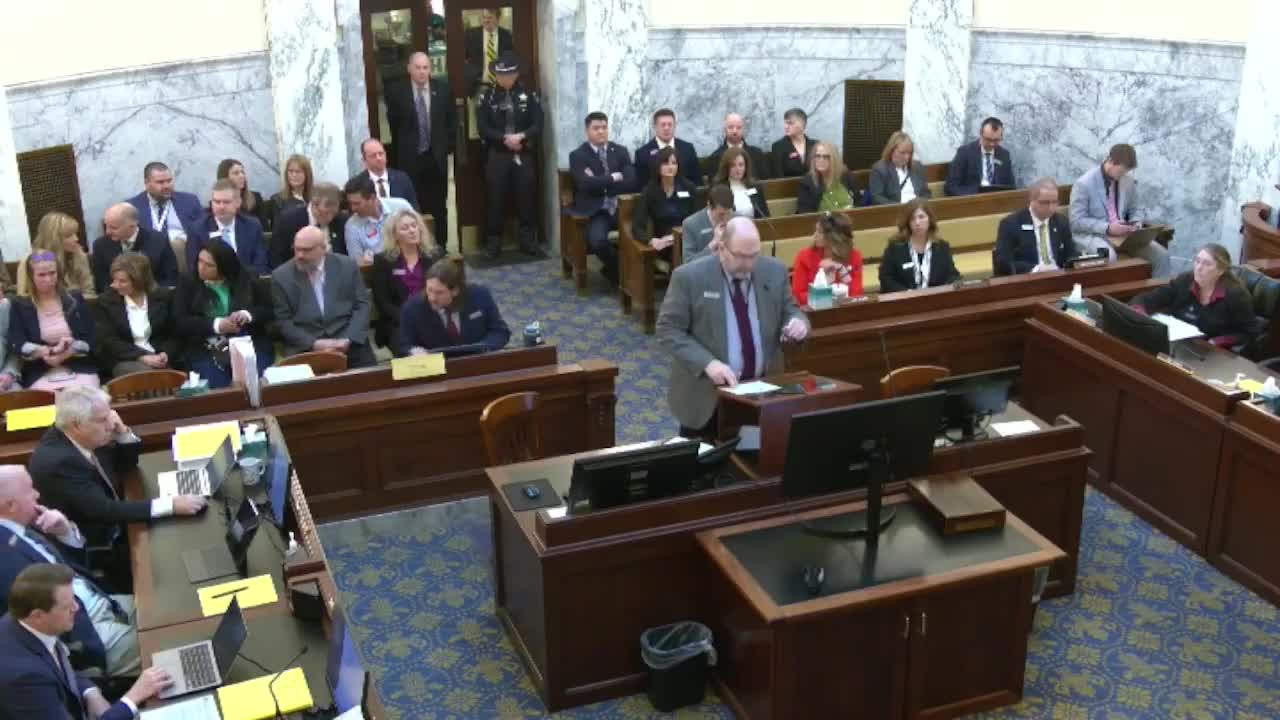
College of Eastern Idaho President Lori Barber told the Joint Finance‑Appropriations Committee that CEI's rapid growth has stretched facilities, faculty and workforce training capacity and that an ongoing allocation of at least $2 million from a designated community‑college CTE fund would be "absolutely transformational." Barber and Legislative Services Office analyst Kevin Campbell described enrollment growth, waiting lists for CTE programs and staffing shortfalls during the hearing.
Kevin Campbell said CEI grew from about 700 students when it was Eastern Idaho Technical College to roughly 3,600 degree‑seeking students and more than 14,000 workforce training students. He also summarized CEI's budget history, saying the FY2024 appropriation to CEI was $7,003,700 and that FY2025 appropriations were $7,700,000.
Why it matters: CEI leaders told the committee local employers including national labs and health systems are expanding and the region needs two‑year technicians and credentialed workers. Without more capacity, the college said it cannot enroll large numbers of students who want CTE training.
Details from the hearing
- Enrollment and wait lists: Barber said CEI had a substantial CTE waiting list and told the committee it had "465 more students who wanted a place that we didn't have a chair for," describing a fall 2024 semester where many applicants could not be placed in their chosen programs.
- Capacity shortfalls: Barber said CEI's campus footprint has not materially expanded since 2007 even as credit headcount grew more than 273% since 2017. She said classrooms, parking and support offices are at or beyond capacity and that equipment in some CTE labs (for example welding and fabrication) is outdated.
- Employer partnerships: Barber described partnerships with local employers such as INL and Teton Toyota that provide instructors or on‑the‑job training to expand program capacity. She said industry collaboration enabled CEI to nearly double cybersecurity enrollment after INL provided instructors.
- Use of proposed CTE funds: Barber urged that CEI receive a share of a $10 million ongoing pot for community and technical colleges proposed in the budget; she told members that "an increase in our general fund allocation from that 10,000,000 of at least $2,000,000 ongoing would be absolutely transformational." She said those funds would be used for faculty in science and math to support health prerequisites, updated program equipment, and additional advisors and support services.
- Salaries and staffing: Barber said CEI has faculty and staff below local market pay; she reported an analysis showing 20 full‑time faculty below the local K‑12 average and estimated $2,260,000 would be required to bring adjunct and full‑time faculty to parity with the K‑12 average referenced in testimony.
Committee follow up and next steps
Committee members praised CEI's employer engagement and asked for programmatic details and budget uses. Barber said CEI can identify specific program hires (for example three to four faculty in science and math) and equipment needs if allocated additional funds. No formal appropriation vote occurred during the session.
Ending
CEI concluded by asking the committee to consider sustained investment to maintain momentum in workforce and health programs. The committee requested additional detail on program‑level capacity and the college's prioritized uses for any appropriation.