Get Full Government Meeting Transcripts, Videos, & Alerts Forever!
Get email alerts on the Community Colleges Funding topic
No spam. Unsubscribe anytime.
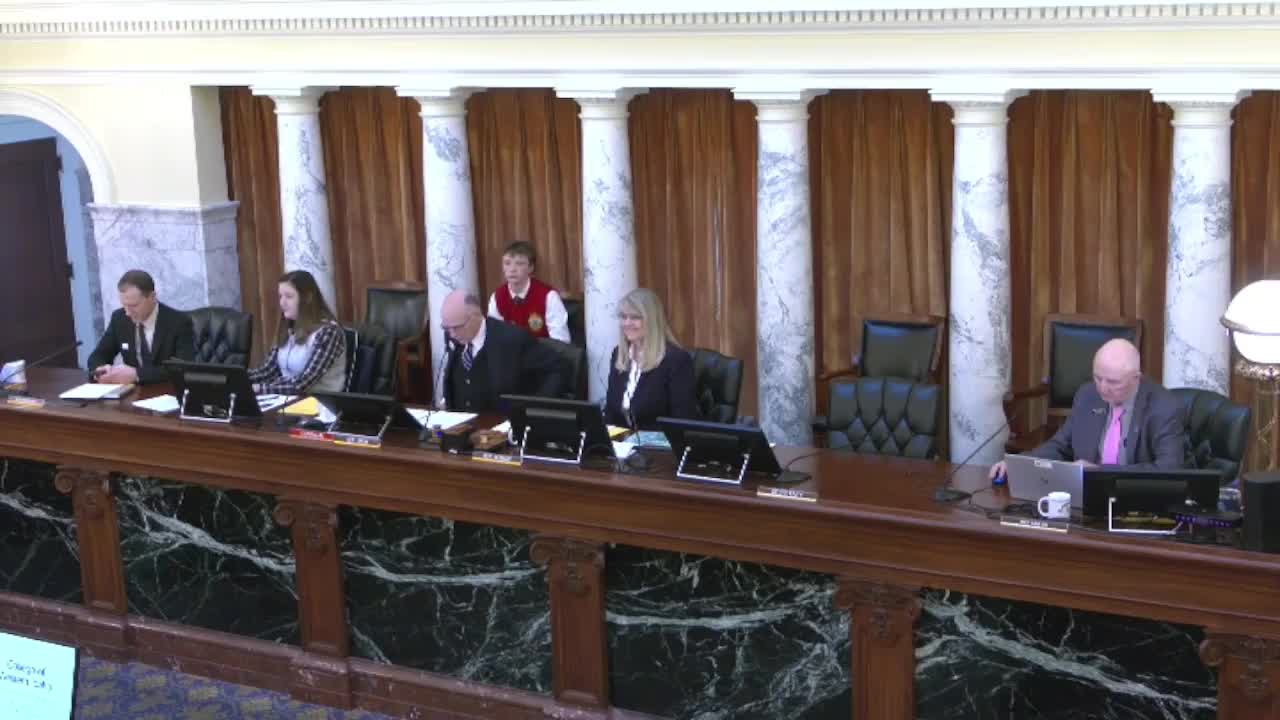
College of Western Idaho tells JFAC rapid enrollment is straining nursing, CTE and support services
Summary
At a Joint Finance-Appropriations Committee hearing, CWI officials described double‑digit enrollment growth, program wait lists and limits from a 3% state cap on an enrollment workload adjustment (EWA) that reduced expected funding for FY2026.
College of Western Idaho President Gordon Jones and Legislative Services Office analyst Kevin Campbell told the Joint Finance‑Appropriations Committee that CWI has seen rapid enrollment growth that is creating capacity constraints in nursing, career‑technical education and student support services.
Kevin Campbell, a budget and policy analyst with the Legislative Services Office, opened the presentation with an overview of CWI's base budget and requested FY2026 figures, noting that "the referendum creating CWI passed on 05/22/2007" and directing committee members to the budget book entry. Campbell said CWI's FY2024 state appropriation was $20,816,700 and that the college typically spends 100% of its state appropriation.
The college's president told the committee enrollment growth has continued "unabated" and said, "we are up this year 13% in our academic enrollment." Gordon Jones said CWI serves a mix of dual‑credit students, academic transfer students and career‑technical learners and that career‑technical education is among the highest growth areas.
Why it matters: CWI officials told JFAC that the combination of rising enrollment and fixed program requirements is producing concrete bottlenecks — faculty ratios and accreditation rules limit class size in health programs, facilities are at or near capacity, and student advisors and other wraparound supports are stretched.
Details from the hearing
- Wait lists and capacity: Jones told the committee the college has roughly 100 people on its nursing waiting list and "a 1,000 students total on wait lists across all of our programs." He identified nursing, automotive technology, welding, cybersecurity and agricultural sciences as particular pressure points.
- Causes of constraints: Jones described three principal constraints: (1) facilities, (2) faculty where accreditation or training standards set firm instructor‑to‑student ratios (for example, nursing), and (3) student support services such as academic advising.
- Enrollment Workload Adjustment (EWA): Campbell reviewed a five‑year budget history and said EWA (previously shown as non‑discretionary adjustments) added ongoing funding in FY2021–22 and produced reductions in FY2023–24. Jones explained the EWA calculation would have yielded $493,000 for CWI in the current cycle but that a 3% cap imposed by State Board guidance reduced the amount recorded in the budget to $265,000. He told the committee that the cap, combined with ordering requirements for health insurance and compensation corrections, limited the EWA amount CWI could report to the legislature.
- Enhancements and programs: Campbell said FY2024 enhancements to CWI totaled $1.1 million for increased nursing capacity, STEM capacity, student outreach and additional compensation. Jones described new or expanded CTE programming including an electric vehicle (EV) technician program that uses donor or industry vehicles for hands‑on training and said the college is pivoting toward mining technician training in response to local permitting and industry activity.
- Affordability and salaries: Jones emphasized CWI's $139 per credit‑hour tuition and the college's 100% acceptance policy. He also told the committee that CWI faculty have master's or terminal degrees but earn roughly $10,000–$20,000 less than comparable four‑year faculty, and that staff such as academic advisors remain below market.
Committee follow up and next steps
Committee members asked for a breakdown of the capacity constraints (facility, faculty, support) and for a clearer calculation showing how the 3% cap affected each community college's EWA. Campbell agreed to provide the committee with the underlying EWA calculations and for CWI to supply the requested capacity breakdown for committee review.
Ending
No formal action or vote occurred during the presentation. The committee invited additional materials from CWI and LSO to better understand how the EWA calculation and the 3% cap affect funding across institutions and to quantify facility, faculty and support shortfalls that are constraining program enrollment.