Get Full Government Meeting Transcripts, Videos, & Alerts Forever!
Get email alerts on the Idla Enrollment Fee topic
No spam. Unsubscribe anytime.
Idaho Digital Learning Academy reports enrollment growth; board to consider lowering per-course fee
Summary
IDLA told the Joint Finance-Appropriations Committee it is seeing enrollment growth (about 9% year-to-date), that its funding was moved to an enrollment-based formula, and that the board is considering reducing the statutory $75 course fee to $40
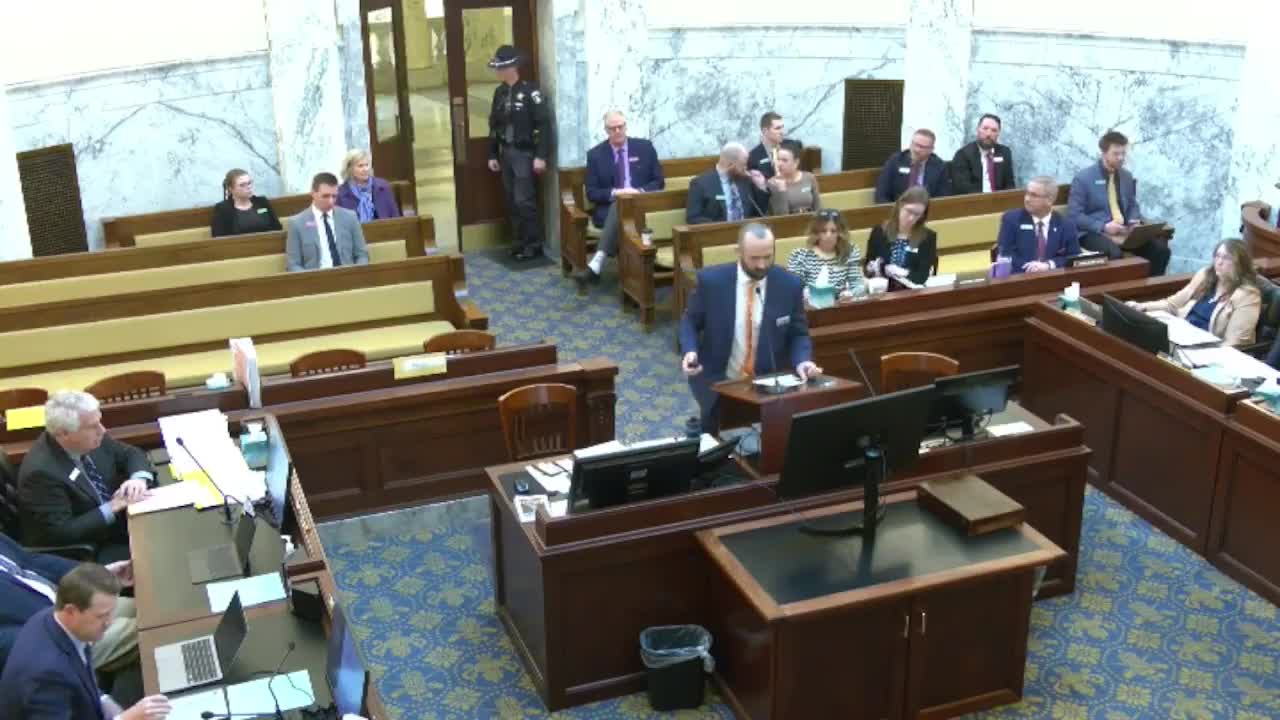
Jared Tetrault told the Joint Finance-Appropriations Committee on March 4 that the Idaho Digital Learning Academy (IDLA) is now appropriated on a per-enrollment basis after 2024 changes to statute and is experiencing enrollment growth that will affect its appropriation.
"They are now tied to the number of students that enroll in their courses," Tetrault said, explaining the 2024 change (House Bill 452) that set IDLA funding at $430 per eligible enrollment. He said estimated enrollments for the current year had been budgeted at 49,680, with updated counts closer to 52,000 and a statutory mechanism that could increase the rate to $445 per enrollment if the committee adopts the maintenance estimate in a pending bill.
Jeff Simmons, superintendent for IDLA, appeared before the committee and described program growth and investments. He told lawmakers IDLA has about 101 full-time positions and several hundred part-time teachers and principals on its roster and is reporting “9% enrollment growth” for the fiscal year. Simmons said the academy’s elementary literacy program and a large increase in driver‑education enrollments were two of the primary drivers of recent growth, and that IDLA uses the same standards and benchmarks as in-person schools.
Simmons also told the committee the academy is working to reduce financial barriers for students. He said IDLA previously charged a statutory course fee capped at $75 and that the board has a proposal before it to reduce the fee to $40 for the coming year — a $35 reduction that the superintendent said the program expects to absorb within its budget while maintaining services.
On operations and finances, Tetrault summarized IDLA’s fund balance and budget mechanics. He said IDLA began fiscal 2024 with about $5 million in cash and closed the year with roughly $8.5 million. Because appropriations are now tied to enrollments, Tetrault said the program’s appropriation will be adjusted if enrollment numbers exceed the estimate used at budget time and that a 1,000‑student swing would change funding by roughly $430,000.
Committee members asked for clarifications about the academy’s growth patterns and program outcomes. Representative Petzke and others requested more granular data on which courses were growing (Simmons pointed to driver education and elementary literacy) and on completion and outcome measures; Simmons said IDLA reports a final grade to the resident district when courses are complete and that the program’s internal target pass rate for all courses is 90 percent (IDLA reported an 89 percent pass rate last year). Simmons described elementary literacy delivery as a K–5 intervention model that pairs an IDLA-certified teacher with the local classroom teacher and uses Istation for assessment and instruction.
Simmons also described IDLA investments in AI tools for safe classroom use and said the program is working to reduce course-material fees by adopting open educational resources where feasible. He said IDLA had negotiated with a vendor to pilot new Idaho-specific features for the Idaho Reading Indicator and that some costs would be incorporated into a new contract.
The committee did not take final action on IDLA funding at the hearing. Analysts and program staff agreed to provide additional enrollment and course‑level data to the committee on request.