Get Full Government Meeting Transcripts, Videos, & Alerts Forever!
Get email alerts on the Employee Compensation topic
No spam. Unsubscribe anytime.
Joint Finance Committee approves $177.43 million CEC package including $1.55 hourly floor for state employees
Summary
The Joint Finance-Appropriations Committee approved a package totaling $177,429,100 to fund change-in-employee-compensation (CEC) decisions for fiscal 2026, including a $1.55-per-hour minimum increase, targeted increases for public safety, IT, nursing and colleges, and a separate allocation for public schools.
The Joint Finance-Appropriations Committee approved a fiscal 2026 change-in-employee-compensation package totaling $177,429,100 on Thursday, directing salary increases that include a $1.55-per-hour minimum for permanent state employees and targeted adjustments for specific employee groups.
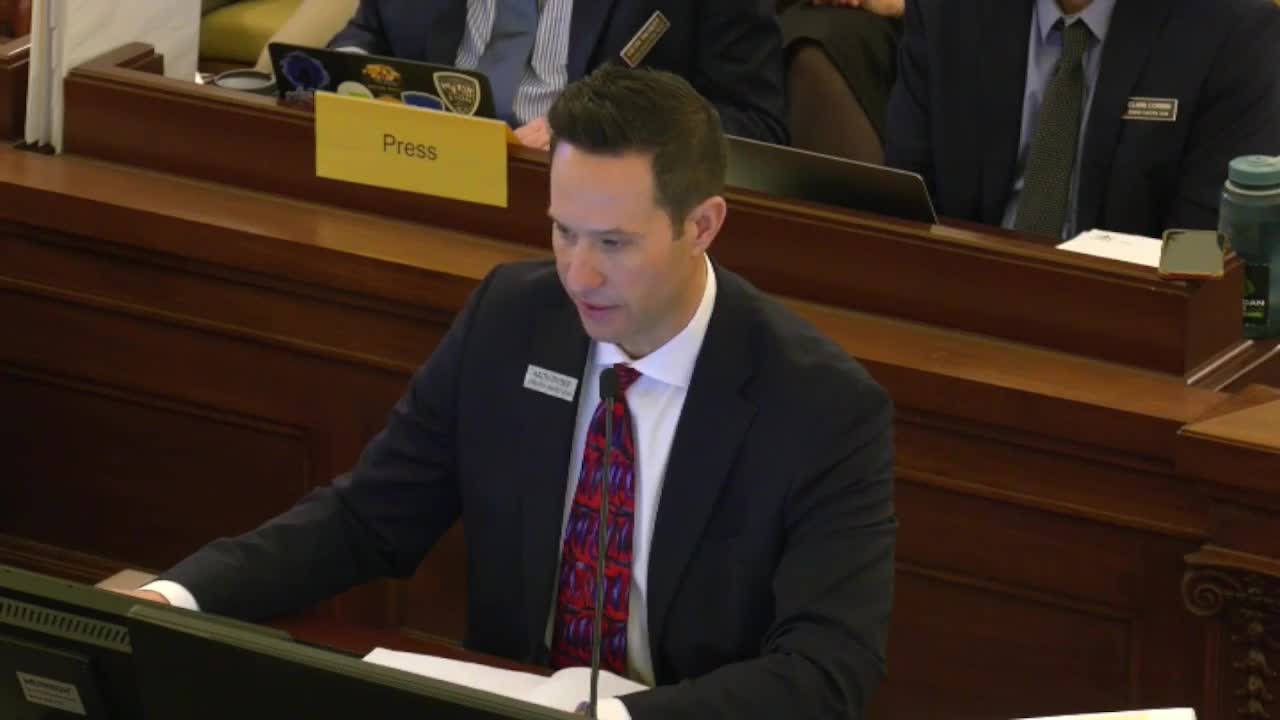
The package, moved by Representative Miller and seconded by Senator Groves, funds $84,411,100 to provide $1.55 per hour per permanent state employee, $2,305,700 for community colleges, $6,042,800 for salary-schedule adjustments for employees at the minimum of pay grades, and $84,669,500 for public schools and the Idaho Educational Services for the Deaf and the Blind. The motion specifies further targeted funding: a 4.5% increase for classified and nonclassified IT and engineering workers, up to an 8% increase for Idaho State Police troopers, and a provision that nursing and healthcare workers receive $1.55 per hour or 3%, whichever is greater. Representative Miller read the motion on the floor: "I move fiscal year 2026 to provide $84,411,100 for a dollar 55 per hour per employee of state agencies and institutions. Include $2,305,700 for community colleges... Additional funding for Idaho military division to maintain parity with federal military compensation, an additional 4.5% for IT engineering workers, additional funding for ISP troopers, and additional funding for nursing and health care workers to receive a dollar 55 or 3%, whichever is greater. And include $84,669,500 for public schools, and Idaho Bureau of Education Services for the Deaf and the Blind."
Keith Bybee, Division Manager for Budget Policy Analysis, presented draft implementing language to the committee explaining that the motion would be added into the maintenance bills already passed by the committee and would include reporting requirements. Bybee said the language would direct agencies to provide pay increases between $1.55 and $1.55 per hour except in specified circumstances, require that any new funding not be transferred from personnel to other expenditure categories, and require monthly reporting by the Division of Human Resources and the Office of the State Comptroller identifying pay changes resulting from the package.
During floor debate several members raised concerns about the package. Senator Ward Engle King said she was "still very concerned about the pay increase for our highly skilled, our highly trained, employees ... I think we're compressing the salary schedule, and I think it's going to continue to cause us problems in the future in retaining state employees and being able to recruit them." Senator Wintrow echoed concerns about competitiveness and retention, stating the committee must provide a "competitive salary package." By contrast, Senator Cook said she would support the motion despite reservations, calling the minimum adjustment a needed cost-of-living measure. Senator Woodward warned the $1.55-per-hour floor could produce "compression issues" and a scenario in which managers are unable to target raises by merit.
The committee approved the motion. The roll-call outcome was announced on the record: "The Senate votes 8 aye, 2 nay... The House votes unanimously," with committee leadership announcing the motion "has passed and will, without objection, carry a due pass recommendation" to the floor. The motion's fiscal detail as read on the record: $128,354,900 from the general fund, $34,266,900 from dedicated funds, and $14,807,300 from federal funds for a total of $177,429,100.
Committee leadership also approved implementing language by unanimous consent after the motion passed; the language includes reporting requirements and provisos about salary-schedule shifts and limits on transferring the newly-appropriated funding.
Why it matters: The approved package sets a statutory and budgetary baseline for state employee compensation in fiscal 2026 and includes direction to agencies about use and reporting of funds. It also allocates a substantial portion of the package to K–12 education and public safety, and it creates new reporting obligations that will allow the legislature to track how the increases are implemented.
What happens next: The committee directed staff to incorporate the motion's dollar amounts and implementing language into the maintenance bills that will be considered on the Senate and House floors. The Division of Human Resources and the Office of the State Comptroller were directed to produce monthly reports identifying pay changes, per the language approved by the committee.