Get Full Government Meeting Transcripts, Videos, & Alerts Forever!
Get email alerts on the Idaho Health And Welfare Reorg topic
No spam. Unsubscribe anytime.
Health and Welfare proposes reorganization, fleet replacements and IT upgrades as JFAC begins budget hearings
Summary
The Idaho Department of Health and Welfare presented a proposed reorganization and related budget requests — including a request to replace 60 state vehicles and to upgrade IT systems — as the Joint Finance‑Appropriations Committee opened 2026 budget hearings.
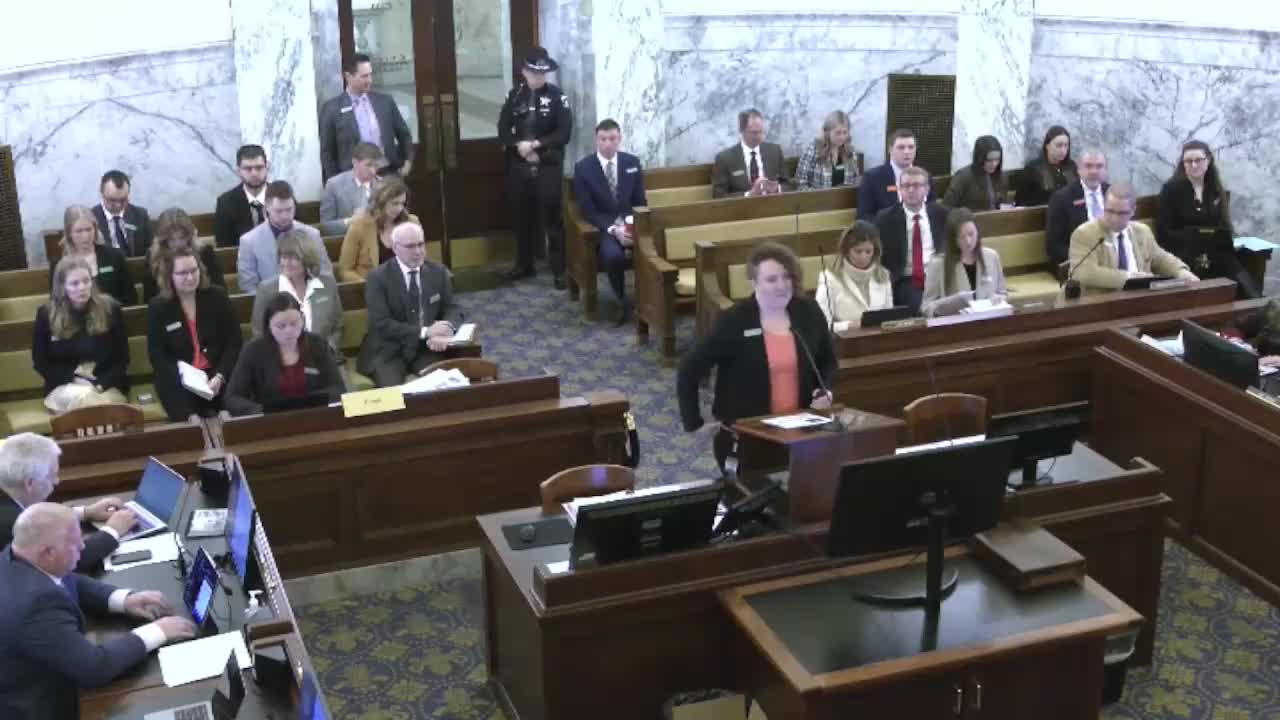
The Idaho Department of Health and Welfare (DHW) briefed the Joint Finance‑Appropriations Committee on Jan. 13 on a proposed organizational realignment and related budget requests as the committee began its 2026 budget hearings.
Budget and policy analyst Alex Williamson opened with an agency overview and described the requested alignments of budgeted programs to the agency’s internal operating structure. The changes appearing in the governor’s request and the agency’s program maintenance submission include splitting Family and Community Services from other divisions, renaming and regrouping divisions, and creating a new child, youth and family services division. Williamson said the agency is asking the legislature to align appropriation units to where the work is being done.
The reorganization, as described by Director Alex Adams and LSO staff, would move several programs and staff into Medicaid oversight: community developmental disabilities (to capture the children’s DD program), the Idaho Behavioral Health Plan staff and the Medicaid program‑integrity unit. Extended Employment Services (EES) would be moved as a budgeted program under Medicaid because Medicaid currently administers the program staff‑wise, the director said. The Idaho Child Care Program (ICCP) would move under Early Learning and Development and receive a distinct appropriation unit for separate budget tracking.
Director Adams said organizational changes were intended to improve lines of sight and accountability. "Budgets are laws, not suggestions," he told the committee, explaining why he created a new chief financial officer position reporting directly to the director. Adams said he also split responsibilities so one deputy director focuses on Medicaid and another on child welfare to improve visibility for those programs.
The director said DHW has about 3,000 employees across 37 locations and 74 buildings and described staffing and facility priorities. The agency requested replacement items including visitation rooms and office remodels, and to replace 60 vehicles at a total of about $1.8 million for fiscal 2026. Adams said the department operates roughly 435 state vehicles statewide and wants to maintain a seven‑year replacement cycle; about two‑thirds of mileage comes from child welfare work (court and visitation transportation). Mileage on vehicles proposed for replacement ranges from about 105,000 to 159,000.
On information technology, the department requested hardware replacement and an upgrade of SQL server software (from 2017 to 2022). Williamson said the governor recommended most IT replacement requests but removed a requested appropriation for additional cloud server capacity after the agency identified other solutions. Adams also described pending hires to staff the Medicaid Management Information System (MMIS) upgrade — he told the committee the MMIS replacement was a large multi‑year project estimated at roughly $180 million and the department planned to hire several IT positions (six were called out during the hearing) to support implementation.
Committee members asked about vehicle counts, replacement timing and miles; Williamson and Adams provided figures and said sales proceeds from retired vehicles are handled under state law (Title 67, Chapter 35) and can be used for capital outlay. Committee members also pressed for detail about how many contract vs. state staff perform licensing and inspection work.
On licensing and certification, the division requested a supplemental exemption to transfer personnel dollars to operating expenditures — a process the legislature restricted in 2024 by Section 8 of Senate Bill 1268 — so the division can hire contract nurses to perform facility surveys when vacancies prevent the agency from meeting inspection timelines. Director Adams told the committee contract nurses have cost roughly $90–$95 per hour, while state staff run about $35 per hour. He said the division’s vacancy rate peaked during the pandemic and remains lower now but still requires some contract support to meet federal/state inspection cadence (DHW noted a required inspection cadence for skilled nursing facilities of roughly every 15.9 months).
Adams and Williamson repeatedly framed these requests as aligning the budget to current operations rather than proposing new services. No final appropriation or statutory change was adopted at the hearing; the committee will consider program maintenance and enhancement bills in upcoming sessions and work groups. The department said it will return for additional division‑level hearings and that LSO and agency staff would provide further detail on fleet lists, staffing status for MMIS positions, and the cost split between contract and employee labor for licensing work.