Get Full Government Meeting Transcripts, Videos, & Alerts Forever!
Get email alerts on the Agricultural Research Extension topic
No spam. Unsubscribe anytime.
UI agricultural research and extension seeks targeted hires, maintenance funding; dean announces retirement
Summary
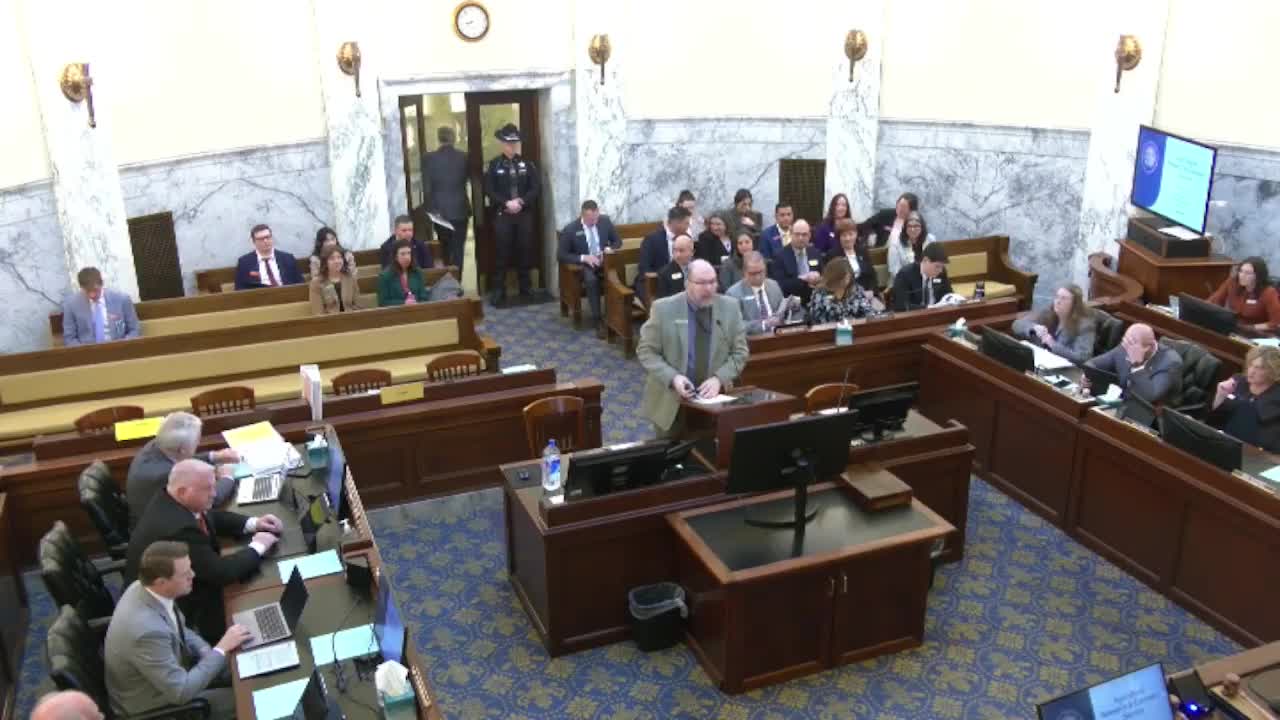
University of Idaho College of Agricultural and Life Sciences leaders briefed JFAC on Feb. 10 about FY2026 requests including a viticulture faculty line and building maintenance funds, described extension outcomes and sought continued support for research infrastructure.
University of Idaho College of Agricultural and Life Sciences leaders told the Joint Finance‑Appropriations Committee on Feb. 10 that their FY2026 requests include a $157,900 viticulture and small‑fruits research faculty position and $250,100 for maintenance at the Idaho Center for Agriculture, Food, and the Environment.
Kevin Campbell, a budget and policy analyst with the Legislative Services Office, opened the presentation with a five‑year budget and expenditure overview for the Idaho Agricultural Experiment Station and extension service, noting that roughly 81% of the service’s expenditures are personnel costs and that the service operates research and extension centers with access to more than 14,000 acres of land for research.
Why it matters: The college and extension network have a presence in nearly every Idaho county, and their research and outreach activities affect producers, rural communities and workforce development. Committee members asked for outcomes, program details and rationale for continued state support of new faculty and facility maintenance.
Michael Perella, dean of the College of Agricultural and Life Sciences, introduced staff on the record and announced his planned retirement in June. Perella highlighted recent infrastructure investments — including a new research laboratory in Parma — and described how state funding leverages additional external grants to support faculty and applied research. He reported the college’s statewide extension contacts totaled more than 450,000 face‑to‑face interactions last year and that extension engaged more than 75,000 youth in 4‑H programming.
Campbell reviewed recent appropriations: FY2024 faculty investments and FY2025 maintenance and ARPA allocations, including $142,000 in ARPA funds connected to digital literacy work and $232,000 for Parma maintenance in FY2025. For FY2026 the college requested the viticulture/small‑fruits research position and $250,100 for ongoing building maintenance at the Idaho Center for Agriculture, Food, and the Environment.
Representative Handy asked whether Idaho research is shifting emphasis from pure yield to nutritional quality; Dean Perella said nutrition and human health are priorities and pointed to campus programs in dietetics and a recent National Science Foundation grant focused on women's health and nutrition as examples. Perella said, "you are what you eat," to underline the link between agricultural production and human health.
Committee members also asked about adult digital literacy work funded initially through ARPA. Perella and college staff said the extension network runs adult computer‑literacy programs in rural communities and that faculty recently secured a federal broadband/ digital‑literacy grant opportunity from the Federal Communications Commission worth up to $13 million (proposal pending federal award processes) to further address the digital divide in rural Idaho. The college said the FCC proposal would engage two‑year schools and other statewide partners.
Dean Perella described the college’s efforts to address water‑use efficiency, soil health, breeding programs and other priorities tied to Idaho’s diverse crop portfolio and manufacturing needs. He cited the new Idaho Center for Plant and Soil Health at Parma as a resource to support applied research and hiring of early‑career faculty. Perella told the committee the college’s retention rate improved after last year’s change‑in‑employee‑compensation appropriation, dropping from 14% to 11% for FY2024.
What came out of the hearing: Committee members asked the college to provide outcome measures and evaluation details for digital literacy and extension programming and requested additional breakdowns of personnel costs and their distribution between agency‑level staff and personnel embedded at technical and community colleges. Dean Perella and staff committed to follow up with requested detail.
Looking ahead: No appropriations votes were taken at the Feb. 10 presentation. College leaders asked for continued state support for targeted faculty hires and research infrastructure and will return with additional documentation and outcome measures at the committee’s request.