Get Full Government Meeting Transcripts, Videos, & Alerts Forever!
Get email alerts on the Committee Procedure Remote Testimony topic
No spam. Unsubscribe anytime.
House Revenue and Tax chair keeps ban on remote testimony, stresses strict hearing procedures
Summary
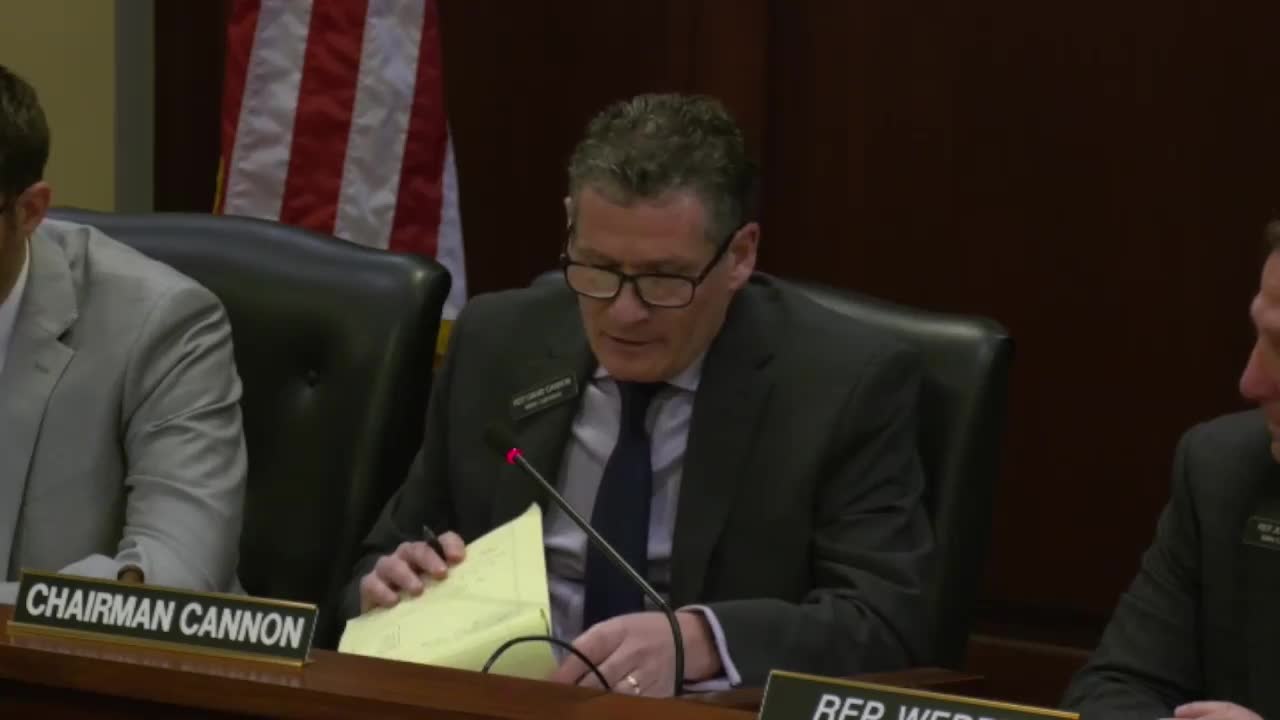
Chairman Cannon told the House Revenue and Tax Committee he will continue the committee's historical policy of disallowing remote testimony, and he emphasized rules for raising questions, making motions and maintaining decorum during hearings.
Chairman Cannon said the House Revenue and Tax Committee will continue its historical policy of not allowing remote testimony and urged members to follow precise procedures for questions and motions.
The chair framed the decision as a judgment about fairness and practicality. "Historically, this committee has not allowed remote testimony, and I've made the decision to continue that policy," Cannon said, adding that written testimony submitted to the committee remains welcome: "It is my understanding that there is a process for having written testimony, submitted by whoever wants to throughout the state, and so we welcome that written testimony and we want to hear from people throughout the state of Idaho."
Cannon gave several reasons for keeping in-person testimony only. He said remote testimony can complicate the committee's ability to assess facial expressions and body language in situations that require close observation, that technical problems (volume, static and other issues) can impede proceedings, and that committee members should be able to gather information from constituents outside hearings and bring that knowledge into the room. He also framed procedural safeguards as central to the committee's work and cited the Declaration of Independence while urging attention to due process and proper notice.
Beyond the remote-testimony decision, Cannon outlined routine procedures for how the committee will operate during bill hearings. He described how sponsors present legislation, how members should raise questions and how debate and motions fit into the sequence of a hearing. "The way you quote unquote raise your hand in this committee is to turn on your red light," Cannon said, explaining that members should turn on their red light and wait to be recognized. He stressed concise, single-part questions and said he would be "a little more stern about reining in" long narrative questions posed as inquiries.
Cannon also emphasized precision in motions. "It's important to be precise in terms of the motions that we make," he said, and directed members to a handout in their packet that explains the committee's preferred motion language (for example, the proper language to "introduce" an RS). He warned that historically interchangeable-sounding terms can create confusion about what was actually moved and voted on.
Administrative details announced at the start of the meeting included committee composition and logistics: Cannon said the committee has 15 members, with 8 returning members and 7 new to the committee, and that the membership currently includes 14 men and 1 woman. He said the committee will operate electronically for document distribution (materials in members' OneDrive folders) but that testimony will remain in-person only.
Several staff and members participated in introductions before the chair's procedural remarks. Cameron Douglas identified himself as the committee secretary and described his background in legislative staff and history; Vice Chairman John Weber introduced himself and briefly spoke about his background as a county commissioner; Elena Russell introduced herself as the committee page. Cannon announced that Representatives Birch and Bruce had agreed to proofread minutes for the committee.
Cannon framed the committee's work as consequential and urged members to treat procedures seriously: he noted that one of the grievances listed in the Declaration of Independence—"imposing taxes without consent"—is directly related to the subject matter of the committee and said that proper procedure matters because the panel decides tax policy. He closed by reminding members there will be no meeting the next day and that they should listen for House-floor announcements about future meetings.