Get Full Government Meeting Transcripts, Videos, & Alerts Forever!
Get email alerts on the Public Safety topic
No spam. Unsubscribe anytime.
Committee advances bill allowing residents to refuse evacuation orders but requires reimbursement for rescues
Summary
House Bill 97 would affirm an individual's right to refuse evacuation orders under Idaho's disaster code and make persons who later request rescue liable for reimbursement; the committee gave the bill a due-pass recommendation.
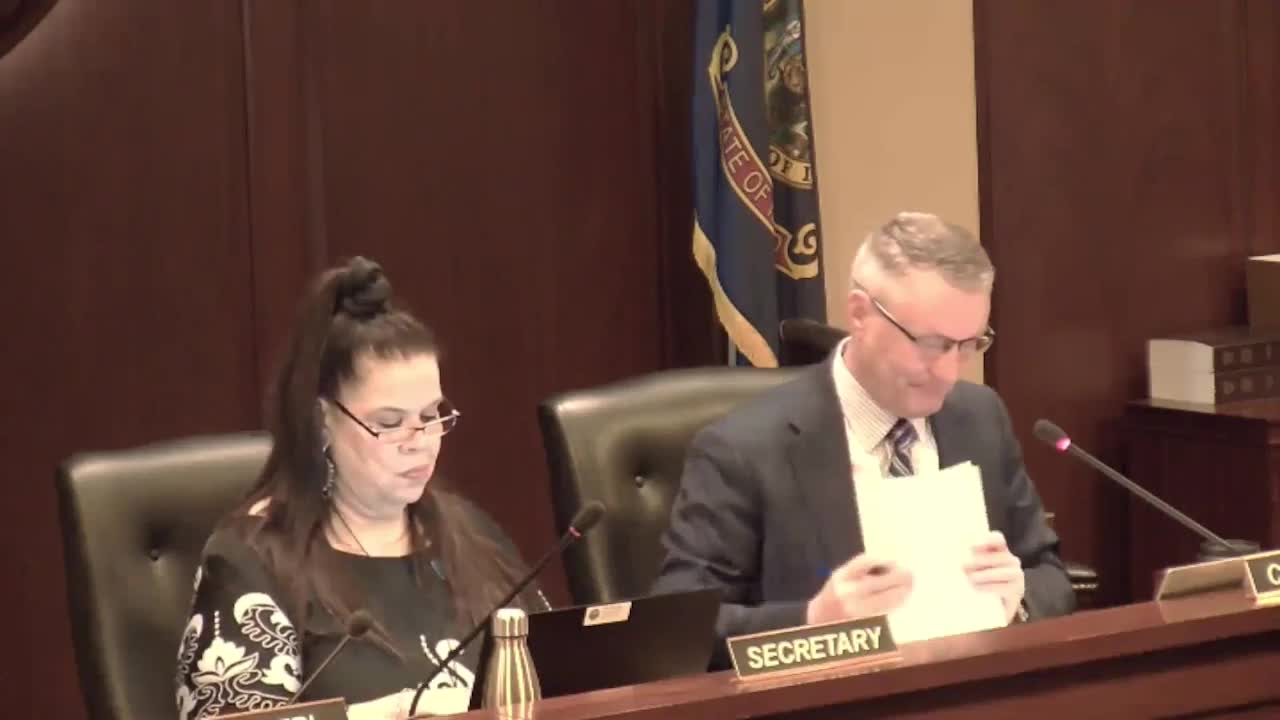
The House State Affairs Committee voted to send House Bill 97 to the House floor with a "do pass" recommendation after hearing from sponsor Representative Scott, who described the bill as an effort to recognize personal responsibility during disasters.
Representative Scott said HB97 amends Title 46, Chapter 10 of Idaho Code (the State Disaster Preparedness Act) to state that a person may choose not to evacuate despite an official evacuation order and that those who later request rescue must reimburse the responding agency for the cost of that rescue. "If they choose to stay they're going to have to accept all risks and liabilities of their decision," Scott said.
Committee members questioned how the reimbursement would be collected and whether the provision could impose undue burdens on vulnerable people. Representative DeGarth said counties sometimes bill people after rescues but face difficulty collecting from nonresidents; Scott responded that local governments have options to pursue repayment but the bill does not itself create a detailed collection mechanism.
Members also raised criminal-liability hypotheticals. Representative Nicholson asked whether a person who refuses to evacuate could be charged if a rescuer died attempting a recovery; Scott said HB97 does not create criminal liability in those circumstances and that the measure is focused on civil accountability and personal responsibility.
Representative Scott and other members emphasized that the bill is narrowly written to apply to the State Disaster Preparedness Act and does not supersede Title 18 (criminal code) where criminal conduct or exigent law-enforcement actions are present. "If there's a crime being committed or a hostage situation ... Title 18 would take precedence," Scott said.
After questions from the committee, Representative Alfieri moved to send HB97 to the floor with a due-pass recommendation; the motion carried.
Votes at a glance: HB97 — sent to the House floor with a due-pass recommendation; committee debate focused on reimbursement mechanics, vulnerable populations and limits where criminal law applies.