Get Full Government Meeting Transcripts, Videos, & Alerts Forever!
Get email alerts on the Vape Taxation topic
No spam. Unsubscribe anytime.
Sponsor introduces proposal to tax vape products, direct funds to enforcement and local health districts
Summary
Representative Gerald Raymond introduced RS 32259 to levy a 3¢ per milliliter excise tax on vape products, require permits for sellers, and align vape taxation with Title 63 tobacco rules; sponsor said revenue would fund enforcement and local prevention.
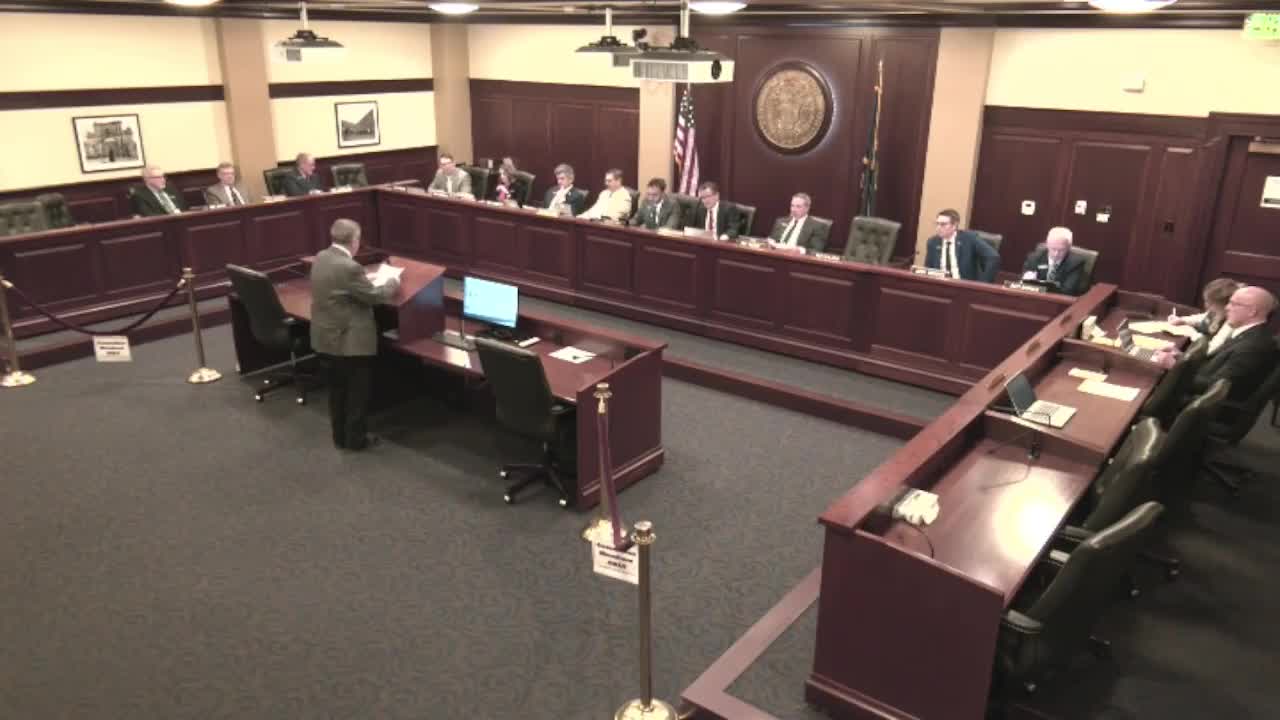
Representative Gerald Raymond told the House Revenue and Taxation Committee on Feb. 24, 2025, that RS 32259 would update Idaho law to tax and regulate vape products similarly to tobacco.
"This piece of legislation deals directly with taxes," Raymond said. The measure would amend Title 63 to include vape products with tobacco and cigarettes and impose a 3¢ per milliliter excise tax on vape liquids, which Raymond said would generate approximately $1,400,000.
Under the sponsor's plan, 75% of revenue from the excise tax would fund enforcement and regulation, and 25% would go to local health districts for education and prevention. The bill would also require sellers of vape products to be permitted by state agencies; the sponsor said some vape retailers may not currently be properly permitted.
Raymond told the committee the proposal was designed in part to help cover a $1,000,000 fiscal note attached to a companion public-health bill, House Bill 244, which was introduced in the Health and Welfare Committee.
Representative Raybould moved to introduce RS 32259 for a hearing; the committee approved the motion on a voice vote. The introduction allows the committee to solicit testimony, fiscal estimates, and legal review before any further action.
The sponsor said the bill is one of several measures developed from an interim study committee on vape products, which included public and industry input. The transcript records the sponsor's statement that industry participants asked to be "part of the solution rather than part of the problem," and that the proposed tax and permitting requirements grew from that process.