Get Full Government Meeting Transcripts, Videos, & Alerts Forever!
Get email alerts on the Small Seller Definition Sales Tax topic
No spam. Unsubscribe anytime.
Committee gives 'do pass' to bill defining 'small seller,' exempts limited annual sales under $5,000
Summary
The House Revenue and Taxation Committee voted unanimously Monday to send House Bill 144 to the House floor with a "do pass" recommendation; the bill defines a "small seller" as an Idaho resident whose cumulative annual sales do not exceed $5,000 and exempts such sellers from sales-permit requirements.
The House Revenue and Taxation Committee on Monday voted unanimously to send House Bill 144 to the House floor with a "do pass" recommendation. The bill defines a "small seller" as an Idaho resident whose cumulative sales in a year do not exceed $5,000, and it exempts those sellers from obtaining a temporary or regular sales permit.
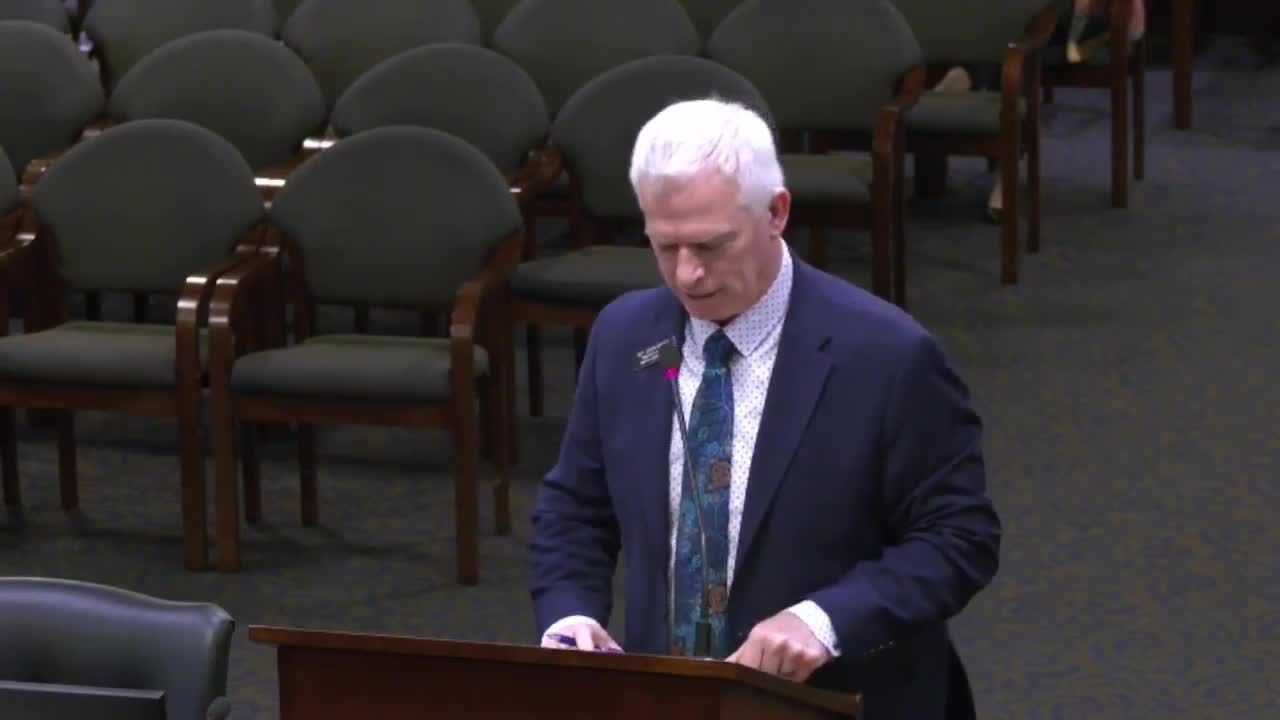
Representative Jason Monks, District 22, said the bill is intended to reduce paperwork for informal sellers such as yard-sale hosts, lemonade stands and individuals selling used household goods online. "A small seller is an Idahoan, resident who makes sales that do not exceed $5,000 cumulatively in a year," Monks said.
Monks told the committee the bill does not create a new permit and specifically excludes sales of motor vehicles, trailers, UTVs, snowmobiles, aircraft and similar titled items because existing registration processes already address sales-tax collection for those items. He also said the Idaho State Tax Commission provided the bill language and the fiscal note. The fiscal note cited in the hearing estimated the general fund decrease at less than $1 million and, according to Monks, that Idahoans would save more than $1,200,000; Monks also told the committee the tax commission estimates the time to process a permit at 14 minutes and that treating roughly 10,701 permits that way would amount to about 1.5 full-time positions.
Committee members asked clarifying questions. Representative Raymond asked why alcohol and tobacco are listed as nonexempt; Monks said that language came from the tax commission and that those items have separate code sections. Raymond also asked about vape products; Monks said the committee could examine that language further. Representative Raymond asked whether exceeding the $5,000 threshold would require paying tax only on the excess or on the entire amount; Monks answered, "The intent is to pay it all. We did not want to have ... the first $5,000 exempt," explaining the bill is not intended to create an incentive to avoid registering until reaching the threshold.
Representative Shepherd moved to send House Bill 144 to the House with a due-pass recommendation and spoke in favor, saying the bill "smells like freedom" and noting many small sellers raise money for charities or community programs. Representative Burch signaled support and said she would give it more thought before the floor vote. Representative Raybould confirmed no public testimony had been offered during the committee hearing.
The committee adopted the motion by voice vote and the measure was referred to the House with a due-pass recommendation.