Get Full Government Meeting Transcripts, Videos, & Alerts Forever!
Get email alerts on the Local Option Sales Tax topic
No spam. Unsubscribe anytime.
Sponsor introduces constitutional amendment RS32531 and implementing RS32532 to create a flexible local-option sales/use tax
Summary
Representative Britt Raybould introduced a joint resolution (RS32531) to place a constitutional amendment before voters allowing a capped local-option sales/use tax for specific services or goods, paired with RS32532 as the implementing statute should the amendment pass; both were introduced for committee consideration.
Representative Britt Raybould introduced RS32531 and the companion implementing RS32532 on Thursday to create a new local-option sales/use tax mechanism available to cities and counties if voters approve a constitutional amendment.
Raybould said the resolution would add a constitutional option for local governments to propose a narrowly defined local-use tax for a specified set of goods or services and for a stated purpose. Under the draft language, any local-option tax would require voter approval, would be limited in rate (the sponsor discussed a 2 percent cap), and would need a stated purpose — for example, a community could propose a tax targeted to visitor-related sales or a specific capital project. The sponsor said existing local sales-and-use mechanisms (for example, auditorium or resort-area districts) would phase out as the new option becomes available, and the implementing RS32532 provides the statutory mechanics to do so.
Committee members asked questions about boundaries and the relationship to existing special districts. Representative Hill asked whether the new authority could be used to target items such as alcohol or firearms; Raybould said the scope of goods and services would be defined by the local ballot language and that voter approval would be required. Representative Cheatham raised concerns that allowing the new option to supplant existing auditorium-district mechanisms could eliminate long-term, reliable funding streams that such districts provide for venues and convention centers; Raybould said existing districts would be allowed to run to their expiration dates but that the RS package aims to simplify local taxing choices going forward.
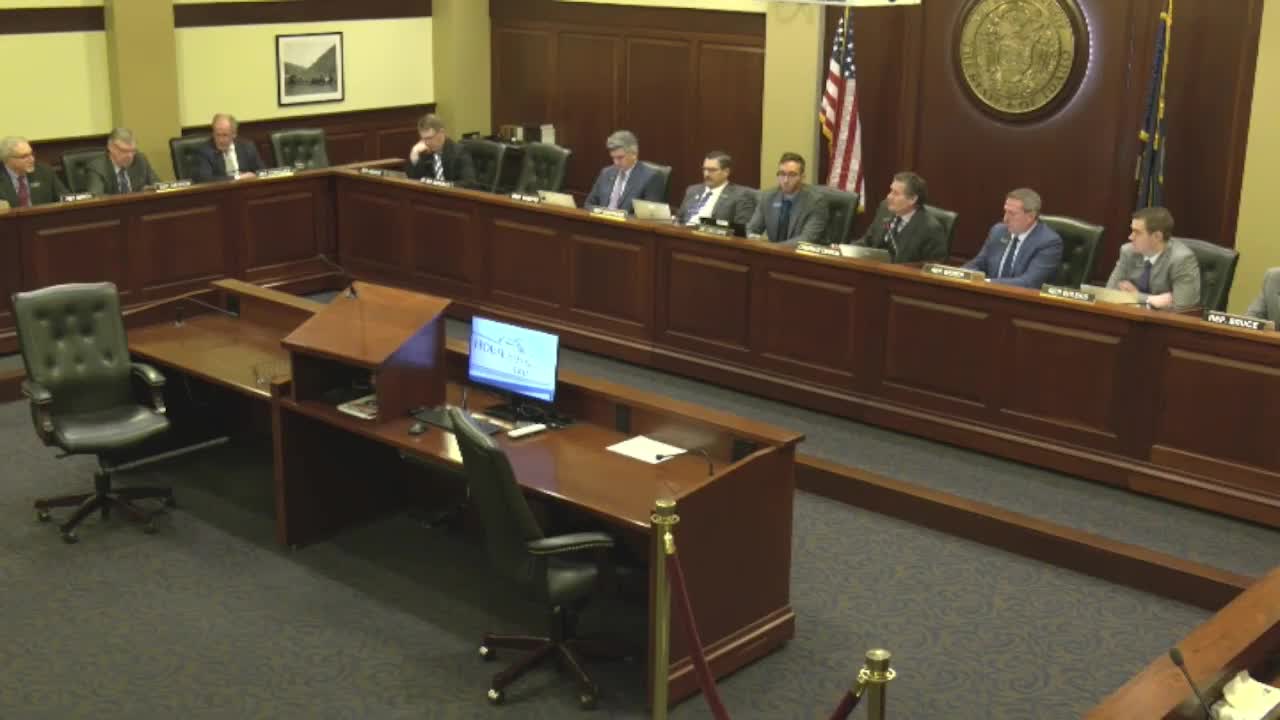
The committee introduced both RS32531 and RS32532 by voice vote. The sponsor said his intent in introducing the two RSs was to start an interim conversation and that he did not intend to move the legislation this session; he asked for informational hearings and further discussion.
What to watch for: The RSs propose a constitutional change that would require voter approval and a statutory framework that would take effect only if voters ratify the amendment. The package raises policy questions about whether to preserve specialized local funding mechanisms (auditorium, resort, or other district taxes) or replace them with a general, flexible local option that local voters could tailor and time-limit.