Get Full Government Meeting Transcripts, Videos, & Alerts Forever!
Get email alerts on the Insurance Health Insurance topic
No spam. Unsubscribe anytime.
Department of Insurance reports PBM enforcement work, outlines wildfire risks and proposed mitigation pool
Summary
Director Dean Cameron told the Joint Finance‑Appropriations Committee on Jan. 21 that the Department of Insurance is implementing last year’s PBM reform, collecting PBM data and handling numerous complaints; he also described wildfire‑driven pressures on the property insurance market and a proposed pool to fund mitigation and stabilize carriers.
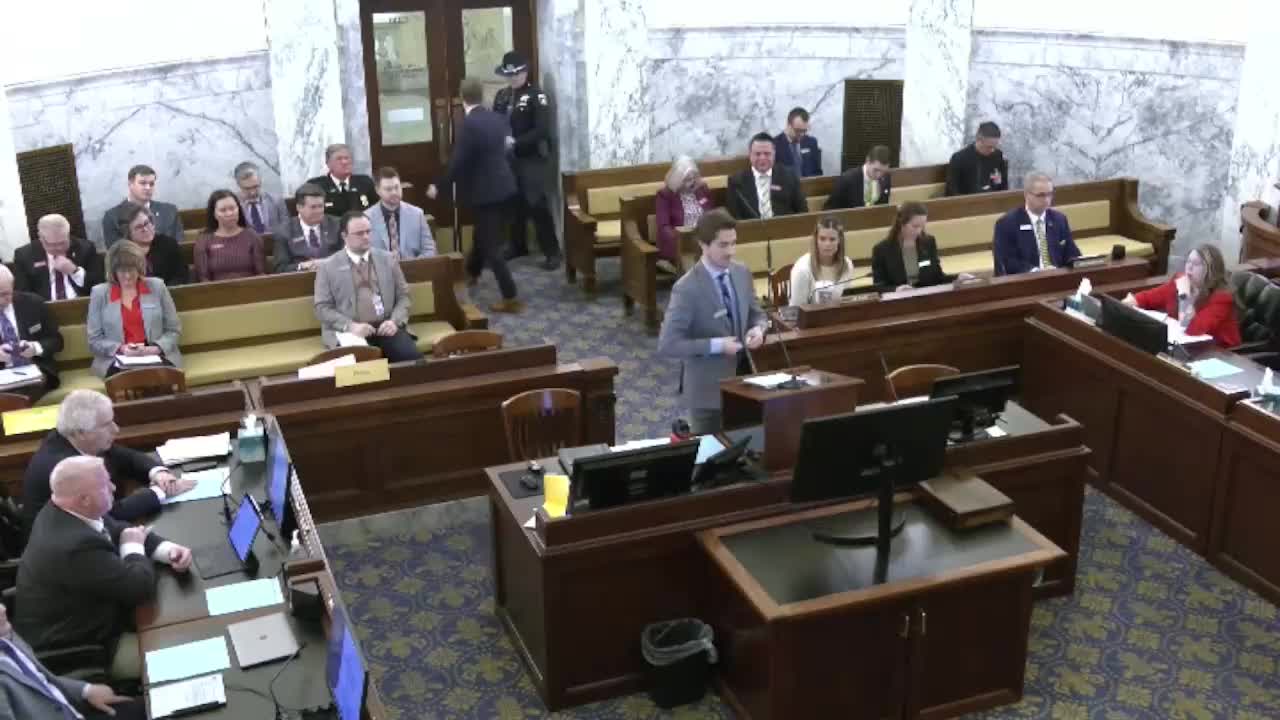
The Idaho Department of Insurance told the Joint Finance‑Appropriations Committee on Jan. 21 that it is enforcing pharmacy benefits manager (PBM) reforms enacted last year, collecting required PBM data and handling numerous consumer complaints while also monitoring wildfire‑related pressure on the property insurance market.
Noah Peterson, budget and policy analyst with the Legislative Services Office, presented the department’s FY2026 enhancement requests and fund summaries. Director Dean Cameron described several agency priorities to lawmakers: implementing PBM reporting and complaint handling under last year’s PBM reform; administering the state’s high‑risk reinsurance pool and a federal 1332 waiver that helps lower individual market rates; addressing wildfire risk to homeowners and the effect of reinsurance and catastrophic losses on carriers; and seeking legislation to create a mitigation and carrier‑support pool for homeowners.
Peterson told committee members the Department of Insurance has 75.5 approved FTPs (63.5 in the Insurance Regulation program and 12 in the State Fire Marshal division) and operates two dedicated funds: the Arson, Fire and Fraud Prevention Fund (for the State Fire Marshal) and the Insurance Administrative Fund (for licensing, examinations and investigations). He summarized fiscal 2024 activity: the department reverted about $2.2 million of its appropriation—roughly $917,000 in personnel and $1.277 million in operating expenditures—and spent approximately 69.3% of its budget on personnel costs and 29.5% on operating costs.
The department’s FY2026 requests include a staff actuary (1 FTP, $201,900 ongoing plus $3,000 one‑time office equipment), a regulatory compliance specialist (pay grade O, to advise on procedure and public policy), a compensation increase for the State Fire Marshal and deputies ($48,100 ongoing), and $162,200 one‑time capital outlay for replacement turnout gear, cameras and two medium‑duty pickup trucks. The department also received a trailer appropriation to implement House Bill 596, which amended Idaho Code, section 41‑349; the agency was appropriated 1 FTP and $132,400 to support PBM reporting and implementation of the statutory changes.
On PBM enforcement, Director Cameron said the department hired an analyst to handle PBM complaints and to collect data submitted by PBMs in a statutory format. “We are in the process of collecting data from PBMs. Most have complied and have submitted their data,” Cameron said, adding that several PBMs have not yet provided required submissions and that the complaints his office is receiving range from alleged improper dispensing fees to contract and responsiveness issues. He said the office is compiling a detailed report and will provide additional data to the committee as implementation continues.
Cameron described the state’s use of a federal 1332 innovation waiver—referred to during the hearing as the “1332 waiver”—and a high‑risk pool that acts as reinsurance for certain high‑cost claims identified by CPT code. Cameron said the waiver and pool have supported lower individual market rates and increased carrier participation in Idaho’s insurance exchange. “We have doubled the number of carriers participating on the health insurance exchange,” Cameron said, attributing part of that change to the high‑risk pool and the federal waiver.
On property insurance, Cameron said wildfire activity in the West and associated reinsurance market tightening have pressured carriers and contributed to nonrenewals and rate increases for some homeowners. He said Idaho typically ranks among states with the largest acres burned and that during the most recent season the state burned just under 1 million acres; the Department of Insurance reported the loss of more than 140 structures this year, roughly 40 of which were residences. Cameron said carriers often purchase reinsurance and that reinsurance cost increases and several insolvencies elsewhere have tightened capacity and raised costs nationwide and in Idaho.
To respond, Cameron said the department is proposing legislation to create a pool to help homeowners harden structures against wildfire and to provide a mechanism to help carriers remain in the Idaho market. The pool would fund mitigation measures—clearing vegetation, replacing vulnerable materials, and other low‑cost hardening steps—and could function in part to spread risk to keep carriers solvent and writing business in Idaho. Cameron said the department also closely tracks the growing use of surplus lines (nonadmitted) coverage for homeowners, which offers fewer consumer protections.
Lawmakers asked for more specifics about PBM complaints and data. Senator Cook praised the department for the analyst but said one staffer may be insufficient given the volume and complexity of complaints; Cameron said the work has proved demanding and the analyst has received numerous complaints. Representative Furness asked for a brief explanation of the 1332 waiver and the high‑risk pool; Cameron described the pool’s role in reinsuring certain expensive claims and stabilizing premiums.
Cameron introduced several staff members present at the hearing, including Deputy Director Wes Trucksler, public information officer Julie Robinson and fiscal officer Lisa McIntosh, and said most department positions are filled. He closed by thanking the committee and noting the department’s intent to continue providing data to the Legislature as PBM implementation and wildfire‑related market changes evolve.
No formal committee action was taken on the department’s enhancement requests during the Jan. 21 hearing.