Get Full Government Meeting Transcripts, Videos, & Alerts Forever!
Get email alerts on the Resource Center Closure topic
No spam. Unsubscribe anytime.
Grand Junction council hears divided views on Resource Center; schedules further discussion on possible short extension
Summary
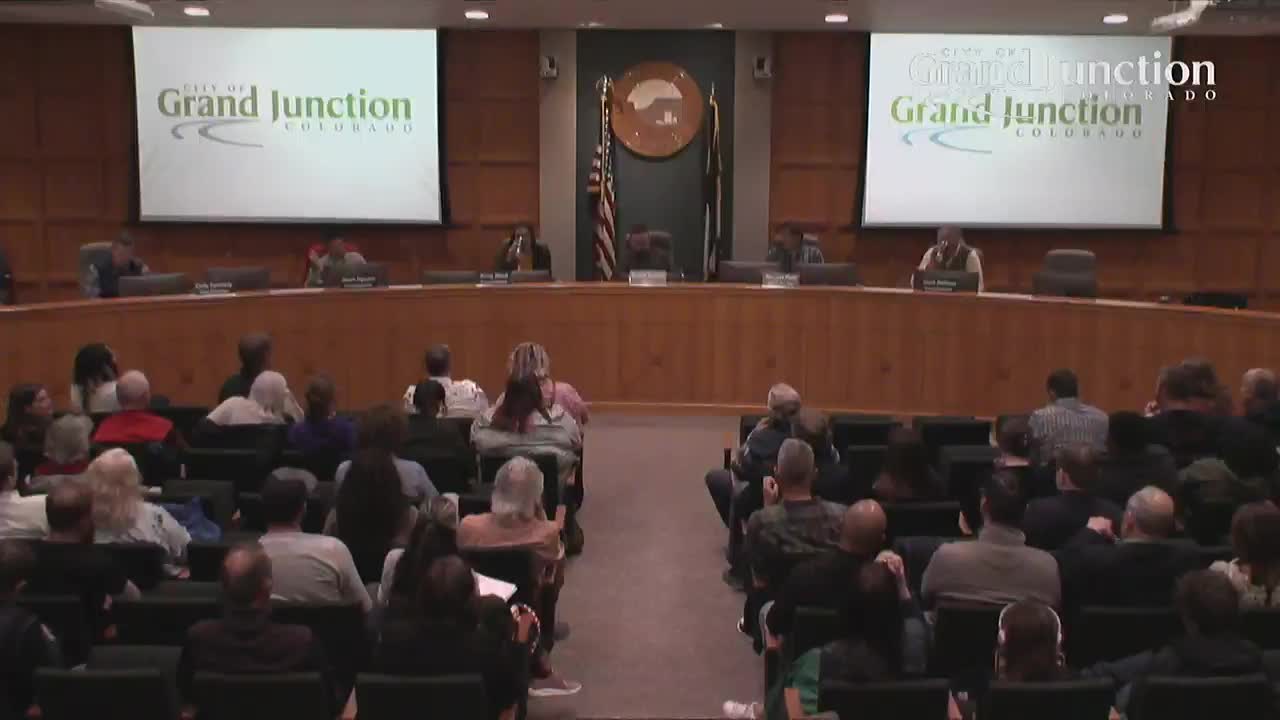
Grand Junction City Council held a special workshop on March 17, 2025, to hear public comment and discuss the planned April 15 closure of the downtown Resource Center and options for an interim or replacement site.
Grand Junction City Council held a special workshop on March 17, 2025, to hear public comment and discuss the planned April 15 closure of the downtown Resource Center and options for an interim or replacement site. Speakers included downtown business owners who said the center has increased trespassing, drug activity and cleanup costs; service providers and people with lived experience who said closing without an alternative would harm clients; and representatives of nonprofit coalitions who asked for more time to find a new location or to shift services.
Why it matters: The Resource Center serves as a hub for meals, case management, nursing services, showers and toilets used by people experiencing homelessness and by multiple local providers. Stakeholders told council that closing the center without a ready replacement would disperse people to other public spaces, worsen public-health and safety burdens on neighboring nonprofits and businesses, and interrupt ongoing housing and health services.
Public comment: More than two dozen community members spoke during an extended public-comment period. Downtown landlords and business owners described safety problems and financial impacts. PJ McGovern, who said he manages multiple Main Street properties, told council he has paid about “$30,000 a year” for private security and weekly cleanup of needles, blankets and feces at several buildings. Jody Visconti Clow, director of Grand Valley Catholic Outreach Day Center, said she had made “a total of 21 calls to 911 dispatch, 16 calls to non emergency, and 8 calls to 911” since mid-December and described repeated incidents of drug dealing and threats near her facility.
Service providers and people who use the center urged more time to relocate services and to preserve critical on-site functions. Stephanie Avascones, executive director of Mutual Aid Partners and co-chair of the Resource Center Service Council, told council the center has delivered “over 83,000 collaborative services” and currently manages “over a hundred, active case management” records. Several speakers representing Mutual Aid Partners, United Way and other providers said the center offers showers, restrooms, storage and on-site case management that are difficult to replicate quickly and that mobile outreach would not replace all functions.
Differences in priorities: Speakers framed the issue differently. Business owners and some residents said the center’s location has depressed downtown visitation and commerce, pushed crime and damaged property; many opposed extending the center’s lease. Service providers and users stressed continuity of care and warned that a sudden closure would set back recent housing placements and other progress. Faith-based and small nonprofits said they bear uncompensated burdens when services are dispersed.
Council and staff discussion: No formal vote was taken. Mayor Herman reiterated that no decisions would be made at the workshop and opened the floor for provider input and staff updates. City staff reported they had evaluated “20 plus” potential properties and that a previously promising site at 2851 Avenue was abandoned after due diligence showed it to be cost-prohibitive. Staff and several providers discussed options including (1) an intentional, limited extension of the current lease while partners secure a new shell and complete renovations; (2) a smaller, distributed model that moves some services to existing agency spaces; or (3) enhanced mobile outreach and transportation to reach people where they camp.
Provider planning and constraints: Providers said some services could be moved but others—showers, toilets, storage and on-site nursing/case management—are harder to relocate quickly. United Way and Mutual Aid Partners told council they can assume or assist with some operational lifts; Homeward Bound and other organizations said removing physical infrastructure (pavilion, heat units, shower trailer) and relocating it would take weeks. Providers cautioned that relationships with clients, trust and referral pathways take months to rebuild if the center closes.
Next steps: Council members did not make a final decision. They asked staff and service providers to return with clearer, deliverable plans and agreed to agendize the question for further council consideration. Council instructed staff to place the issue on the agenda for an upcoming regular meeting (a preliminary discussion on Wednesday following the workshop was requested) and to explore the feasibility of a special workshop the week after to review written proposals from providers and staff. Several providers said they would meet and submit consolidated input to council; United Way offered operational assistance.
Ending: The council closed the workshop without changing the April 15 date at this meeting. Councilmembers signaled differing views—some said they could support a short, definite extension if providers produced concrete deliverables and a timeline; others said the city’s prior public commitment to April 15 must be honored unless there is a clear, immediate alternative. Staff said a lease amendment or resolution could be drafted for council consideration if members provided specific direction on length and conditions of any extension. Council and staff agreed to coordinate follow-up meetings and public communications so stakeholders would know what will be considered next.
Votes at a glance: No formal motions or votes were made during this special workshop. Council directed staff to agendize further discussion of a possible lease amendment or short extension and to coordinate with service providers on an operational plan that would accompany any extension.