Get Full Government Meeting Transcripts, Videos, & Alerts Forever!
Get email alerts on the State Employee Pay Compensation topic
No spam. Unsubscribe anytime.
Change-in-compensation committee recommends targeted raises, trooper pay priority; JFAC accepts report
Summary
JFAC accepted the Change in Employee Compensation (CEC) committee report recommending across-the-board pay schedule shifts, per-FTP pay increases, and targeted boosts for state troopers, IT and nursing roles. Committee members raised concerns about vacancy and retention rates.
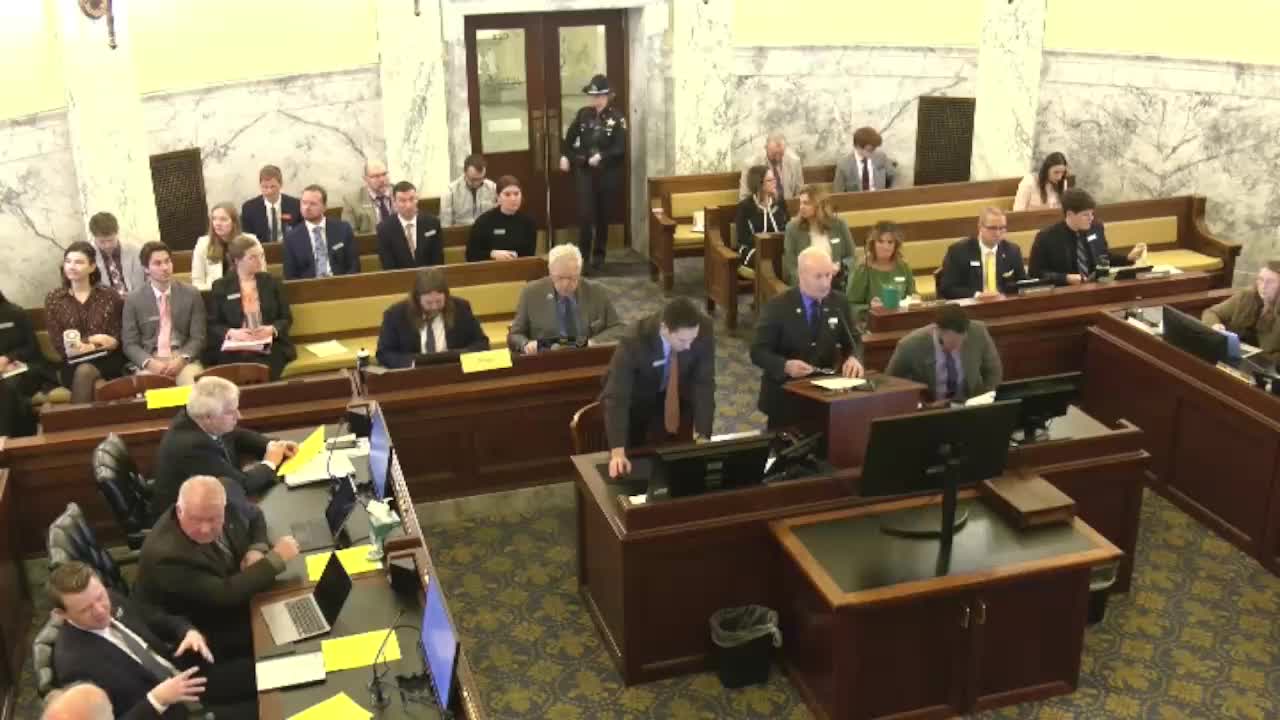
The Joint Finance-Appropriations Committee accepted the Change in Employee Compensation (CEC) committee's report, which recommends adjustments to state employee pay schedules and targeted salary increases for specific occupations.
Senator Dan Foreman, CEC co-chair, told the committee the CEC recommends shifting the primary compensation schedule upward by an average of 3.2 percent, with the exception of pay grade D where the minimum would remain $7.25 per hour. The committee recommended moving specialized schedules up an average of 3.2 percent for public safety positions, 3 percent for IT and engineering, and 3.5 percent for nursing and health care. Foreman also said appropriation levels should increase from $13,000 to $13,960 per FTP for fiscal year 2026.
On salary increases, the CEC recommended funding a $1.55-per-hour increase per FTP in the aggregate, with flexibility given to agency heads and institution presidents on distribution. For Idaho State Police troopers (pay grade L), the committee recommended a funded increase "to meet but not exceed 8%" to address critical staffing shortages. Foreman framed the trooper recommendation as a response to what he described as a "serious public safety emergency," citing 50% manning in parts of ISP District 2 and an ongoing exodus driven mainly by pay.
Representative James Holsclaw, present to echo the committee's appreciation of staff work, said the CEC tried to balance fiscal stewardship and employee retention.
Senator Ward Engelking urged caution, noting that many state jobs are below market and that the state faces high vacancy and turnover (she cited "over a 19% vacancy in turnover"). Representative Tanner asked for the provenance of the trooper recommendation; Foreman reiterated it was driven by retention concerns tied primarily to compensation.
Senator Woodward voiced support for the committee's work. After questions and comments, Co-chair Horman asked unanimous consent to accept the CEC report; the motion was seconded and accepted with no objections recorded.
Key recommendations (as presented by CEC co-chair Dan Foreman)
- Shift primary compensation schedule upward by an average of 3.2% (pay grade D minimum held at $7.25/hour). - Shift specialized schedules: public safety +3.2%; IT & engineering +3.0%; nursing & health care +3.5%. - Fund a $1.55-per-hour salary increase per FTP with agency-level distribution flexibility, or 3% where specified. - Targeted increase for Idaho State Police troopers (pay grade L): fund up to, but not exceeding, 8%. - Fund a 4.5% salary increase for IT & engineering schedule employees (committee recommendation), and a nursing increase of $1.55 per hour per FTP or 3%, whichever is greater.
Votes at a glance
- Motion: Accept report of the Change in Employee Compensation Committee. - Mover: Co-chair Horman (requested unanimous consent). - Second: Senator Woodward. - Outcome: Accepted by unanimous consent (no objections recorded).
Context and concerns
Senator Ward Engelking warned that some classifications remain far below market (she cited being "25% below market rate") and emphasized high vacancy rates. Representative Tanner sought specificity about the trooper pay proposal; Foreman said the 8% target was intended to improve retention and address operational risks in patrol coverage. The acceptance of the report is an advisory step; detailed appropriation and distribution decisions will be made during JFAC's maintenance and enhancement hearings.
Clarifying note: the committee did not vote on insurance appropriation amounts for school districts; the CEC report recommended those be handled in the school budget process.