Get Full Government Meeting Transcripts, Videos, & Alerts Forever!
Get email alerts on the Geologic Survey Database topic
No spam. Unsubscribe anytime.
Idaho Geological Survey requests permanent support for database manager and outlines role in mineral data and core preservation
Summary
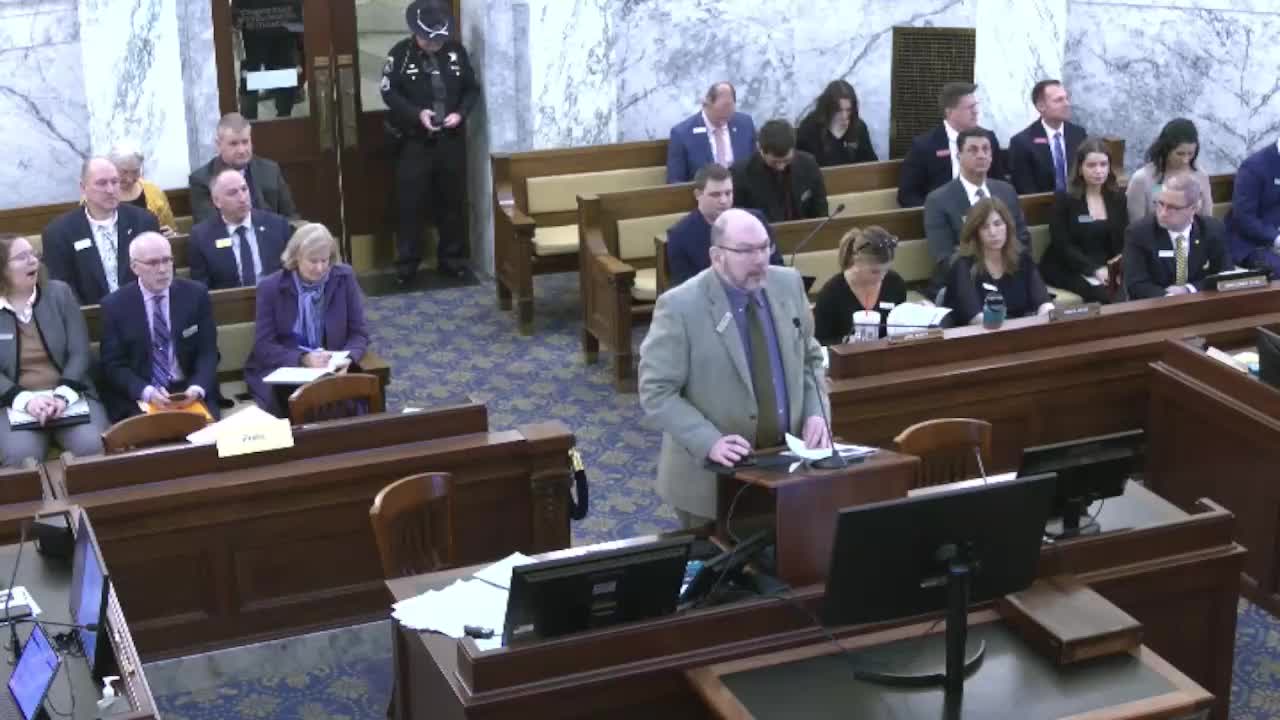
The Idaho Geological Survey (IGS) told the Joint Finance-Appropriations Committee it seeks additional general fund support to convert a grant‑funded database manager post into a permanent position and described a broader case for preserving geologic and core data to support exploration and economic development.
The Idaho Geological Survey (IGS) presented its FY2026 budget request to the Joint Finance‑Appropriations Committee, including an ask to move a historically grant‑funded database manager position to continuing state support. Kevin Campbell, the Legislative Services Office analyst, summarized IGS’s mission as the state lead for collecting and sharing geologic and mineral data.
Claudio Berti, IGS director and Idaho state geologist, described the position as fundamental to maintaining geologic data systems. He said the role has been grant funded and that grant funding is running out. Berti told the committee the position “has been with us for several years now” and that losing it would be “catastrophic for the survey.” He also said the database manager role often enables a 2:1 federal matching ratio, allowing the survey to leverage state funds to attract more federal dollars.
Why it matters: IGS compiles geologic mapping, mineral assessments, seismic monitoring and other technical data used by state agencies, local governments and private industry. The survey said much of its data is publicly available and that preserving physical samples and historical core repositories could reduce duplicative permitting and exploration costs in the future.
Budgetary details and program context: Campbell said IGS had 12.47 authorized FTEs and that personnel costs represented about 76.5% of the FY2024 budget; operating expenses were 14% and capital outlay totaled about $122,880 (including microscopes and a seismometer for the Idaho Seismic Network). IGS received a 0.19 FTE database manager funded in FY2025; the FY2026 request seeks an additional 0.13 FTE to further fund that role. Berti said the position’s grant funding historically came from sources such as abandoned mine lands programs administered through the Department of Lands; those funding arrangements are not guaranteed and could end.
IGS and mineral development: Committee members asked about the survey’s work related to mineral exploration, including rare earth and critical minerals. Berti said the survey provides non‑proprietary geologic data, mapping and research that firms and others use to evaluate resource potential. He said Idaho lacks a physical core repository comparable to some other states and that preserving core and physical samples would be a strategic investment to avoid repeated re‑drilling and re‑permitting.
Next steps: IGS asked for continued legislative support for the database manager position to stabilize a function that supports grants and multiplies federal matching funds. Committee members asked for follow‑up materials and cost estimates for a potential core repository and economic impact analyses.