Get Full Government Meeting Transcripts, Videos, & Alerts Forever!
Get email alerts on the Agriculture Land Use topic
No spam. Unsubscribe anytime.
Senate advances changes to agricultural protection areas after broad farmer support and technical edits
Summary
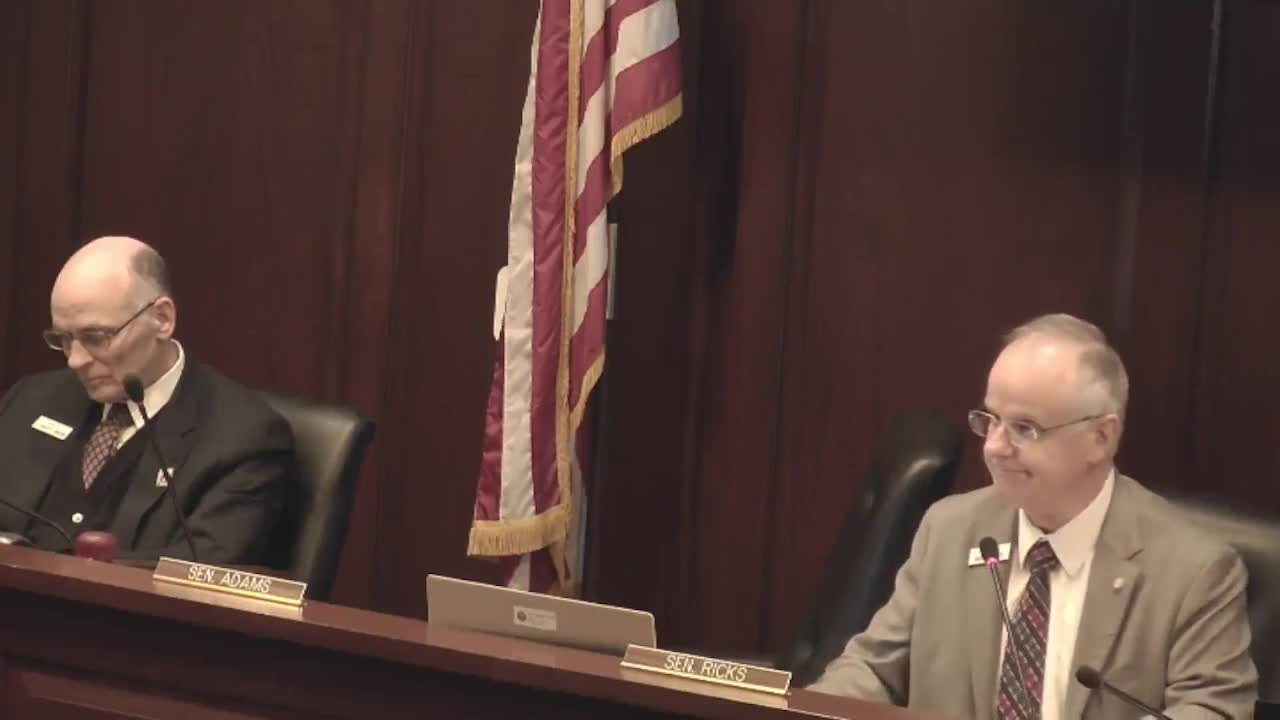
Sen. Ben Adams said Senate Bill 1133 refines the agricultural protection area process to clarify administrative fees and decisions, confirm APAs do not require rezoning, and limit nonagricultural uses on APA‑designated land.
Sen. Ben Adams (R‑12) told the committee Senate Bill 1133 updates the agricultural protection area (APA) statute adopted in the prior session to clarify application and review procedures, protect landowner choice, and tighten land‑use protections.
"This bill makes several updates to improve that framework, by clarifying the application process, ensuring fees are reasonable, and reinforcing the agricultural protection area designations, so they do not require a rezone or comprehensive plan amendments," Adams said.
Roger Batt, representing the Idaho Eastern Oregon Seed Association, described the bill section by section and identified a key local concern: some county zoning ordinances effectively blocked APA applications in parts of Canyon County by treating applications as if they required the more costly rezone or plan‑amendment process. Batt said the proposed changes would ensure application fees "are not to exceed the cost of covering those administrative expenses" and would clarify that APAs "do not require a rezone or a comprehensive plan amendment." He also described language to allow landowners to apply whether they are inside or outside an area of impact.
Several growers and local agriculture advocates testified in support. Shane Alder described farmland loss as an urgent problem for fourth‑generation farmers. Miguel Villafana (transcript spelling), a Canyon County grower, said city impact‑area boundaries had excluded some landowners from applying and that the county's fee structure required for a comprehensive plan amendment could cost upwards of "approximately $5,000 to $6,000" per application.
The Association of Idaho Cities urged a narrow amendment to protect taxpayer investments tied to areas of impact, noting recent changes to area‑of‑impact law require counties and cities to reexamine those boundaries and that the areas of impact should be limited to expected five‑year growth. Jonathan Wheatley, deputy director of AIC, recommended removing the phrase "inside or" on a line in the draft to avoid unintended impacts on municipal investments.
The bill sponsor and supporters proposed and circulated committee amendments that would remove proposed creation of an "agriculture protection area fund" from the bill and refine administrative timelines and appeal language. Key amendment points described in the hearing include: - Clarifying that approved APAs do not trigger a rezone or comprehensive plan amendment. - Limiting application fees to administrative costs and allowing fees for appeals only to cover costs. - Inserting a 60‑day administrative decision timeline for a planning‑and‑zoning administrator or other designated official; if that official fails to issue a written decision within 60 days, the APA area's recommendation becomes final. - Prohibiting commercial or industrial uses on APA lands unless they "contribute to the agricultural operation" and making those uses subject to county P&Z ordinances and building codes.
Action taken Sen. Den Hartog moved that the committee send Senate Bill 1133 to the fourteenth order for possible amendment; Sen. Anton seconded the motion. The motion carried.
Next steps The bill was advanced to the fourteenth order for amendment consideration. Proponents asked the committee to consider AIC's suggested wording changes to avoid creating conflict between APAs and areas where municipal investments are expected.