Get Full Government Meeting Transcripts, Videos, & Alerts Forever!
Get email alerts on the Backyard Chickens Hoas topic
No spam. Unsubscribe anytime.
House committee holds bill that would limit HOA bans on backyard chickens
Summary
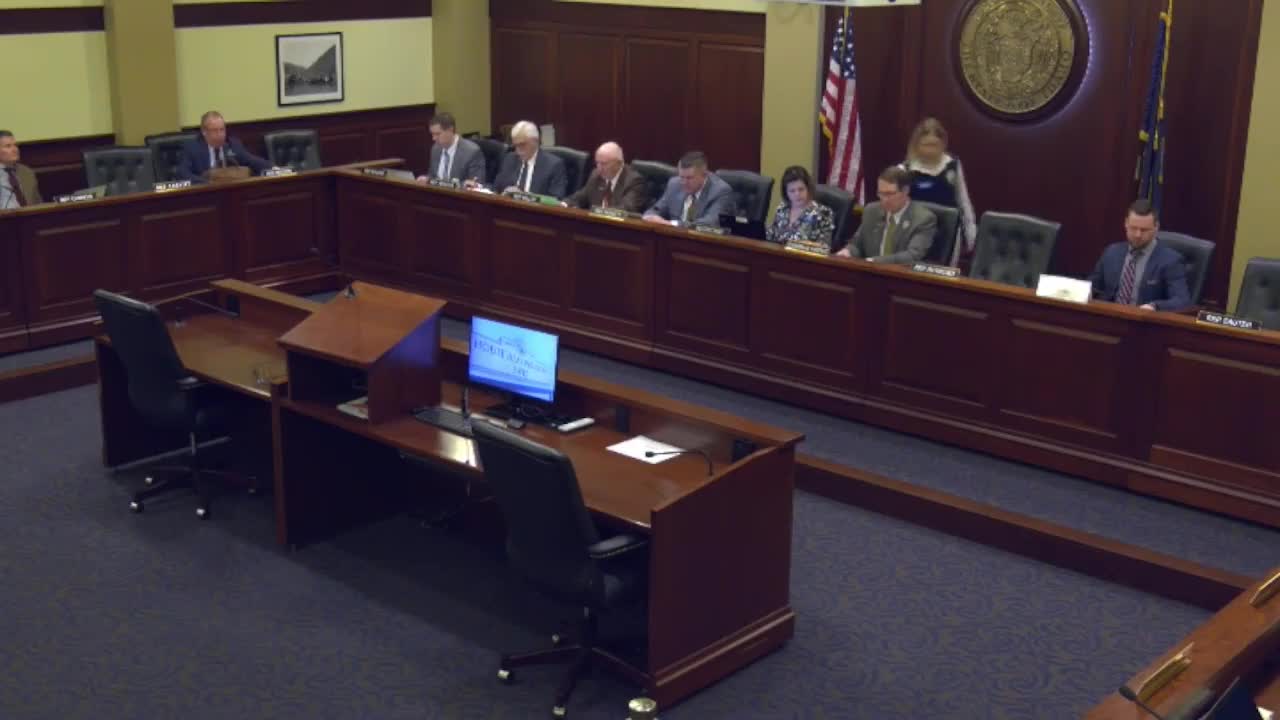
The House Agriculture Affairs Committee on a close 8‑7 roll call voted to hold Senate Bill 10 26 in committee after extended member questions and public testimony both for and against the proposal.
The House Agriculture Affairs Committee on a close 8‑7 roll call voted to hold Senate Bill 10 26 in committee after extended member questions and public testimony both for and against the proposal.
Representative Steve Tanner introduced the measure, saying it would stop homeowners associations from using deed restrictions or covenants to prohibit homeowners from keeping chickens on single‑family lots. "This bill only allows for the procurement and the farming of chickens," Tanner said, and the draft sets a baseline of "4 chickens for every 2 tenths of an acre," with a maximum computed by lot size and exemptions for agricultural zones and multifamily housing.
The measure prompted questions from committee members about public‑health impacts, local control and legal clarity. "Has there been any discussion with the state vet or others what this will do for being able to control the bird flu?" Representative Dygert asked. Tanner said he had not received such input and did not have documentation on that question.
Public testimony was largely opposed. William (Bill) Schultz, a former homeowners association president, told the committee he purchased into a neighborhood because of CC&Rs and called the bill "a nightmare for the HOA boards" and asked members to "please ... kill it outright." John Osmond, a Star homeowner, described a prior neighbor flock that he said produced nuisance odor and, he asserted, contributed to his pet dog's fatal salmonella infection: "That chicken poop ... killed my best friend," Osmond said. Scott Emerick, another homeowner in unincorporated Ada County, warned the bill could invite predators and public‑health risks and said the measure "yanks the rug out" from homeowners who bought into communities with restrictions.
Noel Rauschendorfer, a property‑law attorney representing homeowners associations, said Idaho courts treat CC&Rs as private contracts and warned that the bill as drafted would render existing restrictive provisions unenforceable. "Idaho Supreme Court has treated them as a private contract many, many times," she told the committee, and she described several textual ambiguities in the draft that could prompt litigation, including how the 0.2‑acre metric should be applied.
Committee members also discussed a related "trailer" bill, numbered in testimony as Senate Bill 10 63, that Representative Tanner said would replace paragraph 3 of the bill and define terms such as "urban farming" and "small farm animals." Several members said they wanted to see the trailer bill text before acting; Tanner and others said a motion to send SB 10 26 to general orders could allow incorporation of that language. Tanner said sponsors had proposed an amendment to change the draft language in line 38–39 to read "at least" and to add "with additional chickens permitted based on lot size or as otherwise allowed."
After extended debate, members offered competing motions: a motion to hold the bill in committee until it could be considered together with SB 10 63; an amendment to send SB 10 26 to general orders; and a substitute motion to hold in committee. The committee took a roll‑call vote on the amended substitute motion to hold the bill in committee; the motion passed 8‑7.
The committee record shows members raised recurring concerns about local control, public‑health authority (including questions about avian influenza and salmonella), the enforceability of CC&Rs, the potential for unintended commercial egg production on larger lots, and ambiguous draft language that members and a property lawyer said could require further drafting to avoid litigation.
The committee did not adopt the bill or any substantive amendments at the hearing; the final formal action was the vote to hold Senate Bill 10 26 in committee. The motion passed 8‑7 and the bill remains in committee pending further action or amendment.
Votes at a glance
- Amended substitute motion: Hold Senate Bill 10 26 in committee — Passed 8‑7 (roll call). Individual roll‑call votes were recorded by the committee clerk during the hearing transcript; the committee tally was 8 in favor, 7 opposed. No adoption of the bill or substantive amendment occurred at this hearing.