Get Full Government Meeting Transcripts, Videos, & Alerts Forever!
Get email alerts on the Animal Health High Path Ai topic
No spam. Unsubscribe anytime.
Idaho agriculture officials describe targeted approach to high-path avian influenza in dairy cattle and poultry
Summary
State agriculture director and state veterinarian told a House committee Idaho has focused movement restrictions and quarantines on lactating cattle and affected poultry facilities while testing milk to limit spread and protect producers' livelihoods.
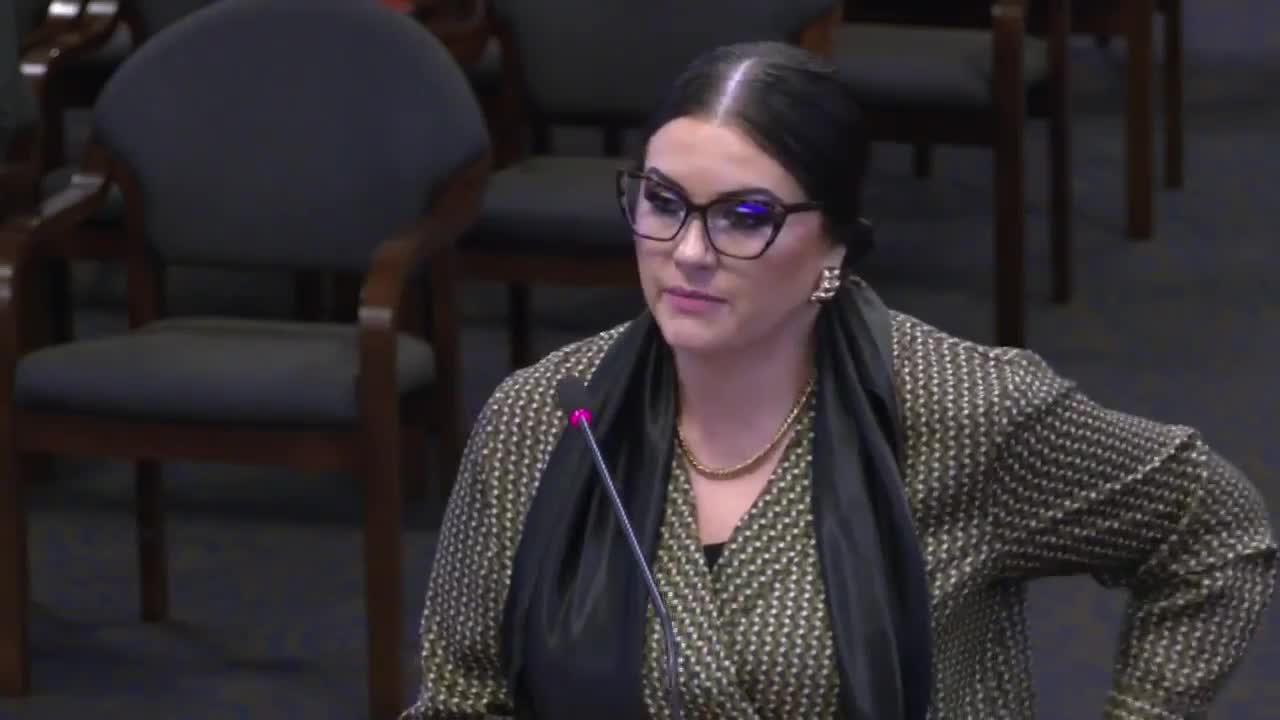
Chanel Tewalt, director of the Idaho State Department of Agriculture, and Dr. Scott Lively, state veterinarian and administrator of the Division of Animal Industries, briefed the House Agriculture Affairs Committee on state actions and ongoing monitoring for highly pathogenic avian influenza (HPAI).
Tewalt said Idaho moved early to restrict movement from affected states and to prioritize farm-level biosecurity. "We're here today for what is either a quick or an exhaust review ... and we're gonna cover high path avian influenza primarily as it relates to dairy cattle," she told the committee. She said Idaho was among the first jurisdictions to restrict cattle movement from states with unexplained cattle illness and to warn producers that cattle-to-cattle transmission was possible.
The briefing emphasized that Idaho has focused restrictions where the agency sees direct benefit. "We know that the disease is primarily existing in the milk," Dr. Lively told the committee, and added that restrictions have been limited to lactating cattle. He said nonlactating cattle, calves, steers and animals moving direct to slaughter have not been restricted in Idaho the way they have been in some other states.
Why it matters: State officials framed HPAI in cattle principally as a production issue affecting milk yield and farm income rather than a poultry-style depopulation response. That distinction has driven Idaho’s more targeted quarantines and its decision to allow some movements — particularly direct-to-slaughter — that other states have barred.
Details and actions taken
- Early movement restrictions: Tewalt said Idaho "very, quietly turned off basically the movement system" for imports from affected states early in the event to limit introductions while investigators sought a cause.
- Milk testing: Officials said Idaho now tests milk as part of a statewide surveillance strategy. Tewalt and Lively said milk testing provides a practical way to detect the virus on dairies and to clear quarantines once milk tests negative.
- Focus on lactating animals: Lively explained the state’s restrictions target lactating cattle because the virus has been repeatedly detected in milk; animals that are dry or moving direct to slaughter are treated differently.
- Poultry differences: Tewalt cautioned that poultry responses differ. She said poultry vaccination and depopulation policies are intertwined with international trade rules and that poultry producers and states have divergent views on vaccination because of trade consequences.
- Federal coordination: Both officials criticized perceived delays or inconsistencies in federal guidance early in the outbreak and said Idaho has sought to keep state and industry dialogue open. Tewalt said, "we weren't getting that direction" from USDA at first and that Idaho later urged clearer federal coordination.
Health and research notes
Dr. Lively said genome sequencing has shown the same strain in Idaho dairies and that clinical severity appears to have declined since the spring peak: "We've had a shift in a reduction in symptoms ... I think would indicate that some degree of immunity is being established." He cautioned that research on immunity, vaccines and risk to other mammal species is ongoing.
On cross-species risk, Lively noted isolated detections in species such as cats and occasional reports elsewhere in skunks and seals; he said the strains seen in some other states have markers of potential mammal adaptation not detected in Idaho’s strains.
Ending
Officials told the committee they will continue targeted quarantine and testing strategies, prioritize communication with local producers, and press for clearer federal guidance on trade, vaccination and response options. "We have tried to have quarantines and restrictions that made sense to industry," Tewalt said, emphasizing the state’s intent to balance disease mitigation with producers' ability to operate.