Get Full Government Meeting Transcripts, Videos, & Alerts Forever!
Get email alerts on the Agricultural Research Extension topic
No spam. Unsubscribe anytime.
University of Idaho agricultural research and extension requests targeted hires, highlights Parma facility and digital‑literacy work
Summary
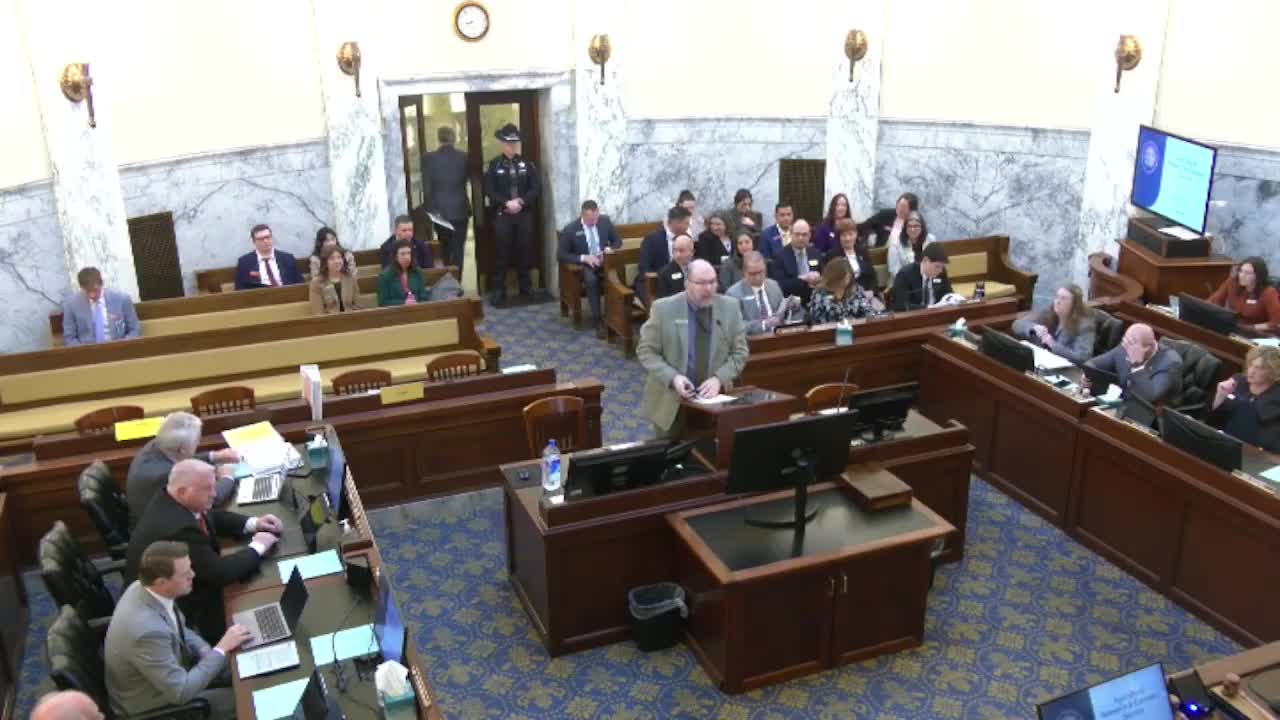
Dean Michael Perella of the University of Idaho’s College of Agricultural and Life Sciences told the Joint Finance‑Appropriations Committee on Feb. 10 that the college and the Idaho Agricultural Experiment Station support agriculture statewide through research, extension and applied programs and requested targeted FY2026 funding for faculty and facility needs.
Dean Michael Perella of the University of Idaho’s College of Agricultural and Life Sciences told the Joint Finance‑Appropriations Committee on Feb. 10 that the college and the Idaho Agricultural Experiment Station support agriculture statewide through research, extension and applied programs and requested targeted FY2026 funding for faculty and facility needs.
Perella said the experiment station operates 10 research and extension centers and extension has staff or a presence in 42 of Idaho’s 44 counties and three recognized tribal communities. “We are proud of the quality and impact of the research we conduct, the students we train, and the unbiased information we deliver to the citizens of Idaho,” Perella said.
Why it matters: Agricultural research and university extension connect producers, communities and rural economies to applied science, pest and water management research, youth development through 4‑H and programs aimed at closing the digital divide in rural areas. Committee members pressed college leaders on outcomes from recent ARPA‑funded digital‑literacy efforts and on the request for new faculty tied to rapidly growing crop sectors.
Budget overview and FY2026 requests
Kevin Campbell presented the Legislative Services Office overview noting the college’s five‑year average FTP is about 341.33 and that personnel comprises roughly 81% of the service’s expenditures. Campbell summarized recent appropriations that included faculty hires for animal and plant sciences and agricultural engineering, maintenance funding for a Parma research lab, and ARPA funds used to support digital‑literacy efforts tied to rural broadband investments.
Perella described specific FY2026 requests: $157,900 ongoing from the general fund for a viticulture and small fruits research faculty position to support grape and small‑fruit growers on disease prevention, water and pest management and post‑harvest storage; and $250,100 for building maintenance at the Idaho Center for Agriculture, Food and the Environment in Parma.
Digital‑literacy and extension outreach
Perella and extension leaders told the committee that extension’s role includes programs beyond production agriculture—youth 4‑H, community assistance and family programs—which is why extension delivered adult computer‑literacy training funded initially with ARPA. Perella said extension staff tallied more than 450,000 face‑to‑face contacts with Idahoans last year and engaged more than 75,000 youth in 4‑H programming.
Perella noted the college recently applied for a Federal Communications Commission grant program; he said the college’s proposal is part of a national competition and, if funded, would bring as much as $13 million to expand rural digital‑literacy work in coordination with two‑year and four‑year schools and community partners.
Committee questions and follow‑ups
Representative Handy asked whether research emphasis is shifting from yield toward nutritional value for specialty crops such as walnuts; Perella said nutrition and health‑oriented research is expanding and pointed to related campus programs. Representative Miller asked broadly about breeding, irrigation and alternative crops; Perella highlighted new facilities and a focus on water efficiency, breeding programs and soil health and cited the Idaho Center for Plant and Soil Health in Parma as a recent investment.
Senator Rose and other members raised the longer‑term funding question for programs started with federal one‑time ARPA funds. Perella said the college and extension teams plan to pursue external federal grants (including the FCC award noted above) and leverage state investment to sustain programs, while acknowledging some ARPA projects were designed to be time‑limited.
Ending
Perella announced his planned retirement in June and closed by thanking the legislature for prior support of facilities and faculty. College leaders said they would provide more detail on outcomes for adult digital‑literacy programs and on how requested faculty positions would address growers’ needs.