Get Full Government Meeting Transcripts, Videos, & Alerts Forever!
Get email alerts on the Public Health Budget topic
No spam. Unsubscribe anytime.
JFAC reviews Public Health Services budget, department seeks to restore programs cut to one-time funding
Summary
The Joint Finance-Appropriations Committee heard an overview of the Division of Public Health Services’ budget, including one-time ARPA/CARES carryovers, a request to restore ongoing programs reduced to one-time funding, and a package of data modernization and workforce initiatives.
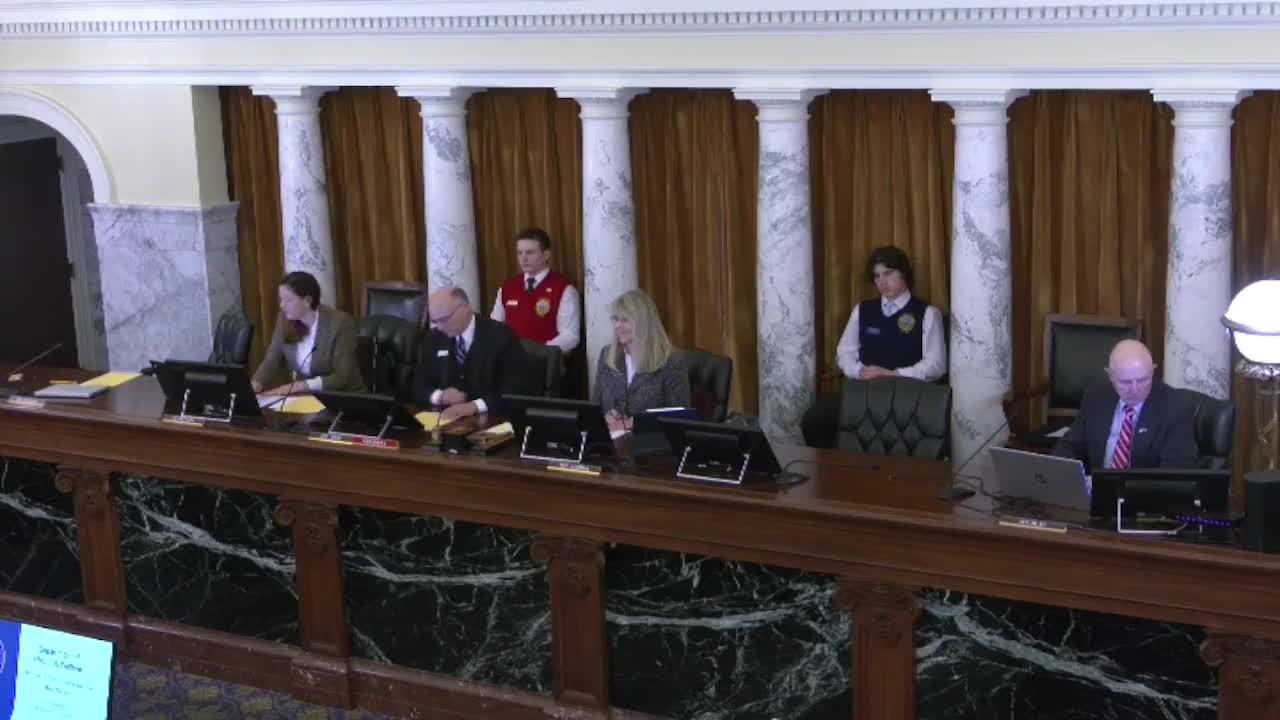
The Joint Finance-Appropriations Committee on Monday reviewed the Department of Health and Welfare’s Division of Public Health Services budget, focusing on a request to restore programs that were moved from ongoing to one-time funding and on a package of federal grant-driven data modernization and workforce initiatives.
Keith Bybee, division manager for budget policy analysis, told the committee the division’s FY2025 appropriation was $164,020,000 and that the FY2026 governor’s request and agency materials show structural shifts driven by CARES Act and ARPA awards in prior years. “What you’re seeing is the downstream effect of all of the CARES Act and ARPA funds that were going through this program at the time,” Bybee said, describing a move of several programs from ongoing to one-time authority and a resulting “true up” of expenditures to appropriated levels.
The request includes both one-time and ongoing elements. One-time items (listed in the agency request and presented on page 266 of the budget book) total about $8,752,500 and are primarily federal ARPA-related carryovers, the department said. Ongoing restoration requests total roughly $20.8 million on the agency request side; the governor recommended about $21.5 million, including an adjustment for program restorations and a $500,000 general fund initiative for a rural physician incentive program.
Why it matters: Committee members pressed the department on which programs are essential, how federal carryover funding changed expenditure patterns, and whether some functions fit better in other agencies. Restoring ongoing authority would return programs to baseline funding after several years of one-time appropriations, which matters for long-term program stability and for counties and providers that rely on these services.
Key program requests and details presented to the committee include: - Suicide prevention: restore $1,807,700 general funds and $195,000 federal funds; program created by the legislature in 2016 and established following the Health Quality Planning Commission report (2015). - Drug Overdose Prevention Program: restore $2,820,200 ongoing and 4 FTE; program in place since 2017 focusing on overdose prevention, naloxone training and related provider-focused efforts. - Refugee health screening: restore $991,000 ongoing and 1.5 FTE; Idaho Refugee Health Screening Program conducts initial medical screening and follow-up for new arrivals to Boise and Twin Falls. - Alzheimer’s and dementia program: restore $275,200 ongoing to support a statewide alliance and strategic plan implementation. - Fit and Fall Proof (older adult fall-prevention): restore $140,000 ongoing; volunteer-led community exercise program established in 2004. - Women, Infants and Children (WIC) and supplemental nutrition: restoration requests totaling multi-million-dollar levels to support nutrition services for low- and moderate-income women and children under 5. - Data modernization and laboratory/epidemiology investments: multiple grants (Data Modernization II and other CDC funding streams) to automate vital statistics, modernize WIC systems, unify roughly 60 siloed public-health systems and improve data exchange and transparency. - Immunization program: the division requested $2,500,000 ongoing from dedicated funds to support vaccine access for Idaho children; the budget materials also reference a larger immunization assessment fund balance and proposed adjustments found on page 268 of the budget book. - Vital records: request for $150,000 ongoing from dedicated funds for the Bureau of Vital Records and Health Statistics, which processes more than 100,000 sensitive records annually. - Home visiting: $725,900 ongoing (federal) to expand voluntary home visiting services in counties identified by a needs assessment.
Committee questions focused on program fit, duplication, and accountability. Representative Wendy Horman asked whether programs such as Alzheimer’s and Fit and Fall Proof should instead be administered by the Commission on Aging; Director Alex Adams and Division Administrator Elke Shaw-Tullock said the Division’s focus is prevention and that some programs target populations and objectives distinct from other agencies’ missions. Adams said the department is open to transferring programs if another agency is a better fit, but that the current restoration request returns existing Division responsibilities to baseline funding.
Senator Jonathon Cook pressed for specifics on data modernization work funded by ARPA and other grants; Adams said the department would provide a three-page summary to the committee outlining system upgrades, WIC modernization, vital statistics automation, and where the work stands.
Several legislators asked about Project ECHO funding, a continuing medical education platform hosted by the university. Representative Horman and others questioned whether the program should remain in the department budget; Director Adams said the department seeks to reduce “pass-through” funding where the agency has no hiring or performance authority and suggested the legislature consider removing legacy intent language that directs continued pass-through support.
The committee also heard that the division’s personnel and operating shares of the budget are relatively small compared with trustee and benefit payments: Bybee said approximately 50% of the division’s budget goes to trustee and benefit payments, around 18.6% (about $27 million) is personnel, and about $46 million is operating expenditures.
Ending note: Department leaders characterized the budget exercise—particularly the move of several items from ongoing to one-time authority in prior years and the current restoration requests—as a “healthy but challenging” review intended to align program authority with current needs. The committee did not take formal action during this hearing; staff were asked to provide follow-up materials on data modernization and to work with analysts on technical details.