Get Full Government Meeting Transcripts, Videos, & Alerts Forever!
Get email alerts on the Criminal Justice topic
No spam. Unsubscribe anytime.
Senate committee advances mandatory-minimum DUI-vehicular manslaughter bill to the floor
Summary
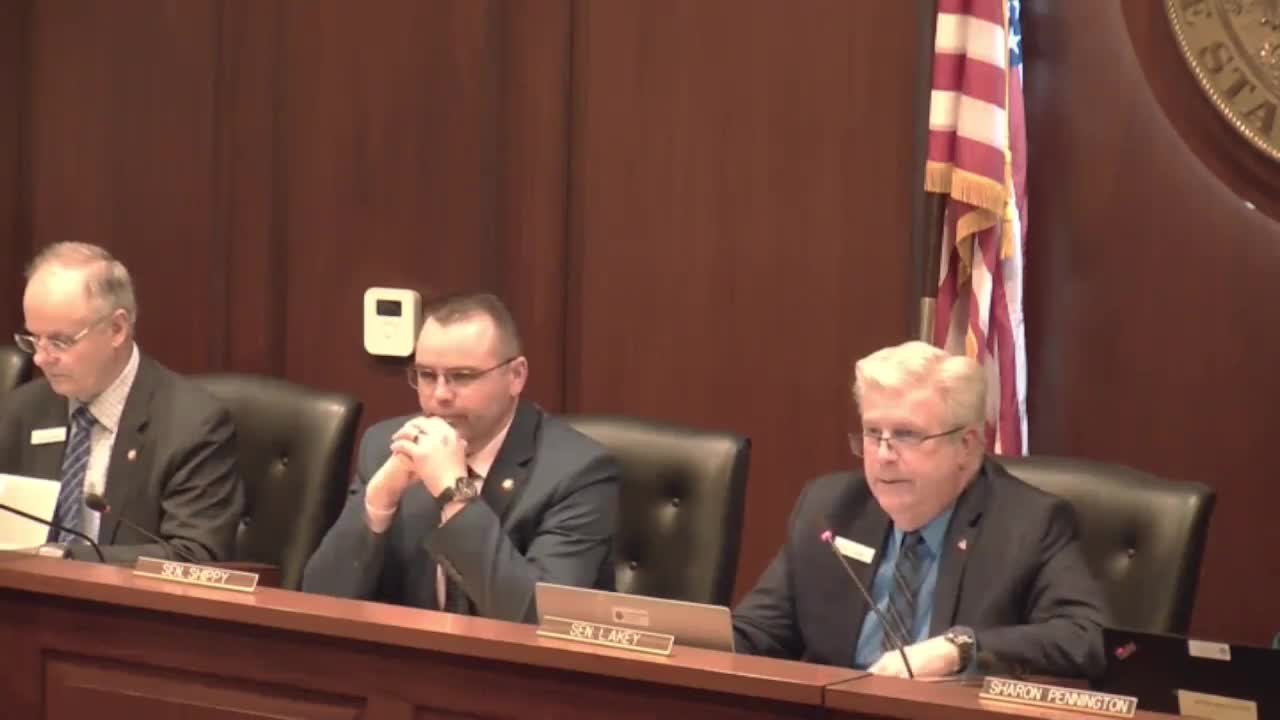
The Senate Judiciary and Rules Committee voted to send Senate Bill 1099 to the Senate floor with a "do pass" recommendation. The bill would require judges to issue a warning after a first DUI conviction and impose graduated mandatory minimum prison terms if a subsequent DUI results in vehicular manslaughter.
The Senate Judiciary and Rules Committee voted to send Senate Bill 1099 to the Senate floor with a due-pass recommendation after public testimony and extended questioning by committee members.
Senator Craig Burnt (R–District 21) introduced the bill as a mandatory-minimum measure aimed at increasing accountability for drivers convicted of driving under the influence (DUI) who later cause a death. "When someone is sentenced for their first DUI conviction ... the judge will now have to issue a warning stating that future DUI convictions along with vehicular manslaughter conviction may, or will result in a mandatory minimum of 5 to 10 years depending on how many DUIs they have on the record," Burnt said in committee.
The bill would require a judicial warning after a first DUI conviction; if a person later is charged with vehicular manslaughter in connection with a second DUI, the bill imposes a five-year mandatory minimum. A conviction for vehicular manslaughter tied to a third-or-higher DUI would carry a 10-year mandatory minimum under the bill. Burnt said judges would still retain the authority to impose longer sentences in cases that warrant them.
Why it matters: supporters said the bill creates predictable consequences for repeat impaired drivers and provides victims and families with a clearer expectation of punishment after a fatal crash. Chief Tracy Bascarachea, testifying for the Idaho Chiefs of Police Association and the Meridian Police Department, urged passage and said the legislation provides clear consequences: "This bill gives 0 ambiguity about the consequences someone will face if they do not learn from what may have been a mistake the first time," Bascarachea said.
Robbie Blassard, a deputy prosecutor representing the Idaho Prosecuting Attorneys Association, described these prosecutions as among the most difficult for victims and prosecutors and said the law would provide "some guarantee of an outcome" in certain circumstances. A member of the public, Deborah Carney, testified she supports mandatory minimums after a family member was involved in a fatal DUI case.
Opponents and cautionary voices on the committee raised concerns about mandatory minimums generally and about fairness where prior convictions occurred many years earlier. Senator Rekke questioned removing judicial discretion and warned mandatory minimums shift negotiation leverage and broaden government power to mandate fixed penalties. Senator Shippey and others supported a graduated approach, noting the sponsor had reduced the original proposal’s harsher thresholds to address fairness concerns.
The committee motion to send SB 1099 to the Senate floor passed; the chair called for ayes and a single recorded nay was entered by Senator Rekke. The bill now proceeds to the full Senate for further consideration.
Ending: Committee minutes record supporters from law enforcement and prosecutors and several members expressing the need to balance judicial discretion with public safety. The bill’s next stop is the Senate floor where further debate and potential amendment are possible.