Get Full Government Meeting Transcripts, Videos, & Alerts Forever!
Get email alerts on the Anti Slapp topic
No spam. Unsubscribe anytime.
Senate committee advances anti‑SLAPP bill to speed dismissal of meritless lawsuits
Summary
Senate Bill 1,001 (SB1001), sponsored by Senator Brian Lenny, would create an expedited process to dismiss strategic lawsuits against public participation (SLAPPs). The committee heard legal and stakeholder testimony and voted to send the bill to the Senate floor with a due‑pass recommendation.
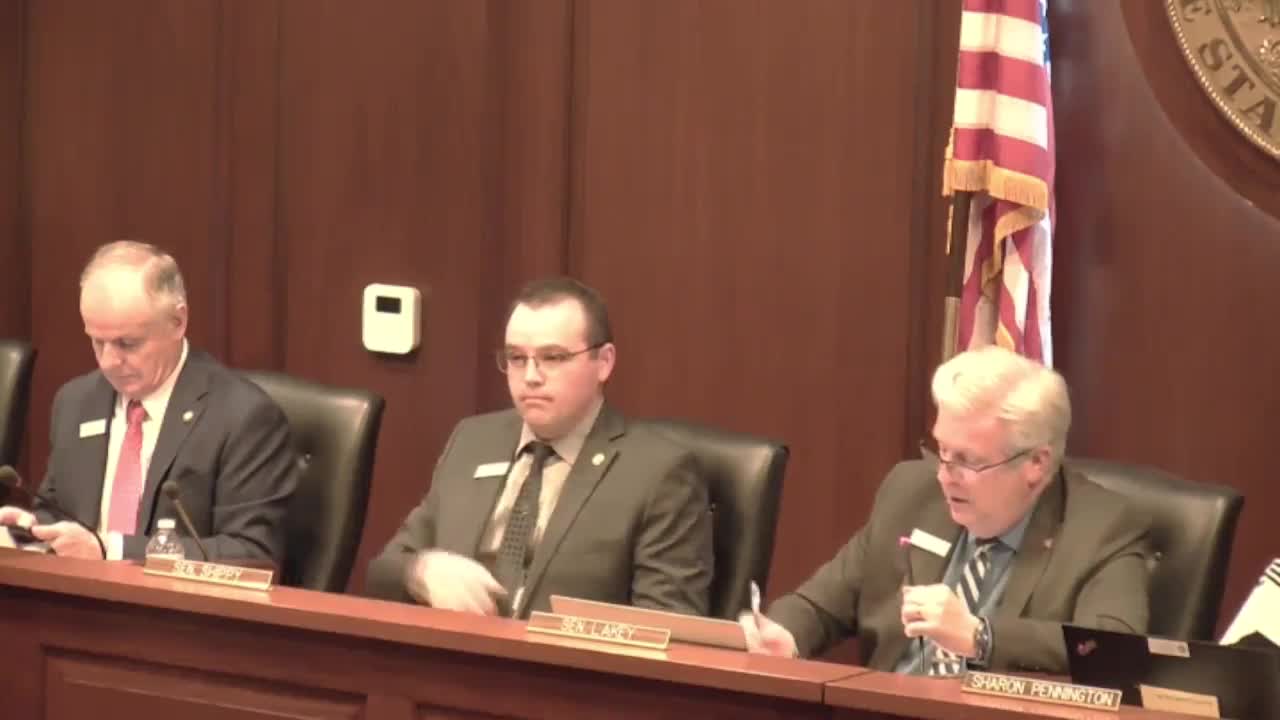
Senators on the Judiciary and Rules Committee advanced Senate Bill 1,001, a measure that would create a statutory procedure to expedite dismissal of strategic lawsuits against public participation, often called SLAPPs.
Senator Brian Lenny (District 13) presented SB1001 as a free‑speech protection measure that gives judges an early procedural tool to dismiss meritless, harassment‑style lawsuits before lengthy discovery and litigation. "This bill creates a new process to expedite sham lawsuits in days, weeks, and months instead of keeping Idahoans buried in court for weeks, months, or years," Lenny said.
Caitlin Wolf, testifying remotely for the Uniform Law Commission, described how the draft — modeled on the Uniform Public Expression Protection Act (UPEPA) — would permit a defendant to file a motion that stays discovery and requires an expedited hearing. Wolf said the judge would then assess whether the suit is a sham and should be dismissed or whether it should proceed under normal civil‑procedure rules.
Witnesses representing a range of perspectives urged passage. Catherine Hartley, an attorney with the Pacific Justice Institute, said anti‑SLAPP laws protect speakers who engage in controversial or unpopular speech and prevent litigation designed to chill public participation. Ken McClure, representing the Idaho Liability Reform Coalition, said the measure "ticks those boxes" for quicker, cheaper resolution of weak claims; Cynthia Gibson of the Idaho Conservation League said the bill would protect public participation and had broad coalition support. David Jensen, chair of Idaho’s Uniform Law Commissioners, said the state commission supports the act.
Committee members asked technical questions about judicial discretion, discovery limits and whether the bill would alter substantive causes of action. Lenny and Wolf repeatedly said the proposal does not change underlying elements of defamation or other claims; it provides an early procedural review so courts can distinguish meritorious claims from those intended to intimidate.
After testimony and questions, the committee voted to send SB1001 to the Senate floor with a due‑pass recommendation. Senator Acdy moved the motion and Senator Forman seconded; the motion carried by voice vote with no opposition recorded in the transcript.