Get Full Government Meeting Transcripts, Videos, & Alerts Forever!
Get email alerts on the Childcare Regulation topic
No spam. Unsubscribe anytime.
Idaho committee advances bill to let providers set daycare ratios; opponents warn of safety risks
Summary
The Senate Health and Welfare Committee voted to send House Bill 243 to the floor with a "do pass" recommendation after a day of testimony that split parents, providers and public-safety officials over whether deregulation would expand child‑care capacity or endanger children.
Boise — The Idaho Senate Health and Welfare Committee voted to send House Bill 243 to the floor with a “do pass” recommendation after more than two hours of testimony on a bill that would remove statutory numeric staff‑to‑child ratios and shift several licensing details to providers and the state Department of Health and Welfare.
Proponents said the measure would reduce regulatory barriers and expand child‑care capacity; opponents — including early‑childhood educators, city officials and law‑enforcement officers — said the change risks children’s safety. Representative Rod Furniss, the bill sponsor, told the committee that HB 243 “helps providers the Idaho way by reducing onerous regulations and helping parents and students find affordable daycare.”
The bill would move certain supervisory language from administrative rule into statute, require providers to adopt and publish a child‑to‑staff ratio policy rather than listing numerical ratios in code, and repeal local child‑care ordinances that now exist in a small number of Idaho cities. Kate Hawes (testifying for the bill), described a revised supervision standard in the bill and said the measure “for a child of 5 years or younger, you must be within sight or normal hearing and near enough to render immediate assistance.” She told senators the change is intended to require active supervision while giving providers flexibility to set age‑appropriate practices.
Opponents said the bill removes critical safety guardrails. Christine Tiddens, executive director of Idaho Voices for Children, told the committee that moving ratio decisions solely to providers would “open the door to operators and bad actors who cut corners to save costs.” Multiple child‑care workers and former directors said existing ratios reflect daily realities of infant and toddler care and that loosening the rules would increase the chance of injury or worse. Sabrina Dunn, an in‑home provider in Kuna, testified, “This bill will directly lead to injuries and even deaths.”
Several witnesses described enforcement and licensing work already done by cities and the state. Kathy Grismeyer, director of policy and government affairs for the city of Boise, said Boise had used zoning changes, tax rebates and other local tools to support in‑home providers and worried about a transition to state oversight without additional resources. Pocatello Police Chief Roger Shy recounted licensing work and investigations handled by local officers and said a 2023 enforcement action showed the role of numerical ratios in identifying overcrowding and abuse; he told the committee the bill “will only further hurt low income families.”
Mark Kirby described a June 2024 death his family says was linked to failures in supervision and alleged ratio violations at a private child‑care facility; he urged the committee to oppose the bill so “no other Idaho family” suffers a similar loss. Supporters including the Idaho Freedom Foundation and the Mountain States Policy Center framed the bill as a market‑driven approach that would remove regulatory barriers to opening licensed providers and thereby increase capacity. Nicholas Kleinworth, policy director at the Idaho Freedom Foundation, said, “The answer is actually more deregulation and flexibility within the industry.”
The bill keeps several existing requirements in place: operating without a license would remain a misdemeanor; background checks for those caring for four or more children in homes would remain; and health and welfare would still be responsible for inspections and other safety functions, witnesses said. The bill also includes a provision stating the Department of Health and Welfare must move relevant rules into statute by 2026.
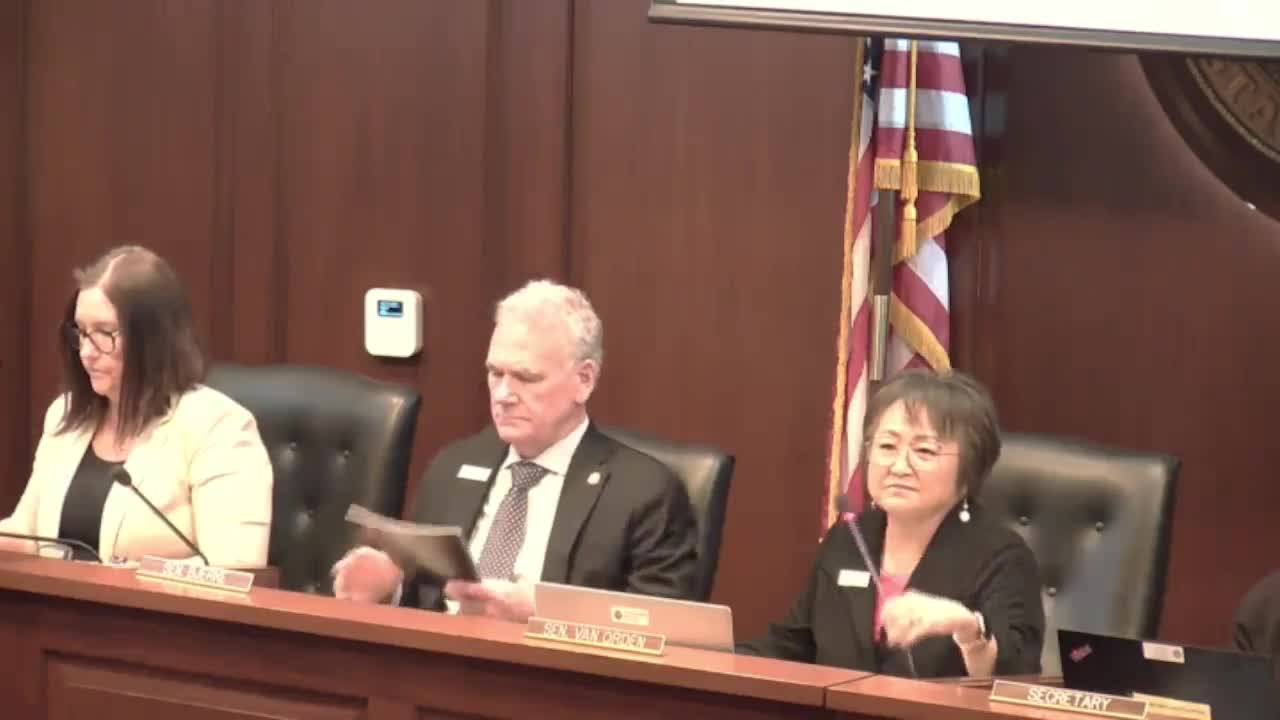
Committee members debated two procedural options. A substitute motion to send HB 243 to the fourteenth order for possible amendment failed (committee tally given in the hearing: 4 ayes, 5 nays). The committee then approved the original motion to send the bill to the floor with a due‑pass recommendation. Senators recorded as voting against the due‑pass on the hearing record included Senator Maryanne Wintrow and Senator Blaylock; the hearing record does not supply a full roll‑call tally in the transcript.
The bill drew broad public turnout and a mix of local officials, providers and advocacy groups. Committee members and witnesses repeatedly asked how the state would handle a transition from some cities that now license child care and whether federal subsidies and their attendant requirements would continue to apply to providers who accept them. The Department of Health and Welfare was described in testimony as the agency that would retain investigative and enforcement authority and that already holds contracts to perform inspections and licensing in many places.
With the committee vote, HB 243 moves to the Senate floor. The bill’s next steps and any amendments were not decided during the hearing.
— End —