Get Full Government Meeting Transcripts, Videos, & Alerts Forever!
Get email alerts on the Juvenile Corrections Budget topic
No spam. Unsubscribe anytime.
Idaho juvenile corrections seeks funding for radios, substance-use treatment as youth population rises
Summary
The Department of Juvenile Corrections told the Joint Finance-Appropriations Committee it is requesting one-time and ongoing funds for radio upgrades and to cover rising residential substance use disorder (SUD) costs as the agency’s census rose from a May 2024 low of 137 to 176.
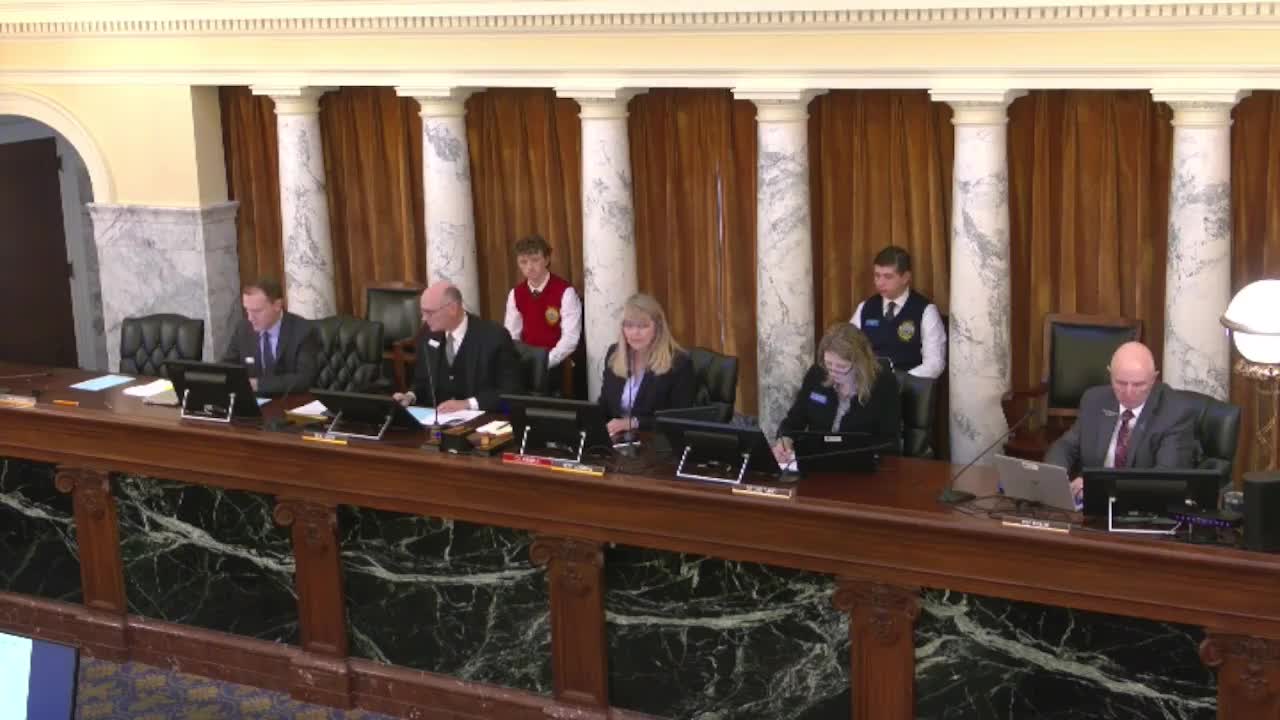
The Idaho Department of Juvenile Corrections asked the Joint Finance-Appropriations Committee on Feb. 18 for a mix of one-time and ongoing funding to replace radio equipment, sustain residential substance use disorder treatment and realign personnel costs as the agency’s youth census climbs.
Department budget analyst Noah Peterson told the committee the department requests a $380,000 one-time purchase from the Juvenile Corrections Endowment Income Fund to upgrade radios across the Lewiston, Nampa and St. Anthony juvenile correction centers. Peterson said a key feature is a “man down” function to alert staff to an employee needing assistance and that some radios already bought have not been programmed.
The radio upgrade request is part of a package of enhancement items the department presented to the committee. Peterson also described a $300,000 ongoing general-fund request to cover higher costs of daily residential treatment for youth with substance use disorders. He said the department’s per-day residential rate rose from about $198 in 2021 to $399 in August 2021, and average length of stay increased from 31 days to 67 days. Peterson said that shift changed annual program costs from about $1.26 million in fiscal year 2021 to roughly $2.7 million in fiscal year 2024.
Why it matters: Department leaders told lawmakers the higher SUD costs were partly covered for a time by the Department of Health and Welfare using ARPA funds, but that support has ended. Peterson said the $300,000 request would “make up the difference from what was previously covered by health and welfare.” He added that Health and Welfare’s earlier funds were short-term and are not available going forward.
Director Ashley Dowell, the agency’s director, told senators and representatives she is “concerned about just the level of mental health we’re seeing in the youth” and cited increases in suicidal ideation and self-harm among youth in the system. Dowell described partnerships with counties and the department’s efforts at reintegration, and said about “95 percent of kids” remain on probation (not in custody).
The department also proposed a net-zero program shift of $350,000 to move ongoing youth assessment center costs from the administrative program into community operations, and a net-zero personnel-to-operating shift of about $675,100 tied to consolidating seven IT positions with the state Office of Information Technology Services. Peterson said the consolidation would reduce the agency’s FTP by seven positions.
Committee members pressed for more data. Representative Tanner asked for counts showing how many youth pass through custody over time; Peterson said the committee could be provided those population trend figures, and Dowell confirmed the department’s census hit an all-time low of 137 in May 2024 and was 176 at the time of the hearing, a roughly 19% increase from the low. Lawmakers also asked for metrics on the youth crisis centers that were intended to divert youth from custody; Dowell said she could provide whatever data the agency has but only offered anecdotal examples during the hearing.
On education staffing, members asked about an “educator career ladder” appropriation in the department’s budget. Peterson explained juvenile facilities employ teachers and the career-ladder funds would apply to those educators; the committee and agency staff said details on mechanics could be provided by the department’s education staff.
On placement and treatment decisions, Director Dowell and committee members discussed that community treatment providers determine length of stay for residential SUD treatment under ASAM (American Society for Addiction Medicine) placement criteria. Dowell said those providers are independent of IDJC and the department does not directly control their clinical placement decisions; she said the department could consider proposals for utilization review but does not currently have licensing to perform that function.
What was not decided: The committee heard the requests and questioned staff but took no formal votes at the hearing. Peterson and Dowell agreed to provide the committee additional data on population trends, crisis center diversion outcomes and the department’s cost drivers.
Ending: The department’s enhancement requests—radio upgrade, SUD funding, IT replacement and personnel consolidations—remain before the legislature as budget decisions continue. Committee members asked the agency to supply follow-up data so lawmakers can weigh the requests alongside other priorities.