Get Full Government Meeting Transcripts, Videos, & Alerts Forever!
Get email alerts on the Program Maintenance Budgets topic
No spam. Unsubscribe anytime.
JFAC advances FY2026 program maintenance budgets covering agencies statewide; Health and Human Services reorganization and large appropriations approved
Summary
The Joint Finance and Appropriations Committee approved a slate of FY2026 program maintenance budgets on Jan. 17 covering the legislative and judicial branches, constitutional officers, public safety, general government, economic development, natural resources, education and health and human services — including a departmental realignment for the
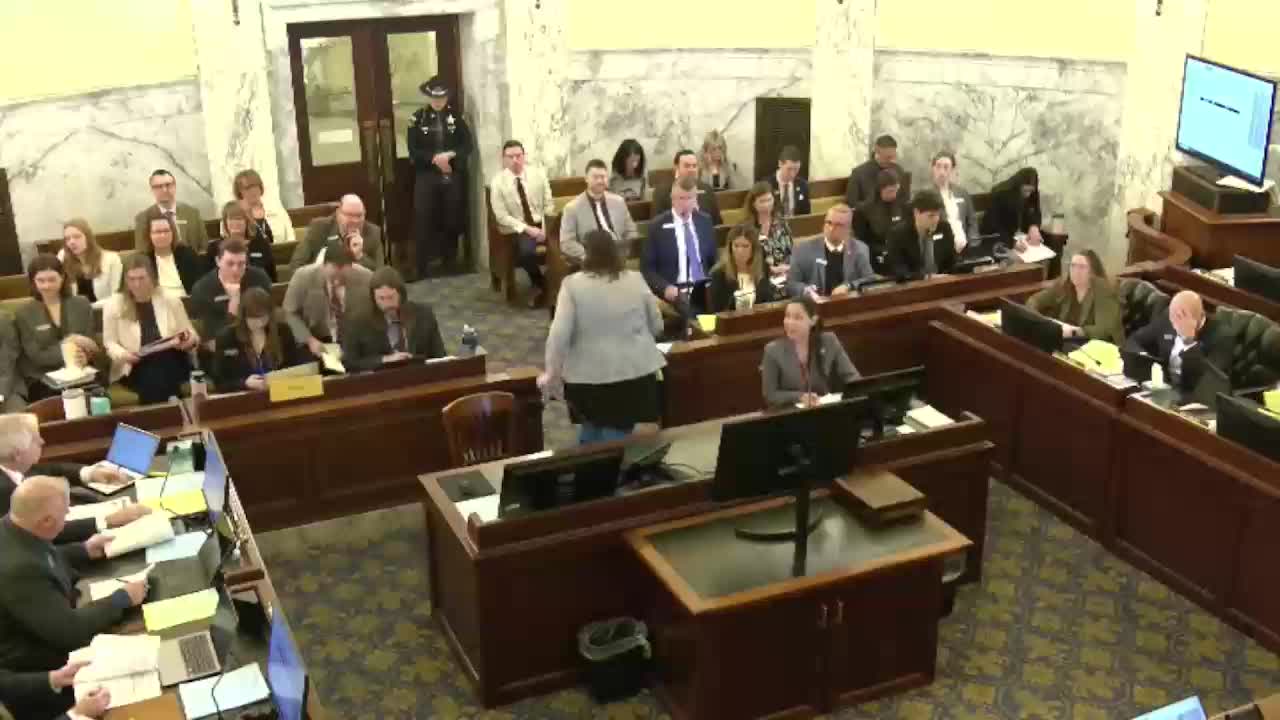
The Joint Finance and Appropriations Committee voted Friday to advance a broad set of Fiscal Year 2026 program maintenance budgets and related appropriation language covering most state agencies and policy areas. Actions included approvals for the legislative and judicial branches, constitutional officers, public safety, general government, economic development, natural resources, the State Board of Education, public schools and Health and Human Services. Committee votes were overwhelmingly unanimous for routine budgets and language; two Health and Human Services-related votes recorded individual no votes.
Taken together, the committee set program maintenance funding levels and standard draft language that will be used in the maintenance appropriation bills. Most motions followed staff presentations and were routine adoption of the FY2026 base plus statewide decisions (contract inflation and cost allocation) and included standard “conditions, limitations and restrictions” language and reporting requirements.
Key totals and notable items - Public school support (program maintenance): committee set a FY2026 total of $3,166,965,700 (all funds), with a general-fund component of $2,651,787,500. There is no FTP cap associated with public schools at the agency level; statutory allocations and distribution mechanisms remain in place. - Health and Human Services (program maintenance): committee set a FY2026 program maintenance total of $5,263,083,200 (all funds) with a general-fund component of $1,135,534,600 and a dedicated fund component of $824,851,000; roll calls recorded two individual nay votes across related motions. - Other program maintenance approvals included: Legislative Branch ($12,546,100 total program maintenance), Judicial Branch ($96,696,300), Constitutional Officers ($73,630,300), Public Safety ($528,074,000), General Government ($479,688,000), Economic Development ($1,380,135,600), Natural Resources ($513,855,000) and State Board of Education totals of $1,099,940,000.
Health and Human Services reorganization and phase-in: Committee approved language and a realignment of appropriation units requested by the Department of Health and Welfare to reflect an internal reorganization, and also authorized a new budget appropriation unit for Idaho Child Care. The realignment motion passed with an 18-1-1 result (18 ayes, 1 nay, 1 absent); Representative Petzke explained his recorded "no" vote as wanting more time to review the organizational shifts and many internal transfers of FTPs and funds.
Approach to appropriation language: Committee members and staff walked through standard language items that accompany maintenance budgets: expense-class and program-transfer exemptions for particular programs (for example, to allow flexibility in emergency or seasonal programs), reappropriation authority for ARPA or other one-time funds that carry forward, and reporting/accountability requirements. Several committees’ longstanding practices — such as allowing certain agencies to carry dedicated fund balances year to year — were repeated in the language motions, and those language motions were approved on roll call, usually unanimously.
Votes at a glance (selected motions and results) - Legislative Branch maintenance (incl. cost allocation): approved 20-0. - Judicial Branch maintenance and language (including reappropriation for court technology): approved 20-0. - Constitutional officers maintenance and language (includes reappropriation authority for state controller data processing and other transfers): approved 20-0. - Public Safety maintenance and conforming language (DOC, Juvenile Corrections, ISP, etc.): approved 20-0. - General Government maintenance + FTP caps and language: approved 20-0. - Economic Development functional area (many agencies): approved 20-0. - Natural Resources maintenance and related appropriations (DEQ, Parks, Water Resources, Endowment Fund Investment Board): approved 20-0. - State Board of Education maintenance and language (including tuition/fee reappropriation authority for universities and exemptions for agricultural research and extension): approved 20-0. - Public School Support maintenance and accompanying language (student support, classroom technology, English proficiency, advanced opportunities, etc.): approved 20-0. - Health & Human Services: (1) Realignment of base and new appropriations unit for Idaho Child Care — approved (Senate 10-0; House 8-1-1) for a total 18-1-1; (2) Program maintenance totals (full FY2026 numbers) — approved (final tally recorded 17 ayes, 2 nays, 1 absent/excused on combined actions). See actions list below for details.
What committee members said: Presentations were led by legislative budget analysts who walked members through comparative summary reports showing the FY2026 base, adjustments for systemic decisions (contract inflation and statewide cost allocation) and the resulting program maintenance totals. Members asked clarifying procedural questions about FTP caps and fund reappropriations; analysts pointed to the legislative budget book and SharePoint materials for detailed agency breakout tables.
Next steps: The motions carry "do pass" recommendations. Staff told the committee they will draft bill language (including the corrective language the committee approved elsewhere) and post draft bills for member review; the committee scheduled a follow-up review hearing after bills are drafted to allow members another chance to spot technical corrections before the bills are introduced to the full legislature.
The committee’s actions set baseline operating budgets for FY2026 and preserve the statutory distribution mechanisms embedded in several program lines (notably public schools). Members flagged outstanding items (noted below) that still require work-group or committee follow-up, including final decisions on any cross-agency compensation allocations (CEC) and health-insurance funding that were not resolved during this session.